


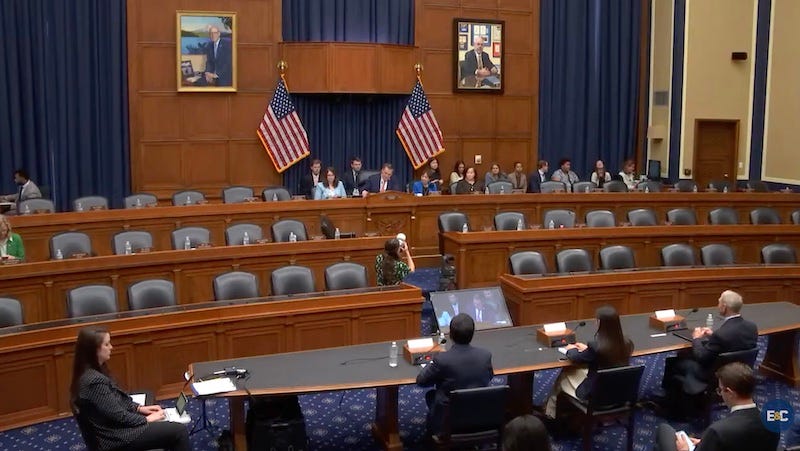
The House Commerce Committee’s Subcommittee on Communications and Technology has taken up the Satellite and Telecommunications Streamlining -- or SAT Streamlining Act.
The bill is aimed at modernizing how the Federal Communications Commission licenses satellite operators -- a process that industry witnesses say hasn’t kept pace with the realities of today’s market.
Tom Stroup, president of the Satellite Industry Association, told the subcommittee that the pace of satellite deployment has outstripped the regulatory framework designed to govern it.
“The current licensing regime was not designed for a world in which thousands of satellites are launched in a single year and constellations are replenished on multi-year cycles,” Stroup said. “SIA applauds the FCC’s creation of the Space Bureau to provide additional resources and focus in our industry, as well as its ongoing space modernization for the 21st century proceeding, which proposes to replace the legacy satellite rules with a new framework.”
One of the bill’s key provisions is a shot clock -- a deadline for the FCC to act on license applications. But that provision drew scrutiny. Kara Azokar, vice president of regulatory and public policy at Iridium, said that speed must be paired with deliberation.
“Shot clocks or deemed granted provisions are key to speeding up the process, but without a tolling provision that enables additional analysis in complex situations that require additional technical analysis, it could result in what Shiva mentioned, which is a rubber stamp,” she said. “And when an application is rubber stamped, it results in petitions for reconsideration, which results in uncertainty for licensees that have licenses that may conflict with the application, and the applicants that just got a grant can’t rely upon it. So a tolling provision, like what is in the bill, enables the FCC additional consideration to ensure regulatory certainty for all because technical considerations have been fully developed and decided upon.”
The stakes are particularly high for smaller operators. Shiva Goel, a partner at Wiley Rein, and former NTIA spectrum official and FCC advisor, told the subcommittee that delays hit emerging companies hardest.
“Smaller companies in particular have much more to lose and are much more vulnerable from delay. They don’t have war chests. They need to show their investors and customer base that they have a license and that they’re ready to go,” Goel said. “And they also need predictability and certainty about when they’re actually going to be able to operate.”
No vote has been scheduled. The subcommittee’s examination signals growing congressional interest in reshaping the regulatory environment for commercial space -- a dynamic worth watching for anyone with a satellite program in the pipeline.
-0-
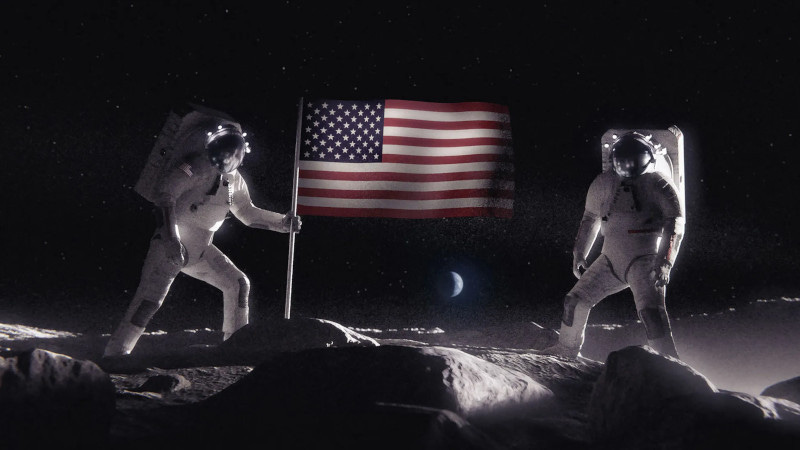
NASA is facing a potential spacesuit gap -- and the agency’s own inspector general is raising the alarm.
A new report from NASA’s Office of Inspector General finds the agency may not have flight-ready extravehicular activity suits in time to support planned lunar surface operations under the Artemis program.
The report identifies the Axiom Space suit -- developed under a NASA contract -- as the primary option for early Artemis lunar surface missions. But the OIG found development timelines are tight, testing milestones have slipped, and NASA lacks sufficient backup options if Axiom’s suit encounters further delays.
The report also flags the aging Extravehicular Mobility Units -- the suits currently used on the International Space Station -- as a near-term risk. The existing ISS suit inventory is limited, and production of replacement units has not kept pace with operational demand.
The inspector general’s recommendations center on NASA accelerating its suit certification milestones, establishing clearer contingency plans, and improving oversight of contractor performance. NASA management agreed with the recommendations but did not commit to specific corrective timelines in its formal response.
For the JSC audience, the supply chain dimension here is significant. Suit development draws on a narrow base of qualified fabricators for pressure garments, life support hardware, and thermal protection systems. Any slip in suit availability doesn’t just affect an astronaut’s schedule -- it can hold up an entire mission.
-0-
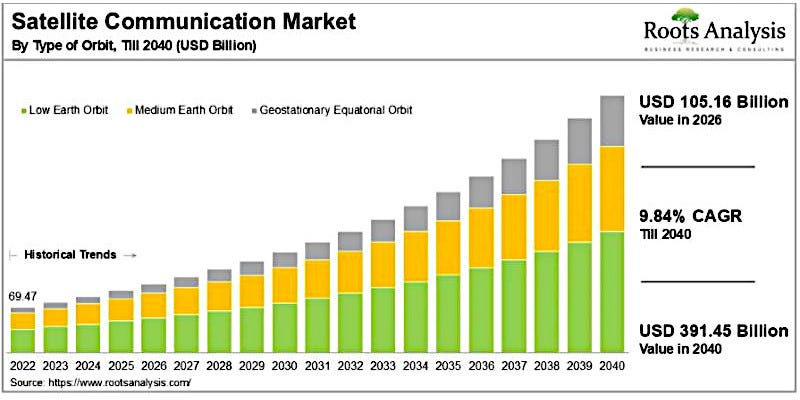
The satellite communications market is on track for substantial long-term growth -- and a new market analysis puts a number on it.
According to a recent projection from Roots Analysis, the global satellite communications market is expected to top $391.45 billion by 2040. The growth is being driven by expanding broadband demand in underserved regions, the proliferation of low Earth orbit constellations, and increasing reliance on satellite connectivity for defense and government applications.
The analysis points to several demand drivers converging at once: growing maritime and aviation connectivity requirements, the buildout of direct-to-device services, and continued investment in national security communications infrastructure.
For context, that projected figure represents a market roughly two-and-a-half times the size of today’s satellite communications revenue base -- which means the infrastructure, manufacturing, and services needed to support it don’t fully exist yet. That gap is where the supply chain story lives.
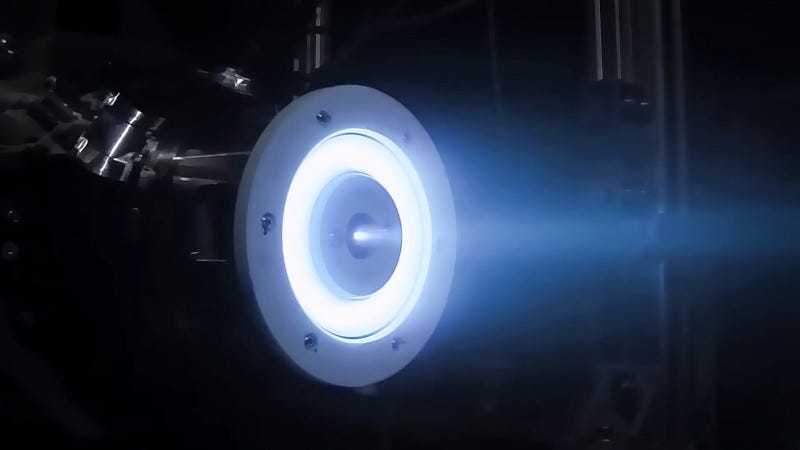
A new electric propulsion thruster has entered the commercial satellite market -- and its introduction comes at a moment when demand for in-space propulsion is accelerating.
The new thruster is designed for small to mid-sized satellites operating in low Earth orbit -- the same size class driving constellation buildout across both commercial and government programs. The system uses Hall-effect thruster technology, which ionizes and accelerates propellant using electromagnetic fields to generate thrust -- a well-established approach that trades raw power for efficiency and longevity.
The manufacturer says the new unit targets a market segment currently underserved by qualified, flight-heritage propulsion options. That’s a pointed commercial claim in an environment where supply chain leads for propulsion components have stretched to 12-to-18 months in some categories.
For program managers sourcing propulsion for constellation applications, new entrants with qualified hardware expand options at a moment when the incumbent supplier base is under strain. The question -- as with any new propulsion system -- is how quickly the thruster can accumulate the flight heritage that government and prime customers require before committing to a new vendor.
-0-
This week on The Journal of Space Commerce podcast ... the space supply chain is under pressure, and the stress points are becoming harder to ignore.
Across propulsion, satellite manufacturing, and ground systems, lead times are stretching. Component shortages are cascading into integration delays. And demand -- as we just heard -- is not slowing down.
The core problem is structural. The commercial space market has scaled faster than the industrial base supporting it. Constellation operators are placing orders for hundreds of satellites. Defense programs are adding to that queue. And the supplier ecosystem -- particularly at the sub-tier level -- has not added capacity at the same pace.
The Aerospace Industries Association (AIA) and PricewaterhouseCoopers (PwC) released a white paper last month focused on the supply chain for the commercial space industry, and the findings may have been something of a wake-up call for the industry.
Steve Jordan Tomaszewski, vice president of Space Systems for AIA, told me on the podcast that the pressure is coming largely from the increasing demand for spacecraft and components for a variety of missions.
“Overall, that is a good problem to have. It means that space is being more and more useful in our everyday lives all around the world. And especially if we look for applications like using satellites for national security purposes,” Tomaszewski sadi. “If we’re looking at using satellites for exploration, for communications and more of commercial applications, there is just more and more demand happening today. However, we don’t see capacity and the manufacturing base able to keep up with that demand.”
That mismatch has a direct cost. Delayed deliveries push out revenue. Program slips create downstream schedule conflicts. And in a market where launch windows are finite, a supply chain miss can mean a missed orbit.
You can find The Journal of Space Commerce podcast on Substack, or wherever you download your multi-media content
-0-
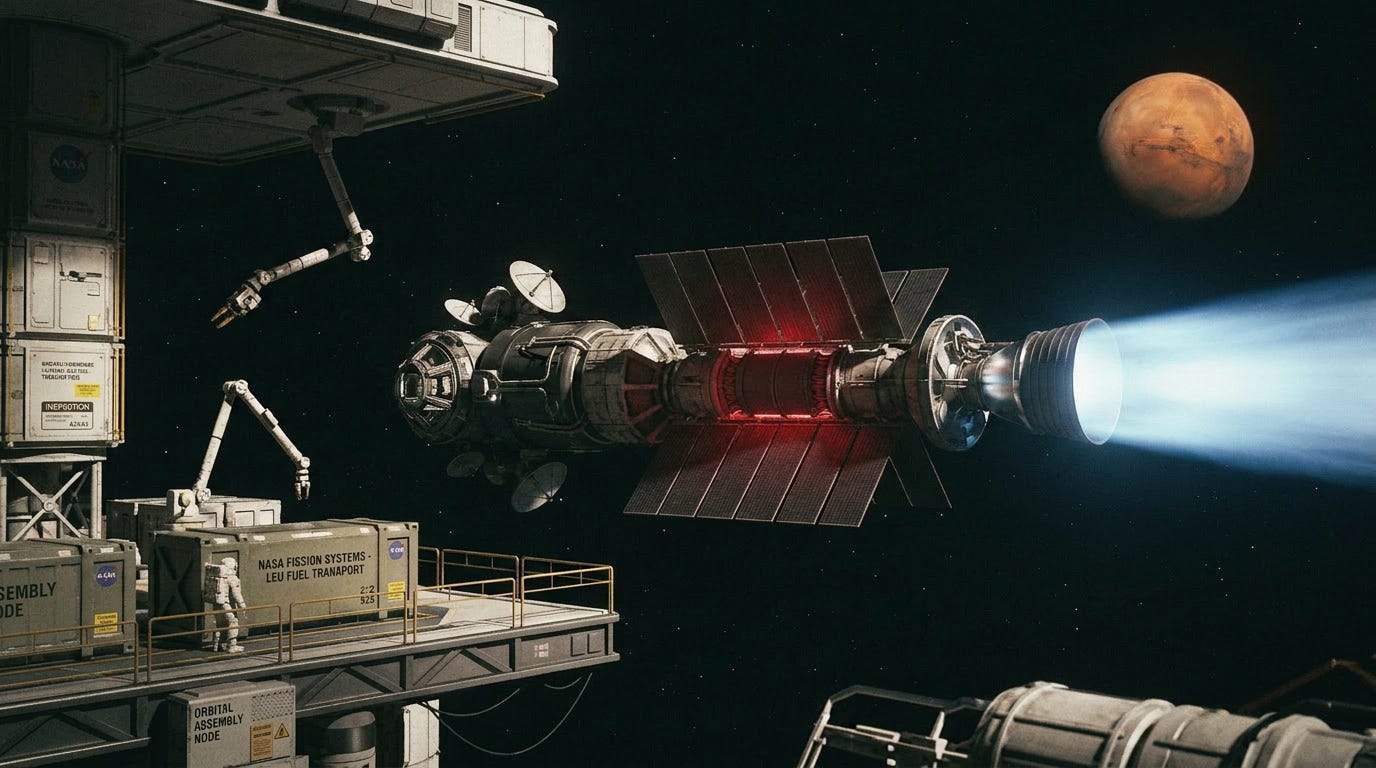
In Depth this week,
NASA’s Space Reactor One -- called SR-1 Freedom -- is the agency’s plan to launch the first fission-powered spacecraft in American history. The target launch date: December 2028. The destination: Mars orbit. [Paywall]
The hardware architecture combines a closed Brayton cycle fission reactor -- generating more than 20 kilowatts of electrical power -- with the Power and Propulsion Element previously built for the now-canceled Lunar Gateway space station. That reuse strategy is deliberate: NASA is engineering for speed, not maximum performance, and the use of previously qualified hardware reduces development risk. The reactor will be fueled by high-assay low-enriched uranium -- known as HALEU -- and will drive ion thrusters that propel the spacecraft to Mars. It would be the first time fission-generated electricity has been used for interplanetary propulsion.
The mission’s payload is called Skyfall -- a suite of Ingenuity-class helicopters designed to operate on the Martian surface.
NASA Administrator Jared Isaacman has described the reactor as “mostly built.” But the primary schedule risks are not in the hardware -- they’re in system integration, HALEU fuel delivery, and a four-layer regulatory authorization process that includes Presidential-level sign-off.
That fuel dependency is worth underscoring. HALEU -- enriched to between five and twenty percent U-235 -- is currently produced at commercial scale by exactly one U.S. facility: Centrus Energy’s American Centrifuge Plant in Piketon, Ohio. SR-1’s fuel needs are manageable. But the signal SR-1’s success sends -- to NASA, to the Department of Defense, and to commercial operators -- will accelerate follow-on demand that the current enrichment base may not be able to meet.
The competitive context is also explicit. China has identified nuclear propulsion as a strategic priority. The National Space Technology and Management directive issued earlier this month frames American leadership in space nuclear power as a national objective -- not just an R-and-D ambition.
The industrial base companies positioned in this supply chain include BWX Technologies -- the only publicly traded, pure-play space nuclear contractor with demonstrated flight hardware capability -- as well as the IX joint venture between Intuitive Machines and X-energy, and Westinghouse, which is developing HALEU transport infrastructure through a January 2026 agreement with Nuclear Transport Solutions.
No prime integrator for SR-1’s reactor system has been publicly named as of this week.
Steve Sinacore, NASA’s program executive for Fission Surface Power, explained during the NASA Ignition event what nuclear power will mean for the future of the space program.
“Nuclear power in space does not just enhance deep space exploration, it enables it. Through increased energy density, nuclear power will keep lunar bases operating through the 14-day, 354-hour night. It will power the missions on the surface of Mars, where without it, the alternative is football fields of solar panels that will be ineffective during dust storms,” Sinacor said. “And nuclear power provides the continuous, reliable, and plentiful energy that will enable surface manufacturing and the ability to make propellant on Mars that brings crews home. Future sustained robotic or human presence missions will require the energy density that nuclear power provides.”
Sinacore said that SR-1 Freedom will be a physical manifestation of American leadership in space.
“Space Reactor One Freedom will unleash American ingenuity to get America underway in space on nuclear power, enable extraordinary science on Mars with the delivery of Skyfall, and set a precedent for all future space nuclear endeavors. SR-1 Freedom will put the United States of America in the driver’s seat of this enabling technology.”
The full SR-1 Freedom supply chain analysis -- including named companies, the HALEU chokepoint, and the four regulatory hurdles before launch -- is available now for paid subscribers at exterrajsc.com under the Market Insights tab.
Other premium articles this week include what the SATELLITE 2026 hype left out, a look at the Artemis cadence math, and columnist Mike Daily explores the Mahanian Lesson in orbit.
-0-
Worth a Second Look:
Collaboration Pioneers ‘Lunar Iron’ for Lunar Base Infrastructure
Dream Chaser Spaceplane Completes Launch Acoustic Milestone
Spanish Propulsion Startup Wins Contract for Reusable Spaceplane
RAVEN Shuttle, NEST Depot Comprise Orbit Fab In-Space Refueling Network
The Refueling Layer [Paywall]


