

NASA OIG: Agency Faces Spacesuit Gap
Finds Flawed Acquisition Strategy, Loss of Second Provider Put Artemis Lunar Mission and ISS Operations at Risk

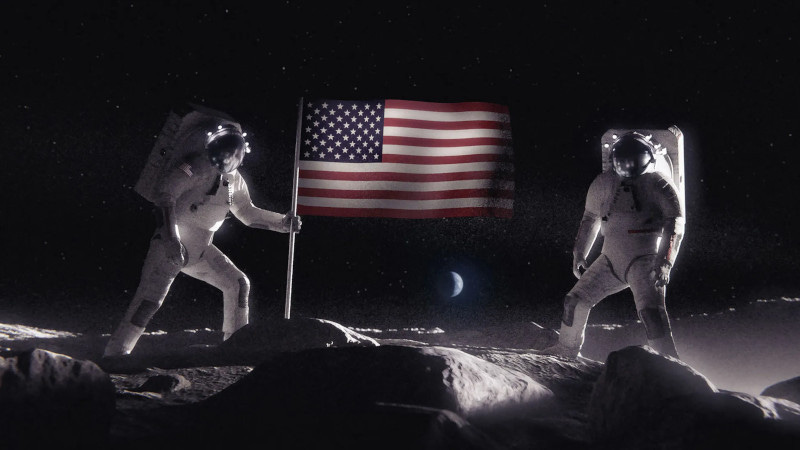
NASA is struggling to develop next-generation spacesuits in time for a planned 2028 lunar landing mission and before the International Space Station is decommissioned in 2030, according to an audit released Monday by the agency’s Office of Inspector General.
The report, IG-26-006, found that NASA’s original schedules for demonstrating new spacesuits were unrealistic, that the agency’s chosen acquisition strategy was poorly matched to the developmental nature of the project, and that NASA now relies on a single contractor — Axiom Space — after the other provider was removed from the contract just two years after the program began.
Years of Failed Development
NASA has not completed an upgraded flight-ready spacesuit despite nearly two decades of effort. The Extravehicular Mobility Unit spacesuits astronauts currently use on the ISS were designed over 50 years ago, have not undergone a major redesign in the last 20 years, and carry significant safety risks, including water leaks into helmets and thermal regulation malfunctions.
After four separate development efforts dating to 2007 — all of which failed to produce a flight-ready suit — NASA shifted in 2021 from an in-house design approach to a commercial service-based contract. In May 2022, the agency awarded Exploration Extravehicular Activity Services, or xEVAS, contracts to two providers: Axiom Space and Collins Aerospace, a subsidiary of RTX Corporation. The firm-fixed-price, indefinite-delivery, indefinite-quantity contracts carry a combined maximum value of $3.1 billion. Under the arrangement, NASA would not own the spacesuits but instead rent spacewalking services from the providers following an initial demonstration.
Schedules Were Unrealistic from the Start
The OIG found that original demonstration timelines — spanning just 3.4 years for the lunar suit and 3.8 years for the microgravity suit — were less than half the 8.7-year historical average from contract award to test flight for recent NASA space flight programs. If Axiom experiences delays consistent with that historical average, neither spacesuit would be ready until 2031 — one year after the ISS is scheduled to be decommissioned and three years after the planned Artemis lunar landing.
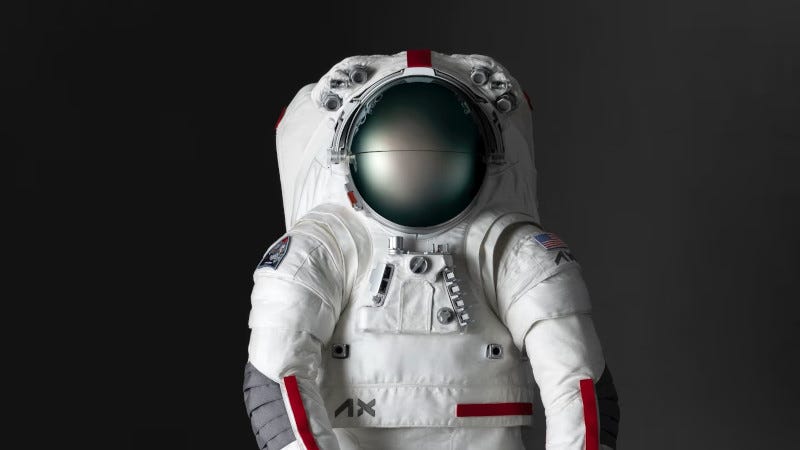
As of January 2026, Axiom was working toward demonstrating both suits in late 2027, already representing a delay of more than a year and a half for each.
Acquisition Strategy Introduced its Own Risks
The OIG concluded that applying a firm-fixed-price, service-based contract to a developmental system like the next-generation spacesuit was fundamentally misaligned with the technical and financial risks involved. A fully operational spacesuit has not been designed, developed, and produced for NASA’s use since the 1970s, underscoring the novel technical challenges involved. The independent Standing Review Board reached a similar conclusion in August 2023, finding that few of the necessary conditions for successful firm-fixed-price contracts were present — but noted it was too late to change the contract structure.
The agency also required potential bidders to submit proposals covering both lunar and microgravity spacesuits simultaneously, which the OIG found limited an already constrained pool of competitors. The requirement likely deterred companies capable of developing only one type of suit. Ultimately, NASA received just two bids — one from Collins, which had extensive experience but a documented record of poor management, and one from Axiom, which had no spacesuit development experience whatsoever.
NASA rated Collins’ past performance as “Excellent” during the source selection despite documented management failures on its existing ISS spacesuit maintenance contract. In March 2023, four NASA program managers signed a letter to Collins senior management outlining “pervasive management and performance issues” over several years, stating that the company’s performance was a risk to Artemis launch schedules and the viability of the ISS.
Collins Exits; Single Provider Remains
In September 2022, NASA awarded Axiom the first xEVAS task order — valued at $228 million — to develop and demonstrate a lunar spacesuit. In December 2022, NASA sole-sourced a $97 million task order to Collins without competition to develop a microgravity spacesuit for the ISS. NASA acknowledged the non-competitive award was necessary to meet its contractual guaranteed minimum order obligation to Collins and to keep the company active.
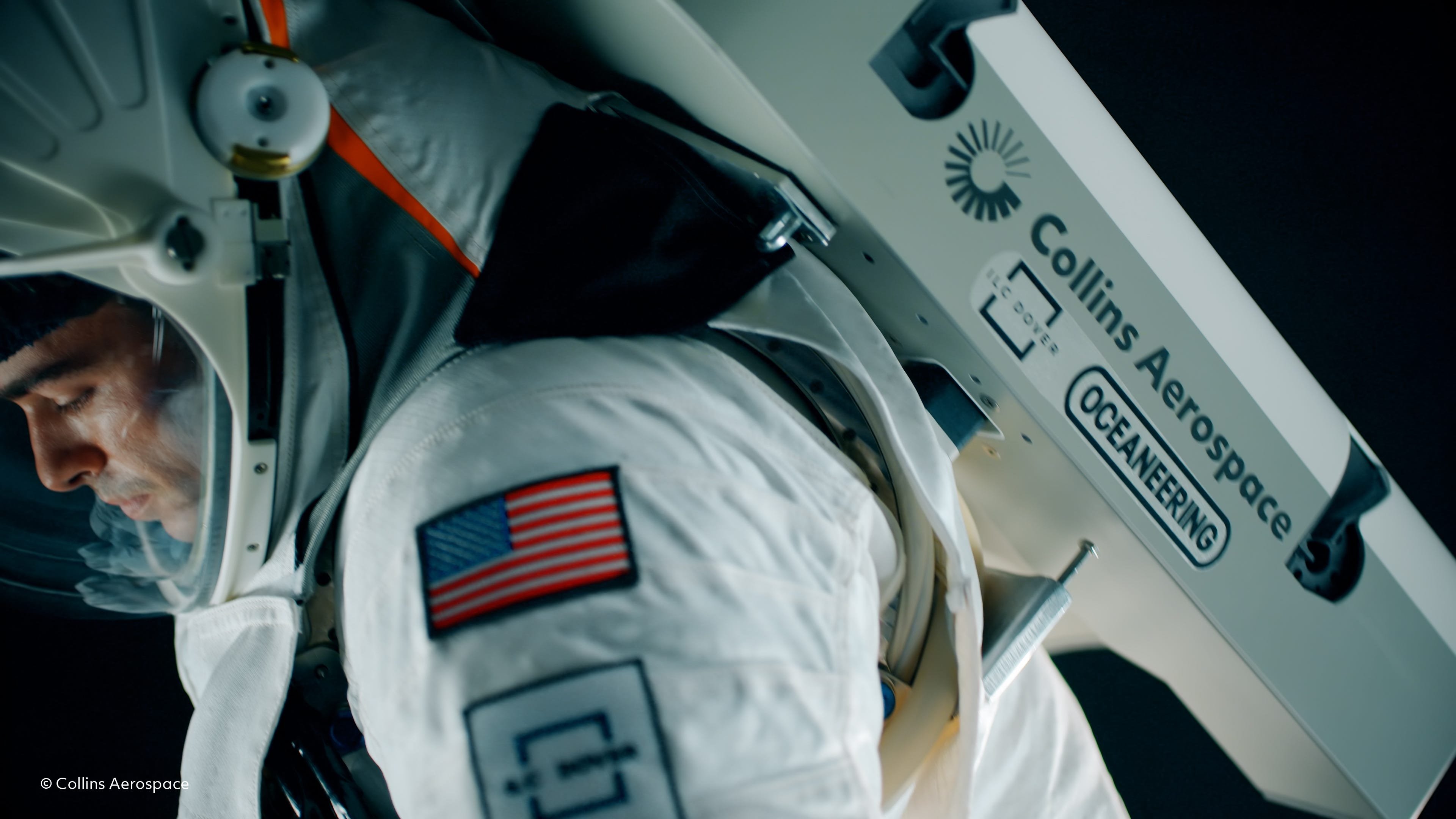
In July 2023, NASA awarded both companies $5 million “cross-over” task orders, allowing each to begin developing both suit types in parallel — a prescient decision, the OIG noted, that limited schedule damage once Collins departed. The agency also approved partial milestone payments to both providers in December 2023, a step the OIG said deviated from the firm-fixed-price contract’s explicit terms, which require full milestone completion before payment.
By June 2024, Collins had completed its Preliminary Design Review for its microgravity spacesuit — one year late. That same month, NASA and Collins mutually agreed to remove Collins’ task orders from the xEVAS contract, citing the company’s inability to meet the ISS demonstration schedule. By the time of the departure, NASA had paid Collins $37 million across four milestones, receiving no hardware in return but retaining some conceptual design data.
With Collins gone, Axiom became the sole active xEVAS provider. The OIG noted that NASA can no longer rely on competition to control costs, and that any future schedule slips now affect both the ISS Program and the Artemis campaign simultaneously.
NASA’s Mitigation Steps and Remaining Risks
In response, NASA has taken several steps to shore up Axiom’s development efforts. In December 2025, the agency awarded a $13.1 million contract for oxygen regulators — a critical, low-inventory component flagged as a top risk on both the legacy and next-generation suits. As of December 2025, NASA’s Extravehicular Activity and Human Surface Mobility Program had spent over $79 million on spacesuit testing and $63 million on insight and collaborations with xEVAS providers.
As of that same date, Axiom had 37 active or completed collaboration agreements with NASA in areas including dust mitigation, acoustics, and manufacturing. The OIG cautioned, however, that agency-wide staffing reductions could threaten the availability of the experienced civil servants central to those collaborations.
A separate concern raised by the OIG is the lack of a universal interoperability standard between spacesuits and Artemis vehicles and assets. NASA is already encountering compatibility conflicts between Axiom’s spacesuit design and Blue Origin’s Blue Moon Human Landing System. The mismatch — involving the location and design of the area where suits are put on and removed — may require costly design changes by either company.
Recommendations
The OIG made two recommendations to NASA’s Associate Administrator for Exploration Systems Development Mission Directorate: seek industry input on current xEVAS contract requirements to ensure future competition can be maintained, and develop a plan to establish interoperability standards between Artemis lunar vehicles and spacesuits. NASA concurred with both recommendations. The agency indicated it would seek industry feedback on contract requirements if it decides to add new providers or establish a successor contract before September 2027, and that it would develop consolidated interface control documents for all Artemis lunar vehicles by December 31, 2027.