

The Refueling Layer
Why the Supply Chain Behind Orbital Propellant Transfer is the In-Space Economy’s Most Consequential Blind Spot

What This Means
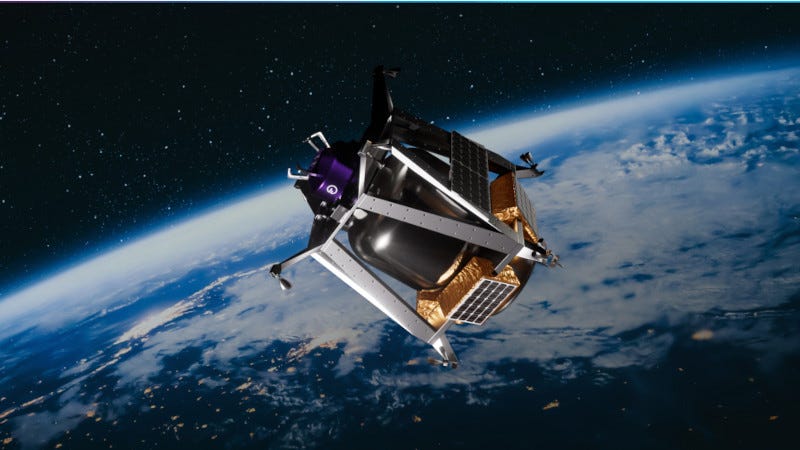
The orbital refueling supply chain has a structural gap below the mission layer. The Tier-2 and Tier-3 manufacturers of cryogenic transfer hardware and the ground-side industrial gas infrastructure they depend on are too thin, too concentrated, and largely invisible to the executives and investors funding the in-space services economy they are supposed to enable. With Astroscale U.S. and Orbit Fab targeting a joint June 2026 launch for the first U.S. operational GEO refueling mission, the supply chain behind them — not the mission operators themselves — is the constraint that will determine whether 2026 marks a genuine turning point or a delayed promise.
The Refueling Layer
There is a version of the in-space services economy that works. Satellites are refueled in orbit, extending their operational lives by a decade. Cislunar logistics depots hold propellant reserves for missions venturing beyond low Earth orbit (LEO). Defense constellations are designed from the start to be refueled — not replaced — as the most cost-effective way to sustain persistent coverage. The companies building those services are real, funded, and under contract. The technology, at least in its basic form, has been demonstrated.
What has not been demonstrated — and what almost no one publishing in this space has mapped — is whether the supply chain required to make all of that work actually exists in sufficient depth to support it.
It is a reasonable question to skip over. The mission-layer players are compelling. Astroscale U.S. has a Space Systems Command (SSC) contract worth $61 million to deliver the first operational hydrazine refueling above geosynchronous Earth orbit (GEO). Orbit Fab has a flight-qualified, open-licensed fueling interface, a published price sheet, and a collaboration with Airbus Defence and Space signed as recently as March 2026. Eta Space is targeting a June 2026 launch for its LOXSAT spacecraft — purpose-built to test twelve cryogenic fluid management technologies under a $25 million National Aeronautics and Space Administration (NASA) Tipping Point contract.
The question worth asking before any of those programs become commercial infrastructure is not whether the mission operators can execute. It is whether the supplier base below them can scale.
