



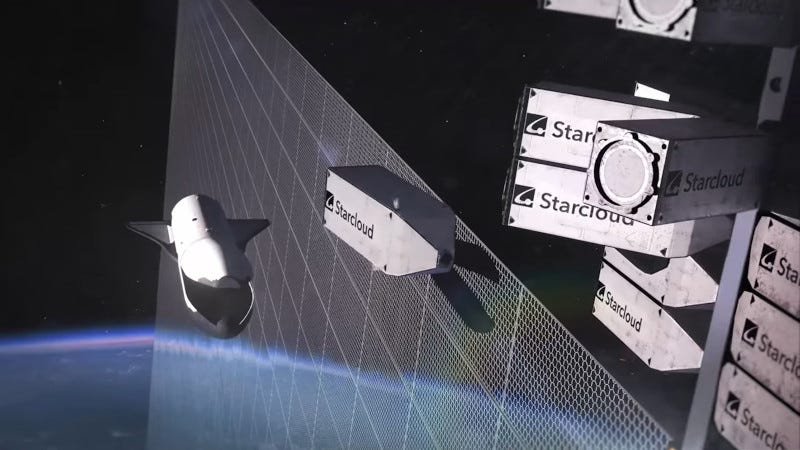
Here’s a number that would have seemed like science fiction three years ago — one-hundred-and-seventy million dollars for a Series A round. That’s what Starcloud just pulled in — and they plan to use it to put data centers in orbit.
The company closed a $170 million Series A at a $1.1 billion valuation — making it a unicorn just seventeen months after its Y Combinator demo day. According to Starcloud, that makes it the fastest unicorn in Y Combinator history. The round is also more than double the size of the next largest YC Series A, bringing the company’s total capital raised to $200 million.
So what does Starcloud actually do? CEO Philip Johnston framed it this way — and I’m quoting here — “The AI revolution is colliding with the physical limits of our terrestrial energy grid. We are quickly running out of places to build new energy projects for data centers on Earth.”
His answer? Go up. Starcloud is building data centers in low Earth orbit, where solar energy is effectively unlimited and the permitting headaches that can add five years to an earthbound data center project simply don’t exist.
And they’re not just talking about it. With only $3 million in pre-seed funding, the company designed, built, and launched its first satellite — Starcloud-1 — in 21 months. That mission flew the first NVIDIA H100 GPU to orbit, performed the first orbital AI training run, and ran a version of Gemini — the Google AI model — from space. That’s a serious set of technical milestones for a company that didn’t exist two years ago.
The round was co-led by Benchmark and EQT — that’s the world’s second-largest private equity firm, with more than 100 billion dollars in assets under management and a portfolio of more than 70 data centers on the ground.
Later this year, Starcloud-2 launches — featuring what the company calls the largest commercial deployable radiator ever sent to space, and 100 times the power generation of Starcloud-1. The company says it will be its first satellite running commercial workloads for paying customers.
Bottom line: orbital AI compute is no longer a think-piece concept. Starcloud is building it, and some of the biggest names in venture and infrastructure just bet $170 million that it’s real.
-0-
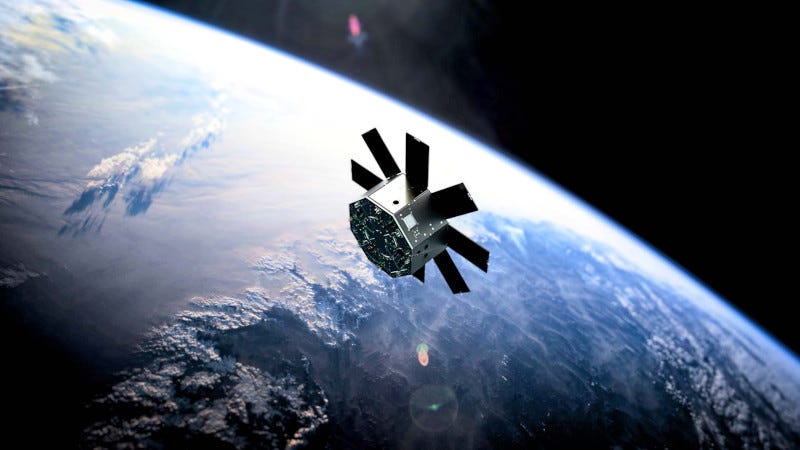
Sidus Space reported its full-year 2025 financial results this week, and there are two stories inside those numbers.
First, the challenging headline: revenue came in at approximately $3.4 million for the year — that’s a decline of about 28 percent compared to 2024. Cost of revenue increased 48 percent to roughly $9.1 million, driven largely by higher depreciation tied to the company’s expanding satellite fleet. Net loss for the year totaled $29.5 million, up from $17.5 million in 2024 — and that includes a $4.5 million non-cash impairment charge related to LizzieSat-1.
On the company earnings call posted online, CEO and founder Carol Craig described 2025 as a, quote, “pivotal year” — framing the losses as investment, not failure. The company launched LizzieSat-3 in March of last year, demonstrated on-orbit AI processing through its Orlaith AI ecosystem, and validated sub-5-meter imagery resolution with a partner payload.
“An important part of our strategy is that our satellites are company-owned and company-funded, with multiple customers contributing revenue before and after launch. Unlike others that may depend primarily on government contracts to finance and build their satellites, we made a deliberate decision to create a Sidus-owned platform, including the underlying intellectual property that can support commercial, civil space, and defense customers on a single satellite,” Craig said during the company earnings call. “This dual-use multi-mission model creates diversified revenue streams, broadens customer opportunities, and supports a more resilient business model in an increasingly dynamic geopolitical environment. Another important differentiator is that we intentionally designed our satellites to serve as both development and production platforms. From the beginning, our goal was to build a robust, redundant satellite architecture capable of testing and maturing technologies while simultaneously supporting customer missions.”
But here’s the other story: the balance sheet. As of December 31st, Sidus had $43.2 million in cash — up from $15.7 million at the end of 2024. That’s a $27.5 million increase, driven by equity capital raises in the back half of last year. Working capital jumped from $8 million to nearly $35.7 million.
They also expanded their contract portfolio significantly. Among the highlights — a ten-year IDIQ contract under the Missile Defense Agency’s SHIELD program, which carries a potential ceiling of $151 billion. They expanded their manufacturing agreement with Lonestar Data Holdings for lunar satellite work to $120 million total contract value. And post-year-end, they announced that Maris-Tech’s AI-based edge computing payload is scheduled to fly on a Sidus mission in Q4 of this year.
The company now holds 15 issued patents and has designs underway for multiple next-generation platforms, including a cislunar and lunar satellite called LunarLizzie — an 800-plus kilogram platform.
-0-
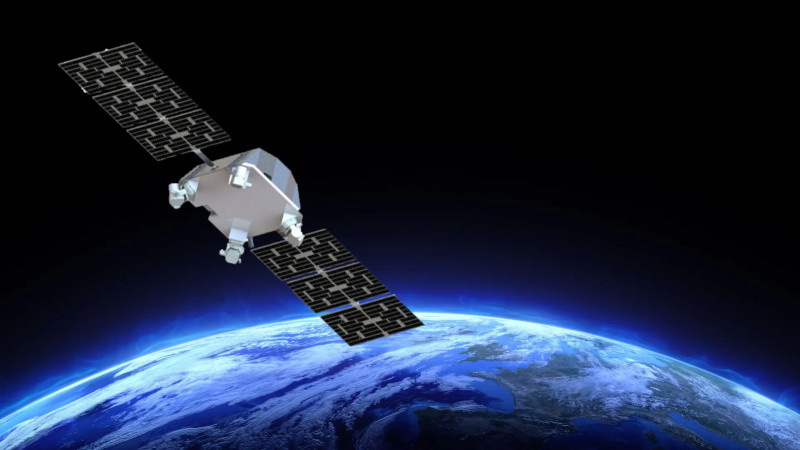
From Florida’s Space Coast to Silicon Valley — Momentus Space has completed its move into a new 61,100-square-foot research, development, and manufacturing facility in San Jose, California.
The headline number here is the clean room. Momentus has gone from 4,500 square feet of clean room manufacturing to 16,000 square feet — nearly four times the capacity. The new facility also includes a machine shop, a dedicated mission operations center for monitoring and controlling spacecraft in orbit, and — notably — it comes with lower monthly operating costs than the company’s previous lease.
CEO John Rood said the move positions Momentus to meet rising demand across the national security and commercial space sectors. The company has specifically called out Golden Dome and the MDA SHIELD program as programs it intends to support from the new facility.
The San Jose location also puts Momentus closer to its supply chain, key industry partners, and the talent base in the Silicon Valley ecosystem — which matters when you’re scaling manufacturing operations.
Momentus has had a complicated few years on the public markets, but this move signals a company focused on operational scale and execution. More clean room, lower overhead, and a mission control capability under one roof. That’s a meaningful infrastructure upgrade.
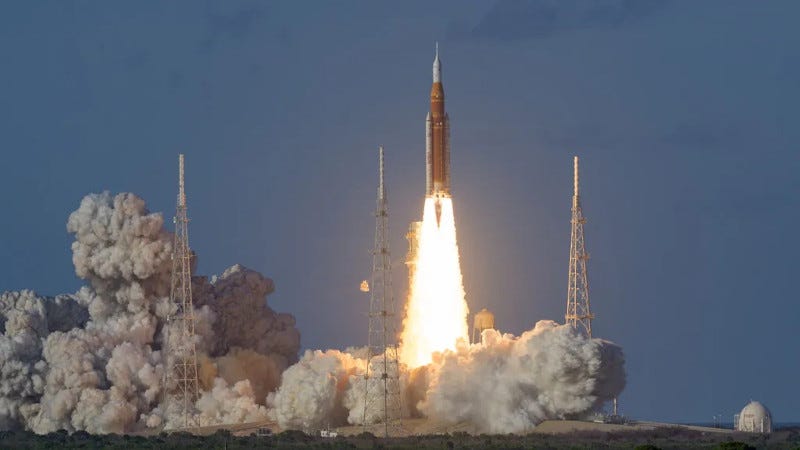
For the first time in more than fifty years, human beings are flying to the Moon.
NASA’s SLS rocket lifted off from the Kennedy Space Center on Wednesday evening carrying four astronauts aboard the Orion spacecraft, which the crew has named “Integrity.” The crew includes NASA astronauts Reid Wiseman, Victor Glover, and Christina Koch — and Canadian Space Agency astronaut Jeremy Hansen.
The main event comes tomorrow in the form of a planned multi-hour lunar flyby. The crew will photograph and observe parts of the Moon’s far side that have never been seen by human eyes in person. Total mission duration is approximately ten days, ending with a Pacific Ocean splashdown.
This mission is not a lunar landing — it is a crewed test flight. But the objectives are foundational: validate life support systems with crew aboard, test Orion’s handling in deep space, and lay the groundwork for future surface missions.
The commercial space implications here are significant. A sustained crewed lunar presence — which is the stated goal of the broader Artemis program — will require commercial logistics, commercial habitation, commercial surface systems, and commercial data services. What’s happening in orbit right now is the beginning of that pipeline.
-0-
From the Moon to the International Space Station — this next story is about a robotics startup with big ambitions and a mission manager with deep roots.
Icarus Robotics, a New York City-based company co-founded by Ethan Barajas and Jamie Palmer, has awarded a contract to Voyager Technologies to support the in-orbit demonstration of its free-flying robotics platform — called Joyride. The demonstration is targeted for early 2027 aboard a space station.
Under the agreement, Voyager will handle payload integration, safety certification, launch coordination, and real-time mission execution support. That’s what Voyager calls “mission management as a service” — and with more than 1,400 missions managed across its career supporting the ISS, the company has a well-established track record for getting payloads to orbit and operating them when they get there.
Voyager president Matt Magaña called the Icarus contract exactly the kind of work the service was designed for — helping companies, quote, “move from ideas to proven flight heritage.”
But what makes this story a little more than a straightforward contract announcement is the personal connection. Icarus co-founder Barajas participated in Voyager’s NASA HUNCH program as a high school student — a program that gives students hands-on experience building hardware for the space station. That early exposure to spaceflight shaped his path. Now his robotics company is coming back to the station — this time as a customer.
The Joyride platform is designed for autonomous navigation and operations inside and around space stations — working in environments where human presence is difficult or costly. As commercial stations like Starlab move toward operations, the demand for capable autonomous robotics platforms in orbit is only going to grow. Icarus is early, but this demonstration could be a meaningful step toward a very large market.
-0-
Coming up this week on The Journal of Space Commerce Podcast, I talk with FCC Space Bureau Chief Jay Schwartz about the mission of the Space Bureau and the recently approved Notice of Proposed Rulemaking on spectrum for “Weird Space Stuff”.
Schwartz explained that the FCC’s spectrum licensing dance card has been growing exponentially, and for more exotic missions.
“There’s also been a significant change in the types of applications in terms of the complexity that we’ve gotten. So a decade ago, about 80% of the applications were geostationary applications, relatively straightforward to license. And typically you’re dealing with just one satellite, right? What we’re seeing today is we’re seeing that flipped and something on the order of about 80% are your NGSO or your LEO constellations,” Schwartz said. “So more complex, larger, obviously, in terms of the number of satellites, more complex interference environments. And then actually, we’re also getting a number of things, we might touch on this a little bit later, that don’t even fall into that traditional NGSO or GSO category. So we’ve licensed a few commercial lunar missions, for instance, and I think we’ll continue to see more and more of those type of emerging space activities.”
Later this month, a deep dive on the recent Space Supply Chain report with Steve Jordan Tomaszewski and Doug Anderson ... on the Journal of Space Commerce Podcast.
-0-
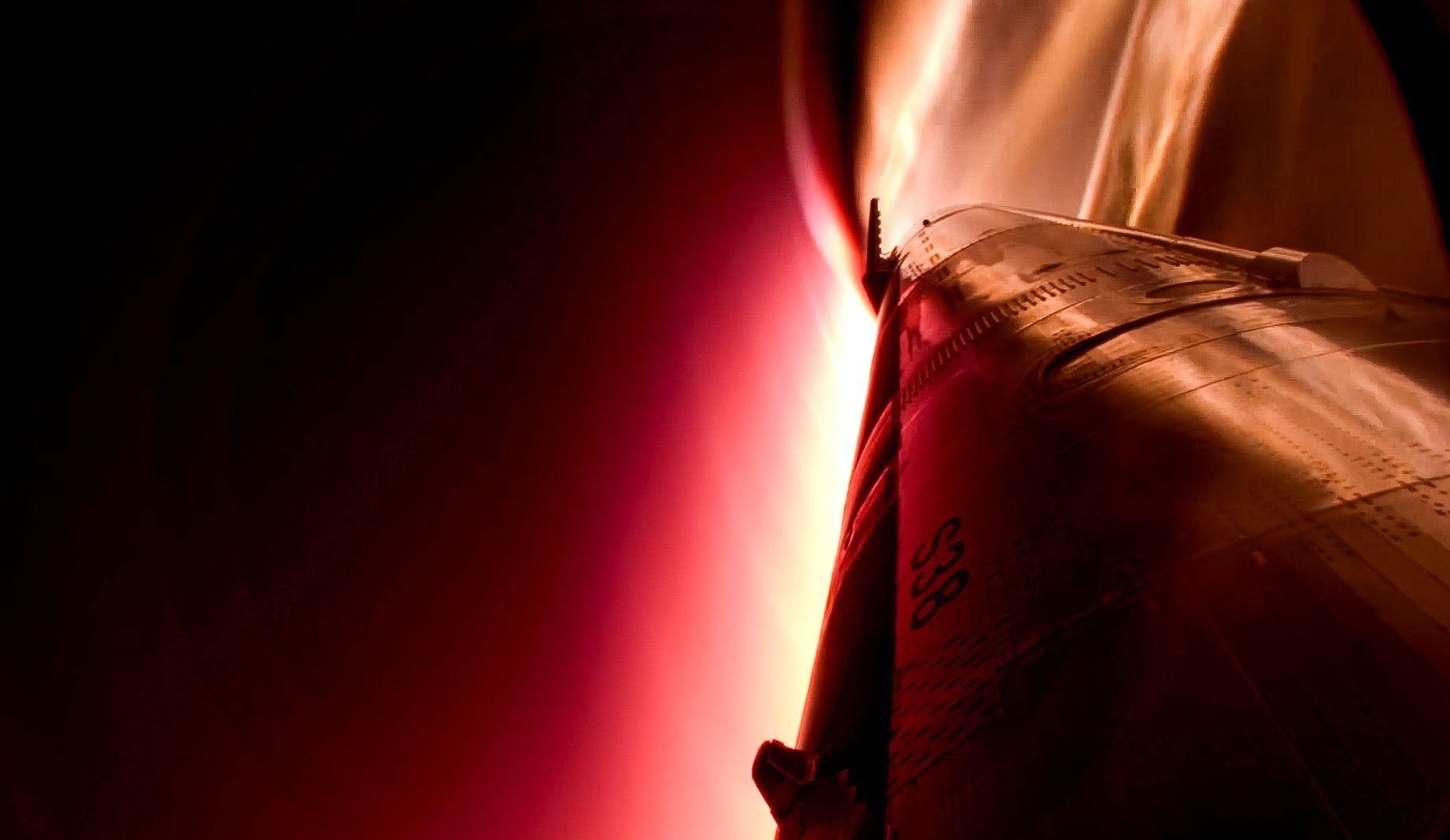
In depth this week, there may be no single event with more potential consequence for the commercial space industry in 2026 than what’s coming out SpaceX — and it has nothing to do with a rocket launch. (Paywall)
SpaceX is reportedly preparing to file a confidential IPO prospectus with the Securities and Exchange Commission, targeting a June 2026 stock listing. And the valuation being attached to this offering? One point seven five trillion dollars — with a raise target above $75 billion.
Let that number sink in. Seventy-five billion dollars raised in a single public offering would nearly triple the $29.4 billion raised by Saudi Aramco in 2019 — the previous record for the largest public offering in history.
At $1.75 trillion, SpaceX would sit above every company in the S&P 500 except Nvidia, Apple, Alphabet, Microsoft, and Amazon. That means the moment it lists, it becomes one of the most valuable companies in the world — full stop.
So how did we get here? The valuation isn’t just about rockets. SpaceX has been building value across multiple vectors simultaneously. There’s the launch business — a near-monopoly on heavy lift capability. There’s Starlink — a global satellite internet constellation with a growing subscriber base across consumer, maritime, enterprise, and government segments. There’s a substantial government contract portfolio spanning NASA, the Space Force, and the NRO. And then, as of February of this year, there’s the wild card: SpaceX completed an all-stock merger with xAI — Elon Musk’s artificial intelligence company — creating what the market is now pricing as an AI-plus-space platform at a combined level that justified pushing the pre-IPO valuation from roughly $1.25 trillion after the merger to the current $1.75 trillion target.
The implied revenue multiple here — at roughly 113 times projected 2025 revenues — is well above any comparable public space company. Rocket Lab, for context, trades at 15 to 20 times forward revenue.
Now let’s talk about what this means for the rest of the sector — because there are three distinct dynamics at work here, and every investor in commercial space needs to understand all three.
The first is the capital absorption problem. A $75 billion raise is not a typical IPO. It will pull from the same investor pool that currently holds Rocket Lab, AST SpaceMobile, Intuitive Machines, Voyager Technologies, and every other public space name. Institutional allocators who want space exposure may simply shift that allocation into a more liquid, better-researched SpaceX position. Smaller names — particularly those whose business lines overlap most directly with SpaceX — face meaningful crowding-out risk during the second quarter of this year as attention and capital concentrate ahead of the listing.
There’s an offsetting argument: SpaceX’s roadshow may bring generalist institutional investors into the sector for the first time, expanding the total pool of capital available to space companies over the medium term. The xAI angle in particular will draw AI and technology investors who might never have engaged with aerospace. But in the short term, the bandwidth compression effect is real.
The second is the benchmark dislocation problem. Once SpaceX trades publicly with audited financials, every investment committee in the world has a reference point it didn’t have before. That’s a double-edged sword. Companies with genuinely differentiated models — Rocket Lab’s vertical integration, AST SpaceMobile’s direct-to-device architecture, Intuitive Machines’ lunar services play — should benefit from clarified differentiation. The risk is concentrated in companies whose revenue base overlaps with SpaceX in launch services or satellite manufacturing. And for pre-IPO companies like Voyager Technologies and Karman Holdings — both of which have confidential IPO filings expected this year — every valuation conversation will now happen in the shadow of that $1.75 trillion benchmark.
The third dynamic is actually positive for the broader sector — and it’s the one that doesn’t get talked about enough. The SpaceX S-1 will be the most consequential piece of financial disclosure the commercial space industry has ever produced. For the first time, investors will see audited Starlink subscriber counts and revenue-per-user figures. They’ll see SpaceX’s defense revenue broken out — contracts with the Space Force, NRO, NASA — and they’ll see the actual cost structure behind Falcon 9 and Starship launches. That information doesn’t just price SpaceX. It reprices the entire sector, with real data instead of estimates.
Defense-aligned space companies in particular may benefit from the investor education effect. If SpaceX’s government revenue proves to be as large and as recurring as the market expects — and the USSF budget alone is running at roughly $40 billion for FY2026 — it validates the investment thesis for every company in the sector that carries government contracts as a primary revenue driver.
The S-1, under standard SEC timelines, is expected to become public in late May or early June. From that moment, the commercial space industry will be playing in a fundamentally different information environment.
This is not just the biggest IPO in space history. It is, potentially, the biggest public offering in the history of global capital markets. And it’s happening right now.
Paid subscribers can read the full analysis on The Journal of Space Commerce under the Capital and Investment tab. Other premium articles this week include a look at the ramifications of the Gateway program pause on the space supply chain, and the hidden chokepoints in the “Golden Dome”.


