



The United States has begun enrolling foreign governments into its Traffic Coordination System for Space, marking the first expansion of the system beyond commercial satellite operators.
The Department of Commerce’s Office of Space Commerce has opened what it calls National Government Account access. OSC hopes to build a global space situational awareness coordination framework under Space Policy Directive 3, which directed Commerce to provide space traffic safety data and services to operators worldwide.
The United Kingdom and Australia are the first two governments to onboard. The accounts are read-only, giving each country access to space safety information for all spacecraft affiliated with their nation. The program has no announced timeline for additional government enrollments.
-0-

A new industry-academia collaboration aimed at improving scientific understanding of what happens to Earth’s atmosphere when satellites burn up on reentry has launched, with Astroscale Holdings as convener and Planet Labs and the University of Southampton as founding participants.
The initiative is called Atmospheric Impact of Reentered Spacecraft, or AIRS. Astroscale will coordinate the effort and contribute its own spacecraft data. Planet brings expertise in Earth observation, satellite manufacturing, and operations. The University of Southampton contributes research capabilities in aerospace engineering and atmospheric science.
During reentry, spacecraft are exposed to extreme heating and interaction with atmospheric gases, leading to melting, fragmentation, and vaporization of materials. Under the program, space operators and manufacturers will share non-proprietary spacecraft design information with academic researchers. The goal is to improve atmospheric modeling accuracy, while protecting commercially sensitive data.
-0-
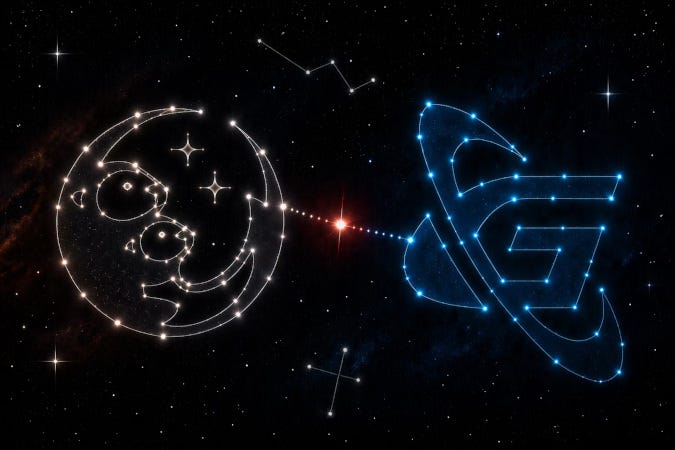
Starfish Space has selected Gilmour Space Technologies as the docking partner for its Otter Pup 2 on-orbit demonstration mission, targeting a docking attempt in the coming months.
Otter Pup 2 launched in June 2025 to demonstrate rendezvous, proximity operations, and docking technologies in low Earth orbit. Following a series of successful rendezvous tests, Starfish Space chose the Gold Coast, Australia-based company for the next phase of the program.
The mission will have Otter Pup 2 perform rendezvous and proximity operations with a Gilmour Space ElaraSat M-M-S-1 satellite ahead of the planned docking attempt. The collaboration gives the Gilmour Space operations teams flight heritage on proximity and docking procedures.
-0-

Axiom Space and Prada have unveiled the inner cooling and ventilation layer of the next-generation lunar spacesuit for NASA astronauts.
The garment, called the Liquid Cooling and Ventilation Garment, or L-C-V-G, is engineered as the innermost layer of the Axiom Extravehicular Mobility Unit, known as the AxEMU. It is designed to keep astronauts thermally regulated and breathing during spacewalks of up to eight hours on the lunar surface.
Axiom Space holds the NASA contract to develop the AxEMU for the Artemis program. The suit is slated for use on Artemis IV, which would mark the first crewed lunar landing since Apollo 17.
The next articles are previews to some of the content that is available to paid subscribers to The Journal of Space commerce. Become a paid subscriber to get the full story.
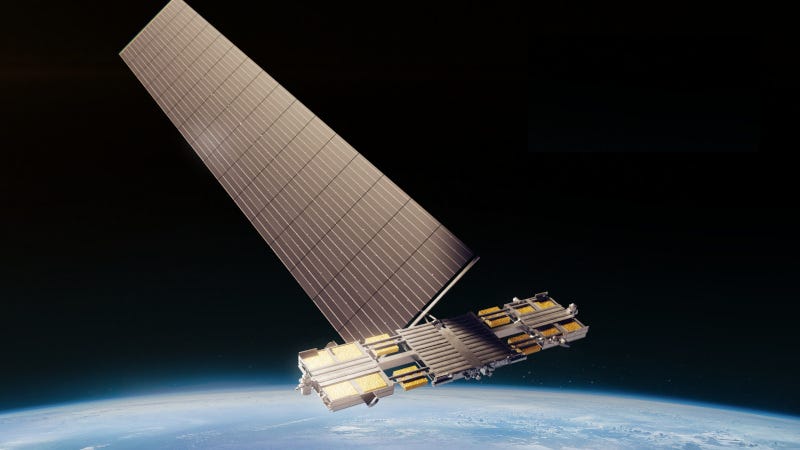
The first Starship-class orbital data center platform has a name, a delivery date, and a power architecture. The sub-tier supply chain it requires doesn’t yet exist at that scale. (Paywall)
Muon Space recently unveiled Condor-Ultra ... a Starship-class spacecraft designed for data-center-class compute, with a 20-kilowatt initial power architecture scaling to 100 kilowatts in future variants. It integrates the NVIDIA Space-1 Vera Rubin Module, a purpose-built A-I inference platform Muon Space says delivers up to 25 times the compute performance of an H-100 GPU for orbital workloads. The first pathfinder delivery is targeted for 2028.
Three supply problems define the near-term window, starting with power generation: Spectrolab and SolAero supply the majority of radiation-tolerant triple-junction solar cells sold in the United States. Golden Dome constellation programs are competing for the same production lines, and a capacity crunch could push program schedules back 12 to 18 months. Then, there’s thermal management: at 100 kilowatts of waste heat, passive radiators can’t do the job, that’s a vacuum physics constraint. No supplier currently offers a complete integrated active thermal control system at that power level. Meanwhile, NVIDIA hasn’t publicly disclosed the Vera Rubin Module’s radiation tolerance specification. Any program committing to a 2028 delivery will need to make a processor sourcing decision within the next 12 months or fall back to currently qualified hardware with significant performance limitations.
The F-A-A’s June 2026 test flight approval for SpaceX’s Starfall in-orbit manufacturing vehicle is the regulatory triggering event. It establishes that a large-format Starship-class payload with computing functions can move through regulatory review, a precedent that didn’t exist twelve months ago.
-0-
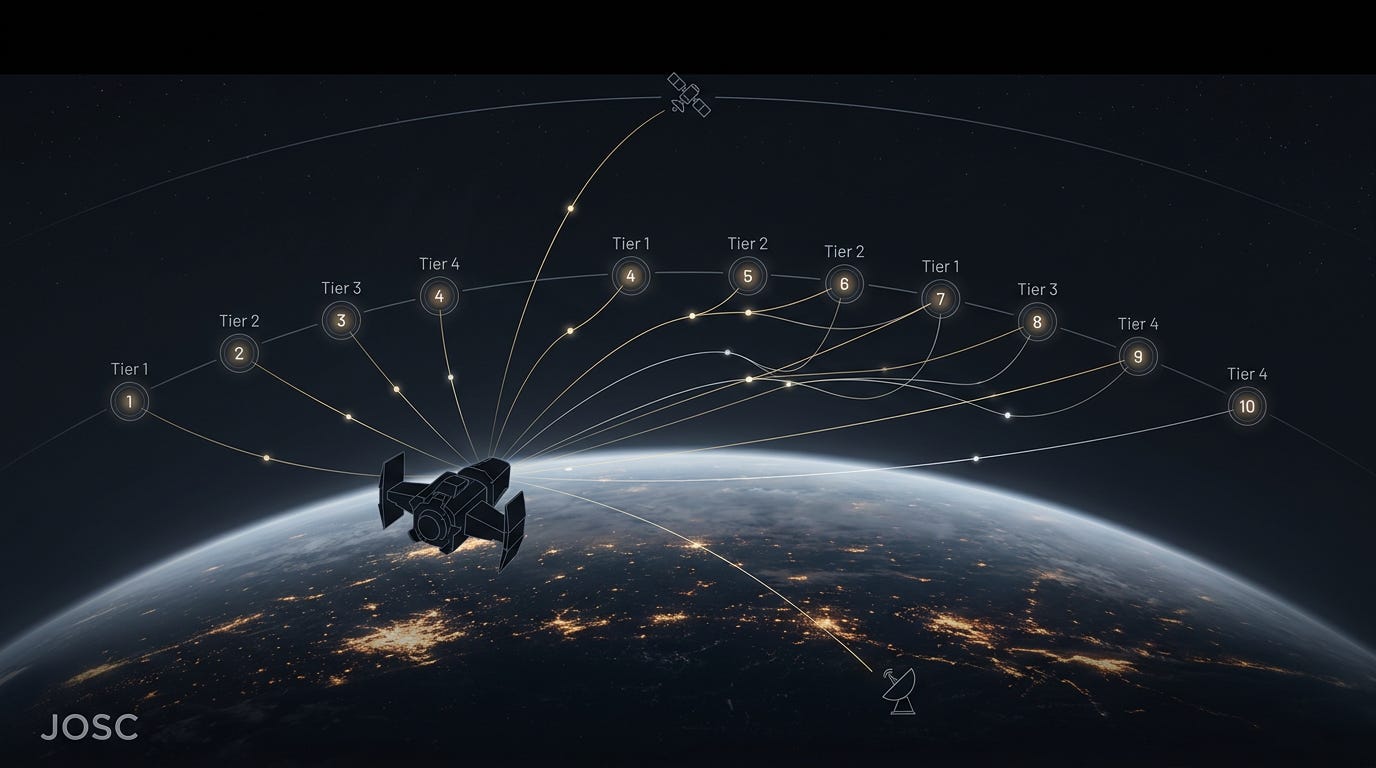
Space Systems Command has awarded 12 “Other Transaction Authority” agreements worth a combined $3.2 billion for space-based interceptor prototype development under Golden Dome. Reading the vendor list as a capability map tells supply chain managers where the gaps are. (Paywall)
The 12 companies span four tiers. Lockheed Martin, Northrop Grumman, RTX, General Dynamics, and Booz Allen Hamilton are the traditional primes, the systems integrators the program needs for hardware manufacturing at scale. RTX has confirmed it’s working with Rocket Lab as a subcontractor, the first visible sub-tier teaming relationship to surface publicly.
Anduril’s inclusion signals that Space Systems Command views autonomous intercept decision architecture, not just interceptor hardware, as a core prototype requirement. Sci-Tec and Quindar are the tier that procurement officers shouldn’t overlook. Both are specialists in satellite ground systems operations and orbital analytics. Their selection signals that command, control, and ground segment capability will be evaluated at the prototype stage, it won’t be deferred to a later program of record.
SpaceX, True Anomaly, GITAI USA, and Turion Space form the fourth tier, and the most structurally significant one. True Anomaly focuses on autonomous orbital operations. GITAI develops robotic systems for in-space assembly. Turion focuses on orbital mobility. Together, they describe an interceptor design space the established defense industrial base can’t supply without commercial partnerships, and a supply chain that doesn’t yet exist at production scale.
One more number matters here. In late May 2026, Space Force awarded a separate $4.16 billion contract for a satellite constellation to track and target airborne threats globally. Together, the interceptor and tracking layer awards describe a complete kill chain being built simultaneously through the OTA mechanism. When two separate vendor sets are developing tightly coupled layers under separate agreements, the interface control documents that bridge them become the critical path item no single vendor owns, and the highest-priority near-term entry point for data link and software-defined radio vendors.
-0-
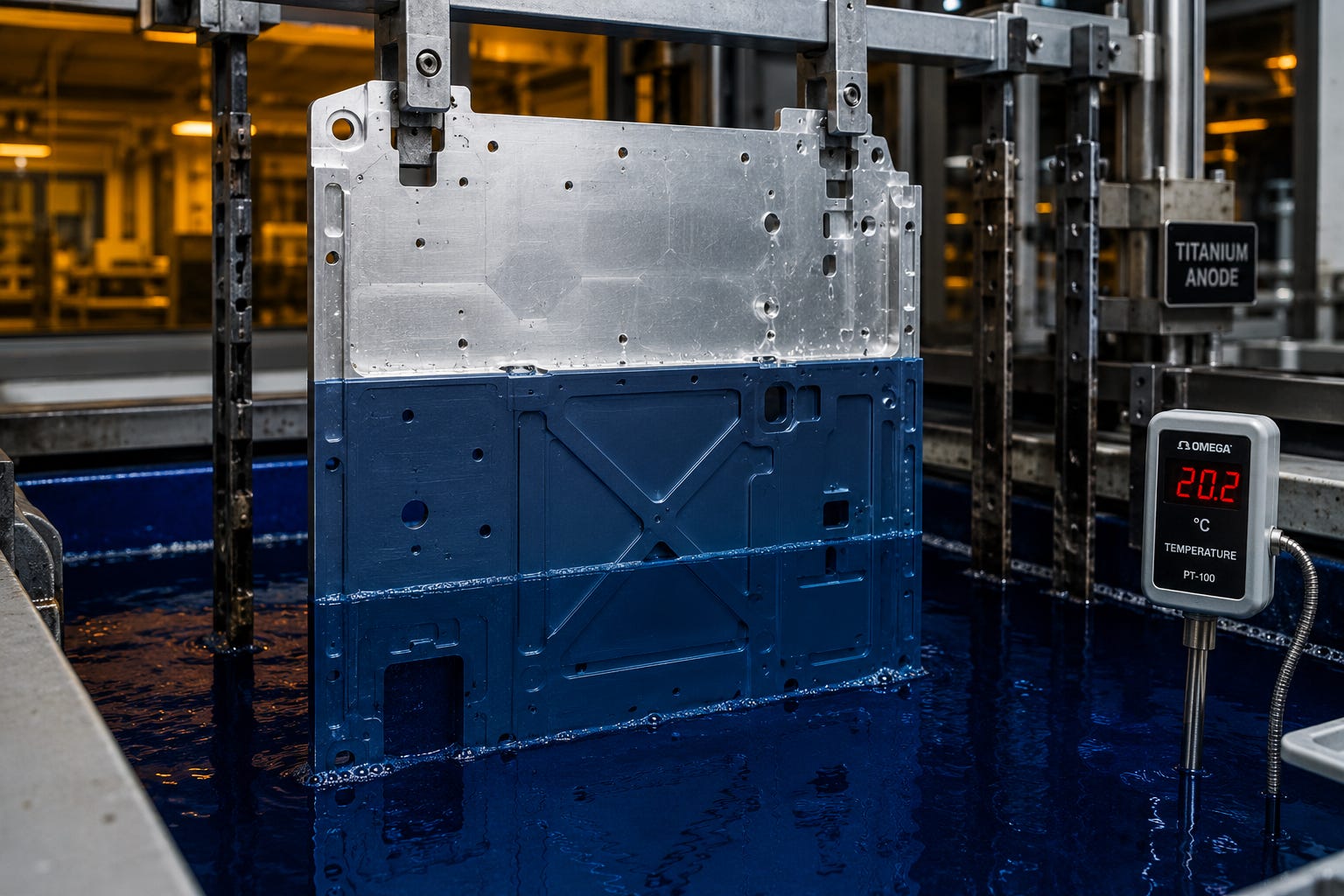
Surface treatment vendors, the facilities that apply coatings, anodizing, and corrosion-resistant finishes to flight hardware, are one of the least visible and most concentrated risks in the current space hardware supply chain. The bottleneck isn’t the technology. It’s the certification regime. (Paywall)
Three overlapping qualification frameworks govern the work simultaneously: military process specifications, NASA process approvals, and NADCAP third-party accreditation. Maintaining all three isn’t optional, a lapse in any one can trigger a re-qualification process lasting months and effectively sideline a vendor for new program work.
The vendor landscape that results is thin. In electroless nickel plating, program managers sourcing a replacement vendor mid-program routinely find the qualified list narrows to one or two names when all requirements apply simultaneously. Re-qualification typically takes 90 to 180 days. In chemical conversion coatings, which is the highest-volume category for aluminum structures, the subset of vendors holding both commercial satellite and DoD classification-sensitive approvals is materially smaller than it appears.
Two forces are compressing that capacity further right now. EPA regulatory pressure on hexavalent (Hex-uh-VAY-lent) chromium has pushed some qualified vendors out of the market entirely, they won’t invest in chemistry reformulation and re-qualification at the volumes they handle. And the current Golden Dome and commercial constellation production surge is driving demand that post-processing facilities can’t quickly scale to meet. Unlike fabricated components, post-processing capacity is constrained by facility square footage, chemical bath volume, and environmental permits. It can’t be doubled on short notice.
Programs that map their post-processing dependencies now, before production orders arrive, can still negotiate long-term capacity agreements with qualified vendors. Programs that wait won’t have that option.
-0-

Finally ... the European Council circulated a compromise text of the EU Space Act in May, advancing it toward trilogue negotiations with the European Parliament. Every U.S. space company seeking European revenue will need to make a compliance decision before this regulation enters into force. (Paywall)
The Council’s text narrowed the jurisdictional scope from the Commission’s original proposal, tightening the trigger to operators that launch from EU territory, operate satellites under a member state’s ITU filing, or provide regulated services through an EU-established legal entity. That narrowing helps U.S. constellation operators structured to serve Europe through non-EU subsidiaries, but it’s not a green light.
The most commercially consequential provision is Article 34, which governs third-country market access. U.S. operators have three pathways: establish an EU legal entity; apply for individual third-country authorization from a member state authority; or rely on a bilateral equivalence arrangement between the EU and the United States. Most U.S. operators would prefer the bilateral route, as it would allow a company already authorized under FAA or FCC frameworks to carry EU market access without duplicating the full compliance stack. But there’s no U.S.-EU bilateral space authorization agreement currently in force, and there’s no firm timeline for one to be established. The first formal trilogue sessions are expected later this year.
The Council text also adds a new in-orbit operations obligation that wasn’t in the Commission’s original proposal. Operators of maneuverable satellites in orbital shells where EU operators also fly must register those maneuver capabilities with the relevant EU supervisory authority. That’s a new reporting requirement for U.S. mega-constellation operators that doesn’t exist in current domestic regulation.
The EU is the largest collective government customer base for satellite services outside the United States. Operators with EU authorization won’t just be in compliance, they’ll have a procurement advantage over competitors that wait. The time to begin scoping the compliance pathway is now, before the trilogue locks the final architecture.
You Might have Missed
AFRL Partners With AI Startup to Diagnose Satellite Power Failures
Three More BlueBird Satellites Set for June 17 Falcon 9 Launch from Cape Canaveral
Elon City, Mars (Paywall)
Three Bets on the Moon (Paywall)


