

Golden Dome’s 12-Vendor SBI Blueprint
What the OTA Structure Tells Every Procurement Officer Watching

What This Means.
The Space Force’s decision to award 12 simultaneous Other Transaction Authority (OTA) agreements worth up to a combined $3.2 billion for space-based interceptor (SBI) prototypes is not simply a procurement action. It is a structural signal about how the Department of Defense (DoD) intends to build space-based missile defense for the next decade. The vendor mix, ranging from Lockheed Martin to a company called Turion Space Corp, tells procurement officers and business development professionals exactly which capabilities DoD believes it cannot source through legacy Federal Acquisition Regulation (FAR) channels alone. Program offices with acquisition responsibility in adjacent constellations, sensing layers, and ground systems should read the 12-vendor list as a demand map, not a press release.
The Signal
When Space Systems Command (SSC) announced in late 2025 and early 2026 that it had awarded OTA prototype agreements to 12 companies for SBI development under the Golden Dome architecture, the number that traveled furthest was $3.2 billion. That figure is accurate, but it obscures something more instructive: the structure of the award tells a more specific story than the dollar amount.
OTA agreements under 10 U.S.C. § 4022 are not contracts in the traditional sense. They are not subject to the standard FAR and Defense Federal Acquisition Regulation Supplement (DFARS) procurement requirements. They can be awarded faster, structured more flexibly, and extended to companies that would be screened out by standard contractor qualification processes. The decision to use OTA at this scale, for a program this visible, is itself a procurement signal.
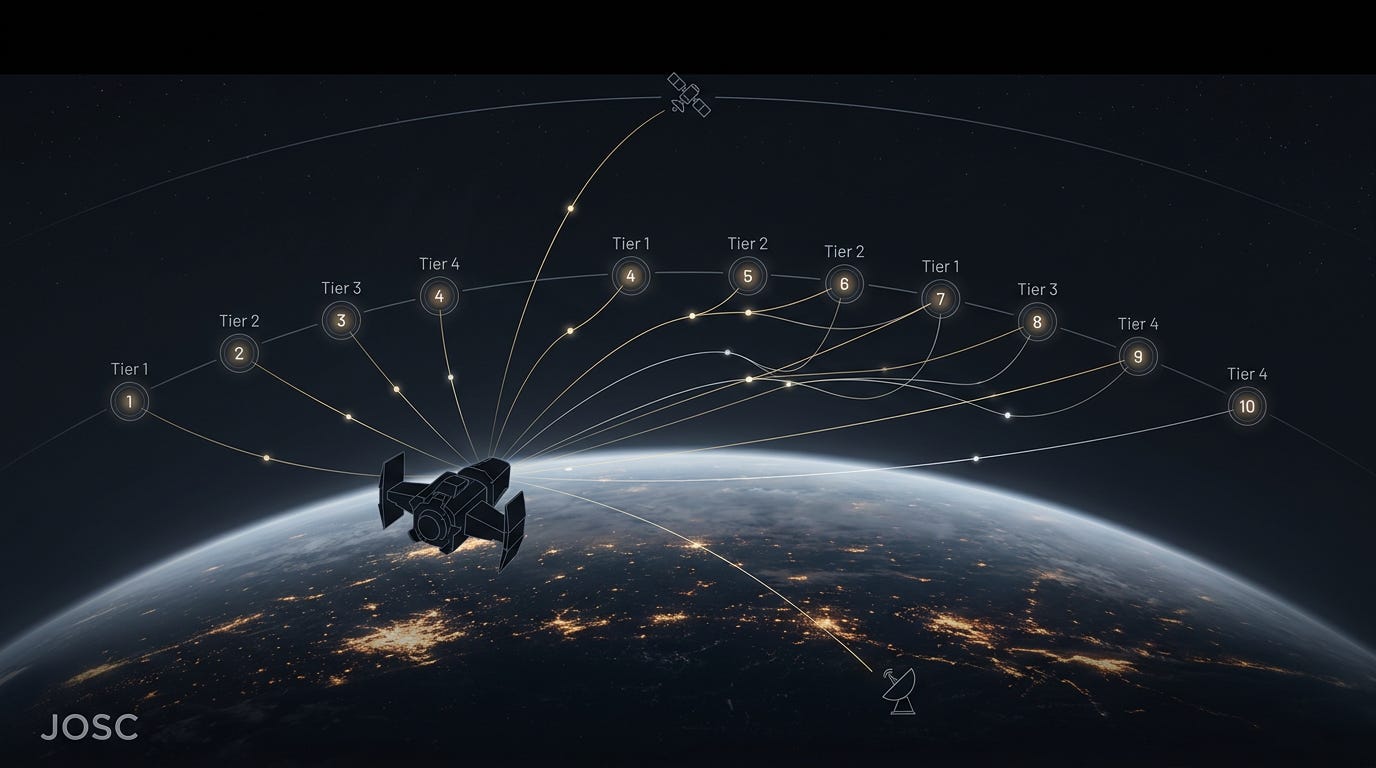
And the 12 companies SSC selected signal something more specific still. The awardees include Anduril Industries, Booz Allen Hamilton, General Dynamics, GITAI USA Inc., Lockheed Martin, Northrop Grumman, Quindar Inc., RTX (formerly Raytheon Technologies), Sci-Tec Inc., SpaceX, True Anomaly Inc., and Turion Space Corp. That list spans four tiers of the defense industrial base simultaneously: legacy primes, defense-adjacent technology companies, mission-specific software and analytics firms, and commercial space companies that did not exist as defense vendors five years ago.
That combination appears deliberate.
What the OTA Structure Actually Reveals
Other Transaction Authority has been used in defense acquisition for decades, but its application in space programs has accelerated sharply since 2020. The SBI awards represent one of the largest single OTA actions in Space Force history by combined ceiling value, based on publicly available Space Force announcements and Class 2 trade reporting; no consolidated historical enumeration of Space Force OTA actions by ceiling value has been published in Class 1 sources as of the research cutoff date.
The statutory rationale for OTA use is competition and speed, but procurement officers reading these awards should focus on a third reason: qualification. The FAR system’s contractor qualification requirements, particularly those tied to cost accounting standards and certified business systems, create meaningful barriers for commercial technology companies. A company like Turion Space Corp or True Anomaly Inc. operates primarily in the commercial market and may carry on its balance sheet neither the overhead structure nor the compliance infrastructure that a traditional cost-type contract requires.
OTA removes that barrier. It allows DoD to prototype with vendors who would otherwise require years of qualification investment before they could compete for a traditional program of record. The 12-company spread strongly suggests that SSC’s acquisition team identified specific technical capabilities, likely including autonomous rendezvous and proximity operations, commercial orbital logistics, and novel interceptor form factors, that could not be reliably sourced through a traditional Request for Proposal (RFP) process without narrowing the competitive field to only the established primes.
The implication for procurement officers watching from adjacent programs is direct: if you manage acquisition for a related sensing layer, a ground-based command architecture, or a logistics and servicing function that the SBI constellation will depend on, OTA is now the expected vehicle. Program offices that have not updated their acquisition strategies to include OTA-capable vendor identification will face structural disadvantage when follow-on requirements emerge.
Mapping the 12-Vendor Mix: What Each Tier Signals
Reading the vendor list as a capability map rather than a roster produces a cleaner picture of what SSC believes it needs and where it believes supply is constrained.
Tier One: Established Defense Primes and Mission Systems Architects. Lockheed Martin, Northrop Grumman, RTX, and General Dynamics represent the traditional prime contractor base for hardware integration and manufacturing at scale. Their inclusion signals that SSC is not trying to replace the established industrial base for SBI development. It is augmenting it. The primes bring proven systems integration capability, existing classified facility infrastructure, and the manufacturing scale that prototype-to-production transitions require. RTX’s public confirmation that it is working with Rocket Lab as a subcontractor to supply launch services or components, the specific capability role has not been described in Class 1 sources as of the research cutoff date, is the first visible indication of how sub-tier teaming is forming beneath the prime layer. Booz Allen Hamilton also falls within this first tier, though its likely role is in mission systems engineering, analytics, and program management rather than interceptor hardware production; procurement officers reading the vendor list as a demand map should treat Booz Allen as a mission systems architecture signal, not a manufacturing one.
"The next section maps the three remaining vendor tiers, including the commercial space operators whose selection signals an interceptor design space the established defense industrial base cannot supply alone. It also addresses the interface control document governance gap between the interceptor and tracking layers, the sub-tier teaming window closing in real time beneath the 12 awardees, and the reconciliation funding risk that every program office planning production-scale investment needs to understand before committing capital. Paid subscribers receive the full vendor-tier analysis, the five specific decision actions, and every forthcoming Golden Dome supply chain brief as the program moves from prototype to production."
