


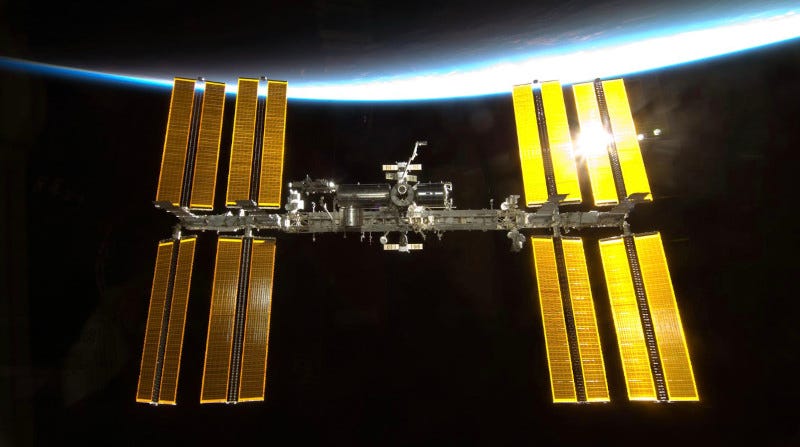
In what appears to be a major change in direction, a NASA spokesperson said the agency will be pulling back from the CLD Core Module approach to developing a replacement for the International Space Station.
Details are still thin, but NASA spokesperson Bethany Stevens posted recently on X that the agency was going to re-think the strategy.
“In the spirit of learning from past programmatic challenges and ensuring a responsible transition from the International Space Station, NASA evaluated both the current commercial space station approach and alternative pathways,” the post on X said.
“Industry has provided extensive feedback making the case for a sustainable commercial market in which NASA is one customer among many, along with assurances regarding available transportation capabilities. The industry position will now shape the path forward as NASA proceeds with the original commercial strategy.
“Over the coming weeks, NASA will work with stakeholders and industry to refine flexible requirements and acquisition plans, with a draft RFP expected later this month.”
While NASA has informally reversed its proposed overhaul of the CLD program, the change has not yet been reflected in acquisition actions, with the Phase 2 contract still on hold and no RFP issued.
This is a developing story, and we will bring you more details as they become available. It also fundamentally changes information we published in several articles this week that were researched prior to the shift. We apologize for the error.
-0-
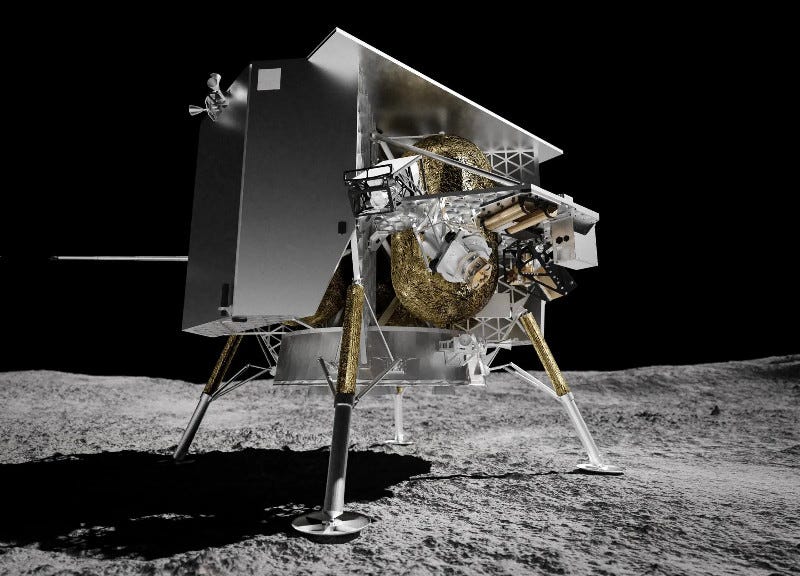
Voyager Technologies has signed an agreement to acquire Pittsburgh-based Astrobotic Technology for up to approximately $300 million in a combination of cash and stock, including contingent consideration.
The deal joins a defense technology and space solutions company with a commercial lunar delivery operation that Astrobotic has built over nearly two decades. Astrobotic operates from facilities in Pittsburgh and Mojave, California, and holds contracts under NASA’s Commercial Lunar Payload Services program. The combined portfolio spans mission management, communications, propulsion, surface delivery via the Peregrine and Griffin landers, surface power through LunaGrid, and habitation through Max Space. The transaction requires customary regulatory approvals and is expected to close by early July 2026.
-0-
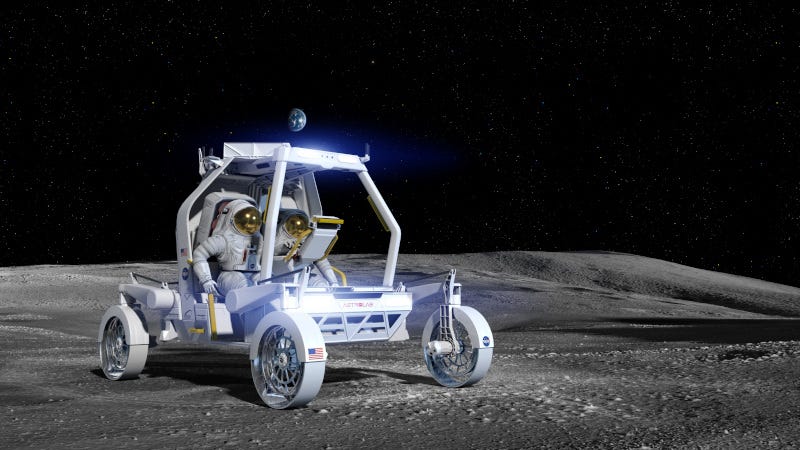
NASA has awarded contracts to two companies to build and deliver crewed lunar rovers to the Moon’s south pole by 2028.
Venturi Astrolab received a $219 million task order, and Lunar Outpost received $220 million — both under Phase 1 High Achievability Mission task orders of the Lunar Terrain Vehicle Services contract. Astrolab’s entry, the Crewed Lunar Vehicle-1, is adapted from the company’s FLEX rover architecture. Lunar Outpost delivers the Pegasus rover, a lighter evolution of its Eagle platform built specifically to meet NASA’s updated requirements. Both rovers reach the lunar surface through the Commercial Lunar Payload Services initiative.
-0-

Apogee has been awarded a five-year, $103.6 million task order to provide positioning, navigation, and timing — or PNT — contractor support services for the Department of War.
The contract targets modernization of Global Positioning System capabilities essential to U.S. military operations, allied forces, and critical infrastructure worldwide. Under the agreement, Apogee will support modernization, acquisition, and sustainment planning for GPS-based technologies. The award comes as the Department of War refines its GPS acquisition strategy with an emphasis on delivering capabilities more rapidly to operational users.
The F-C-C made two significant moves in last month, and together they set a procurement clock that supply chain leaders may not yet recognize is running. [Paywall]
The first was FCC Order 26-26, released May 1st. The order eliminated mandatory Equivalent Power Flux Density limits — constraints that had governed non-geostationary orbit satellite operators since the late 1990s. In their place, the FCC established voluntary coordination agreements between N-G-S-O and geostationary operators. The Commission estimated the shift delivers up to seven times more usable spectrum capacity and more than $2 billion in economic benefits — without a single additional launch.
Twelve days later, the FCC approved SpaceX’s acquisition of approximately 65 megahertz of mid-band spectrum from EchoStar Corporation — AWS-4, AWS H-Block, and unpaired AWS-3 licenses — in a $17 billion transaction. That spectrum underpins SpaceX’s next-generation Direct-to-Device network. Final consummation is expected by November 30, 2027, with interim buildout milestones spanning nine years.
The FCC also granted AST SpaceMobile commercial authorization in April 2026 to deploy 248 satellites providing Supplemental Coverage from Space — SCS — using low-band 700 and 800 MHz spectrum in coordination with Verizon, A-T-&-T, and FirstNet. Half that constellation — 124 satellites — must be in orbit by August 2030.
AT&T, T-Mobile, and Verizon have since announced a joint venture to build a technology-neutral satellite D2D platform targeting unserved and underserved areas. Those carriers are not simply customers. They are setting the technical interface standards every hardware supplier will need to meet.
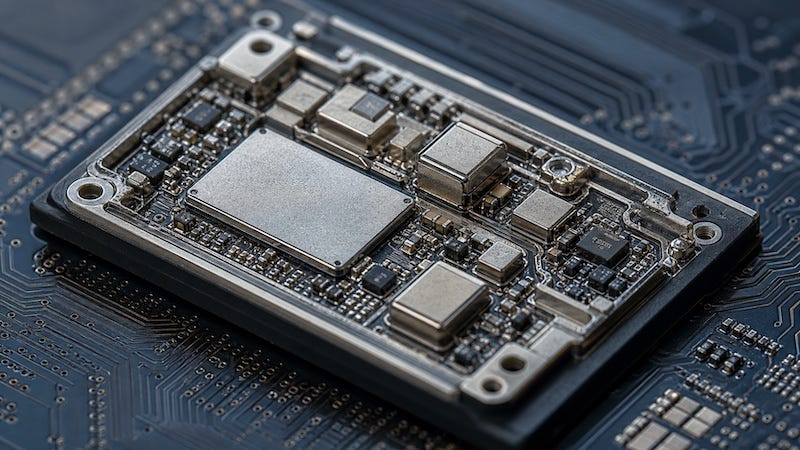
The supply chain pressure point is certification. D2D services at commercial scale require chipsets, modems, and radio frequency front-end components that do not yet exist in sufficient commercial volume. The FCC issued a one-year waiver allowing a broader range of end-user devices to connect to SCS services while equipment certification requirements are finalized. That waiver has a hard clock. Procurement programs that wait for an extension rather than plan to the stated deadline are carrying schedule exposure they do not need.
-0-

The United States Space Force’s Future Operating Environment 2040 report places supply chain disruption inside its darkest operational scenario — not as a footnote, but as a named gray-zone instrument alongside jamming, spoofing, and cyber intrusion. [Paywall]
The FOE’s “Dark Horizons” scenario describes a 2040 environment of continuous, hard-to-attribute conflict below the level of declared war. Within that environment, the document explicitly identifies “targeted micro-supply chain disruptions framed as product recalls” as a tool China could use to gradually weaken adversary capability while staying below the threshold of open conflict. The core of the tactic is the disguise: a supply disruption that arrives as a quality issue, a safety notice, or a routine recall — and routes through commercial processes rather than military channels.
The FOE cites Russia’s Sfera (sf-ER-ah) constellation as a concrete reference point. That program was cut from 600 to 360 satellites due to component shortages — demonstrating that even a major spacefaring nation can be bottlenecked by fragility in key inputs.
The document identifies three supply chain categories with elevated exposure: radiation-hardened microelectronics, rare-earth magnets, and ammonium perchlorate. Program managers and executives at commercial space companies and defense primes relying on single-source suppliers in any of those categories now have the Space Force’s own risk framework to reference when making the case internally for supply chain diversification.
-0-
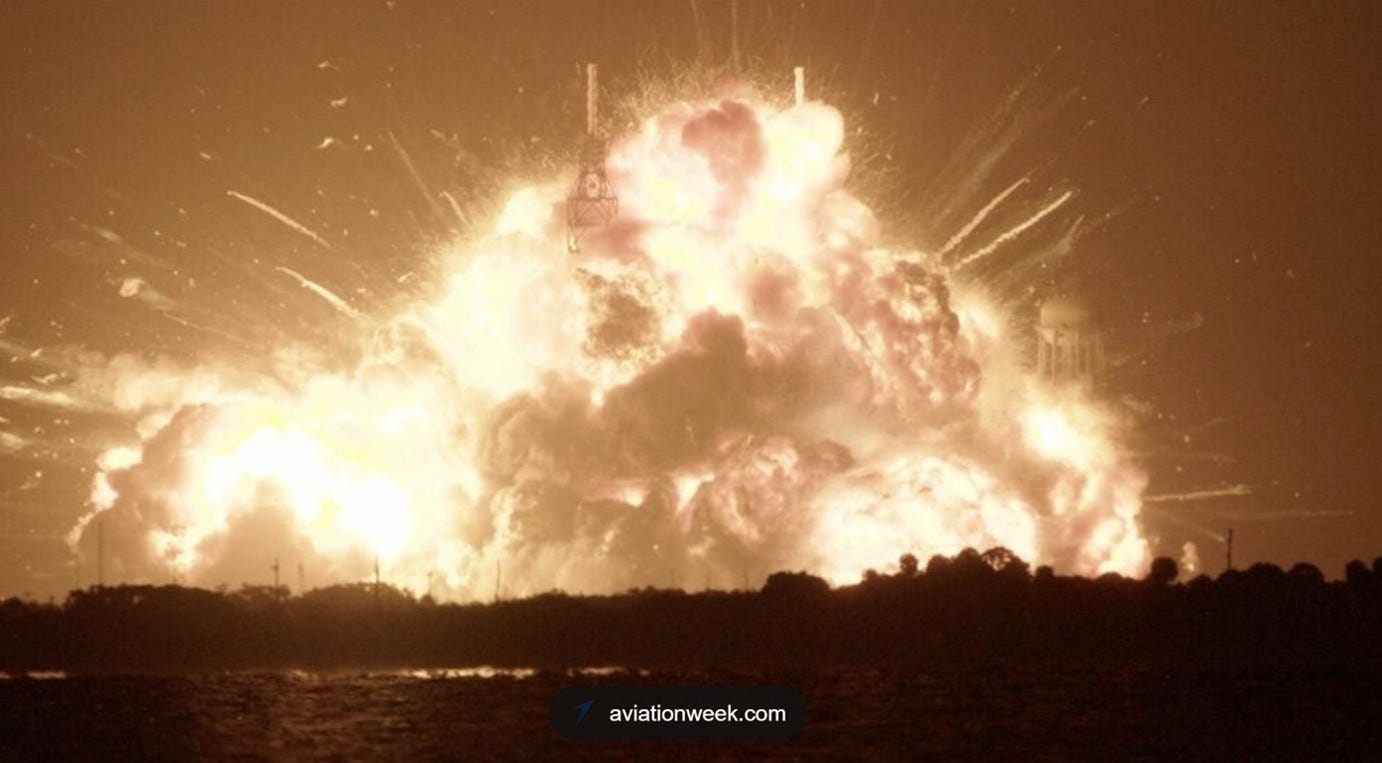
A recent Blue Origin New Glenn launch anomaly and ongoing Starship booster incidents have put a spotlight on something the space industry has been slow to treat as a core competency: crisis communications. [Paywall]
Within minutes of each event, video clips flooded social media. Analysts speculated. Investors watched. Competitors observed. And customers began asking questions behind closed doors. That is the reality of today’s space economy. A launch anomaly is no longer simply an engineering event. It’s a communications event with potential impacts on a company’s reputation and brand.
Michael Daily, President of NewSpace Brand Builders and Ex Terra Media contributor, argues that most space supply chain firms still treat crisis communications as a contingency plan sitting in a binder — and that approach belongs to a previous era. In today’s commercial space environment, Daily contends that crisis communications is brand strategy. Launch providers, propulsion firms, avionics manufacturers, software developers, component suppliers, and systems integrators all operate inside a tightly connected ecosystem. When a high-profile failure occurs, the ripple effects move rapidly across the entire network.
Daily’s core argument: organizations that have inte grated crisis preparation into their broader brand strategy project leadership during turbulence, while those that haven’t project uncertainty. Silence becomes noticeable. Contradictory messaging damages confidence. The companies that handle crises best rarely improvise — they prepare, build communications protocols, train executives, and align legal, engineering, operations, and communications teams before the first emergency ever occurs.
For supply chain companies, that preparation shifts from optional overhead to operational resilience. It is competitive positioning. And in the modern space industry, it’s trust preservation.
-0-

Amazon’s $11.57 billion acquisition of Globalstar, announced in April 2026, marks a structural turning point for the commercial space industry — and the implications run well beyond two companies striking a deal. [Paywall]
Amazon is not a space investor. It’s a logistics, retail, and cloud infrastructure company that has concluded satellite connectivity is too strategically important to source from a competitor. The buyer acquired Globalstar’s licensed spectrum bands and global network infrastructure. Based on the stated strategic rationale and deal structure, spectrum scarcity — not operating cash flow — appears to be the primary valuation driver. The $11.57 billion price represents a significant premium to Globalstar’s pre-announcement market capitalization.
Three other capital events in the past 60 days fill out the picture. Vast Space closed a $250 million funding round led by Andreessen Horowitz at a reported $5.5 billion valuation. K2 Space raised $120 million to advance large-format satellite manufacturing. And SpaceX filed a confidential S-1 with the Securities and Exchange Commission, with trade press reporting a target valuation ranging from about $1.75 trillion to possibly in excess of $2 trillion — though the company has not yet disclosed final pricing in its SEC filing.
What the data shows, taken together, is two stories running side by side. Early-stage capital is still flowing into launch and orbital infrastructure. Consolidation-stage capital is flowing to companies with spectrum assets, existing customer bases, and near-term revenue visibility. The asset profile of the capital magnet has shifted.
For supply chain executives and business development professionals, the strategic read is this: when a public SpaceX creates a liquid benchmark that institutional fund managers can hold directly, capital that currently sits in private space companies will have a new home. Sub-scale operators without a clear path to strategic relevance face a narrowing window to negotiate from strength. The question is no longer whether consolidation will reshape the sector — which companies get acquired on their own terms, and which get absorbed at distressed prices.
Worth a Second Look
Earth Observation Contract Signals Shift to Persistent Intelligence Delivery
Compact Deployable Optical Ground Station Completes Satellite Laser Link Trials
Multi-Year Contract Renewal Targets Automation of Space Domain Awareness Imagery
NASA’s Ignition Framework: Changing Horses Mid-Stream? [Paywall]
The Consolidation Signal [Paywall]


