


HEADLINES
Blue Origin plans to return its New Glenn heavy-lift rocket to flight by the end of this year, following a pad-side anomaly during a hotfire test in late May at Launch Complex 36 in Florida.
Pad cleanup and debris removal are complete, and reconstruction is underway. Blue Origin says it has finished the first two phases of a five-phase recovery plan and is now working through design and repair work tied to the new operations concept.
-0-
Axiom Space has shifted its legal headquarters from Delaware to Texas, aligning its corporate registration with its operational base in Houston.
The move brings Axiom’s legal home in line with Houston Spaceport at Ellington Airport, where the company has been based since its founding in 2016. Axiom reports roughly 700 employees, most of them in Texas. Its Houston Assembly Integration and Test Facility will handle final assembly of Axiom Station modules before launch to low Earth orbit.
-0-
NASA has awarded Intuitive Machines a firm-fixed-price contract worth up to approximately $148.3 million to deliver a production-line-qualified Nova-C lunar lander under the agency’s Commercial Lunar Payload Services initiative.
It’s the sixth CLPS task order awarded to the Houston-based company. The contract is structured to qualify Nova-C for serial production, supporting a higher-volume pipeline of lunar deliveries for NASA and commercial customers.
-0-
And FCC Chairman Brendan Carr says the agency is nearing completion of reforms meant to speed up satellite and earth station licensing.
The Space Modernization Order goes before the full Commission for a vote at the July 22 open meeting.
-0-
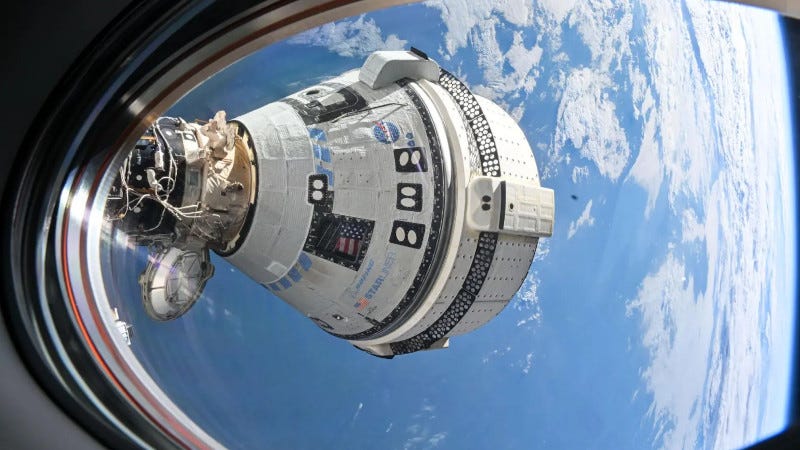
NASA’s Office of Inspector General says the space agency is now operationally dependent on a single company to fly astronauts to the International Space Station, with Boeing’s Starliner capsule unlikely to be certified for crewed flights before 2027. [Paywall]
The audit, released June 30, found Boeing has not resolved helium leaks and thruster failures that have shown up repeatedly in testing. NASA officials had previously targeted fall 2026 for Starliner certification. The inspector general calls that timeline unrealistic, given unresolved technical issues and the fact that Starliner’s next flight will carry cargo, not crew.
Investigators also questioned $127.9 million in milestone payments NASA made to Boeing for a future Starliner flight before the company had completed a single test flight.
NASA has agreed with all six recommendations in the report, including holding further Boeing payments until certification is complete.
SpaceX has flown twelve crewed missions to the station since earning its own certification in 2020. Boeing’s contract, once worth $4.2 billion, has been reduced to $3.7 billion after NASA removed two flights from the agreement last November. The inspector general says NASA will need to buy at least three additional crew flights, from either company, to keep the station staffed through its planned retirement in 2030.
-0-
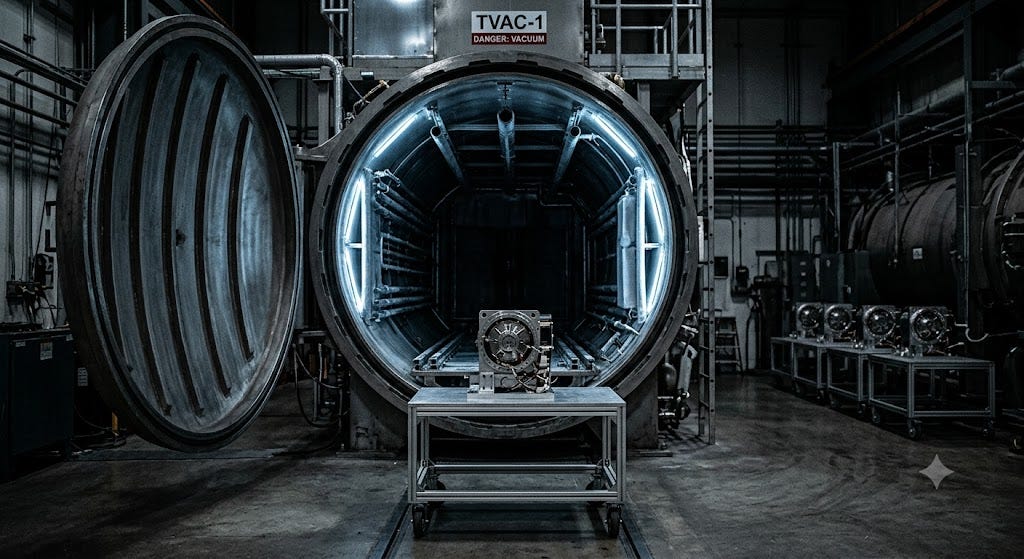
A production bottleneck at a single Colorado supplier is limiting how many satellites the Space Development Agency and commercial constellation operators can get built over the next two years. [Paywall]
Blue Canyon Technologies makes the reaction wheels and star trackers that let small satellites point precisely enough to be useful in orbit. Every unit must pass through thermal vacuum testing before certification, a process that can take more than a week per unit. Industry estimates ... not figures confirmed by the company ... put its annual production ceiling at 400 to 500 units.
Demand from the Space Development Agency’s Tranche satellite programs, along with commercial operators including Planet Labs, Spire Global and HawkEye 360, is now running up against that ceiling. Lead times for reaction wheels and star trackers have stretched from six-to-nine months before 2022, to as long as eighteen months today, according to industry trade reporting.
Blue Canyon is currently owned by RTX Corporation, formerly Raytheon Technologies. But MDA Space recently announced that it has reached an agreement to acquire the company. The effects of that acquisition on the star tracker and reaction wheel supply chain remain to be seen.
-0-
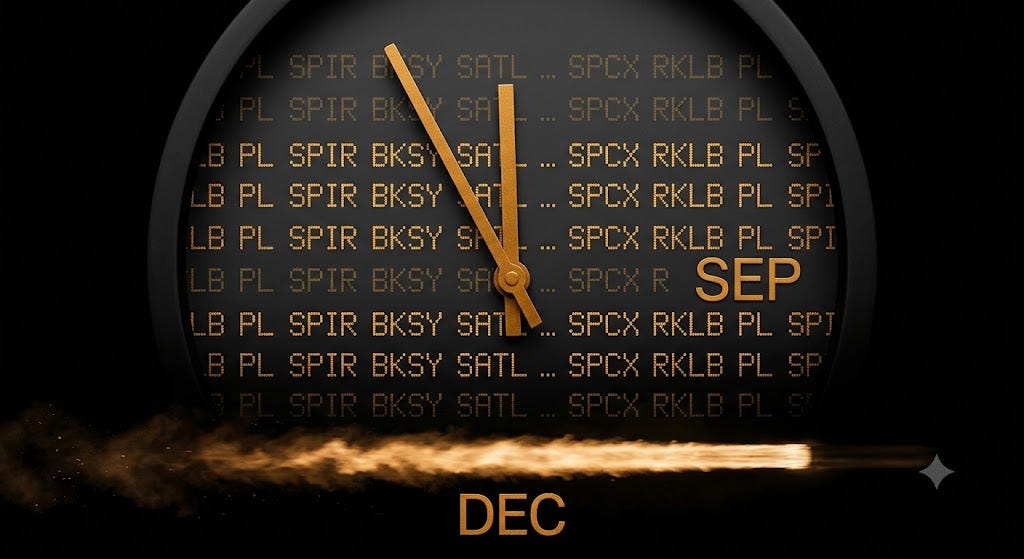
SpaceX shares have climbed more than 40 percent since the company’s initial public offering, and Wall Street is now watching a lockup deadline that could test that gain. [Paywall]
SpaceX priced its IPO at roughly $135 per share, raising more than $10 billion and giving the company a market valuation near $350 billion on its first day of trading. Standard lockup agreements typically bar early investors and employees from selling shares for 90 to 180 days after listing, which would place the first release window in September and a larger one in December.
Analysts note that when lockup periods expire, the added supply of shares can pressure a stock’s price if buyer demand doesn’t keep pace. Smaller space-sector stocks, including Rocket Lab, Planet Labs and BlackSky Technology, often move in tandem with SpaceX because institutional funds hold them together in thematic portfolios.
SpaceX’s exact lockup schedule has not been made public. Analysts point to a few factors that could offset any selling pressure, including index-fund buying if SpaceX is added to a major stock index, or a confirmed commercial Starship mission before the December window.
-0-
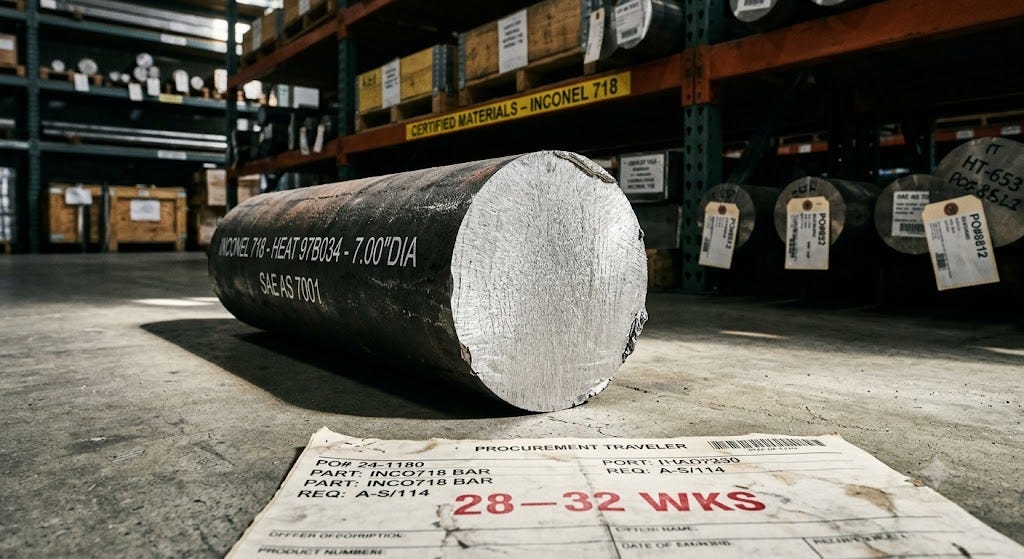
Space manufacturers are now waiting nearly twice as long for a critical rocket-grade metal, and supply chain analysts say the shortage could push back launch schedules already set for 2027. [Paywall]
According to distributer data, Inconel 718, a nickel-chromium alloy used in combustion chambers, turbopumps and fasteners, is now quoting at 28 to 32 weeks for delivery, up from 12 to 16 weeks two years ago. Only a handful of major Western suppliers, including ATI and Special Metals, produce the alloy at scale. Sanctions have effectively removed a major Russian exporter from the market since 2022, and new capacity has not replaced it.
Space programs compete for the same furnace and rolling-mill capacity used by commercial jet engine makers and the oil and gas industry, and space’s comparatively small order volumes put it at a disadvantage in that queue. Qualifying a new supplier or an alternate alloy typically takes 12 to 18 months, longer than many 2026 and 2027 production schedules allow.
Programs across the industry are affected, including United Launch Alliance’s Vulcan Centaur and Blue Origin’s New Glenn. Analysts say companies that pre-position inventory, or pay expedite premiums of 20 to 40 percent, are better positioned to protect their launch dates.
-0-
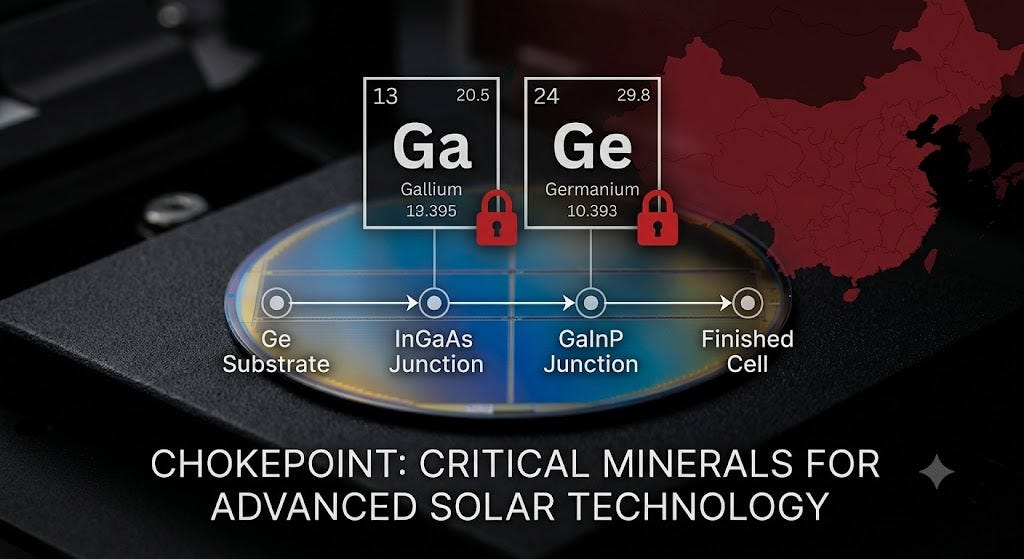
Chinese export controls on two lesser-known elements are working their way into the solar panels and radio equipment aboard American satellites. [Paywall]
China controls roughly 80 percent of the world’s refined gallium and 60 percent of its refined germanium, and Beijing has required export licenses for both since 2023, tightening the rules further in December 2024. Germanium forms the base layer of the triple-junction solar cells used on most satellites, while gallium is a key ingredient in gallium nitride, the material used in high-power radio components for satellite communications.
The U.S. Geological Survey says the United States has no domestic germanium production and imports nearly all of what it uses. Qualifying an alternative supplier for space-grade components typically takes 12 to 24 months under military and civil specifications.
Suppliers including Spectrolab, SolAero and Germany’s Azur Space make most of the West’s space-grade solar cells and are believed to carry exposure to Chinese-origin germanium at the substrate level, though individual company sourcing has not been independently confirmed. The same materials feed defense programs, including Space Development Agency satellite constellations and military communications systems, extending the supply risk beyond the commercial sector.
-0-
Worth a Second Read
K2 Space Plans Seattle-Area Expansion to Support Large Satellite Production
Planet, Isar Aerospace Align on First All-German Satellite
Extending Secure Military Communications Worldwide
Satellite Refueling Demo Aims to Advance Circular Economy in Orbit


