


A German-built Earth observation satellite is slated to launch on a German-built rocket within the next year under a new agreement between Planet Labs Germany and Isar Aerospace.
“Germany has set out an ambitious space agenda. Planet and Isar Aerospace are responding to the moment and delivering a first for the country: both satellite and rocket built in Germany.”
Martin Polak, Planet Labs
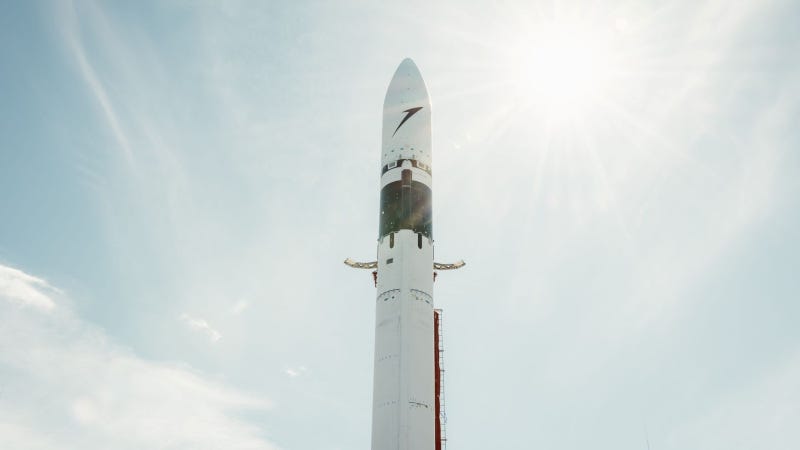
Planet Labs Germany, which operates its European headquarters and Mission Control in Berlin, said Isar Aerospace will carry one of the company’s next-generation high-resolution Pelican satellites on the Spectrum launch vehicle from the Andøya Space launch complex in Norway as early as late 2026. The Pelican spacecraft for the mission will be assembled at Planet’s planned Berlin manufacturing facility, making the payload and launch vehicle both German-built hardware.
“Germany has set out an ambitious space agenda. Planet and Isar Aerospace are responding to the moment and delivering a first for the country: both satellite and rocket built in Germany,” said Martin Polak, Managing Director of Planet Labs Germany. “Most excitingly our joint teams have set an ambitious goal to do this first launch within less than 12 months of agreement – showcasing our agile aerospace approach and supporting rapidly evolving national priorities across security, resilience and civil applications.”
Isar Aerospace will use its Spectrum small launch vehicle for the Pelican mission and follow-on flights for additional Planet satellites. The company is scaling production at a 40,000 square meter factory near Munich, where it plans to build as many as 40 rockets per year. Isar Aerospace said its vertically integrated model spans design, manufacturing, testing and launch services to increase flexibility for commercial and government customers seeking sovereign and responsive access to orbit.
“This collaboration underscores the strength and growing strategic importance of the German and European space ecosystem,” said Stella Guillen, Chief Commercial Officer of Isar Aerospace. “With our unique approach to developing scalable, integrated launch capability, we aim to serve a rapidly growing global demand for access to space for commercial and government missions. Europe now has an unparalleled opportunity to leverage this ecosystem to build resilient space capabilities and unlock its potential for security and economic growth.”
Planet said the agreement is a milestone in its effort to build what it describes as an end-to-end German space ecosystem anchored in Berlin. The company plans to open a manufacturing facility in the city in 2026 to double production capacity for its Pelican fleet, which is designed to provide high-resolution, frequently refreshed imagery for geospatial and AI-enabled analytics. Planet expects to add up to 70 new employees to its current Berlin workforce of about 150 as part of the expansion.
The Pelican mission with Isar Aerospace will be launched from Andøya Space in Norway, using a dedicated Spectrum launch complex operated by the company. While the flight will take place from outside Germany’s borders, both partners emphasized that German-developed satellite and launch technology will underpin the mission, framing it as an early example of sovereign European space capability delivered through cross-border infrastructure.