

NASA’s Single Crew Taxi Problem: OIG Confirms Starliner Slipping to 2027
NASA’s Commercial Crew Supply Chain Faces Single-Provider Risk Through the ISS Transition

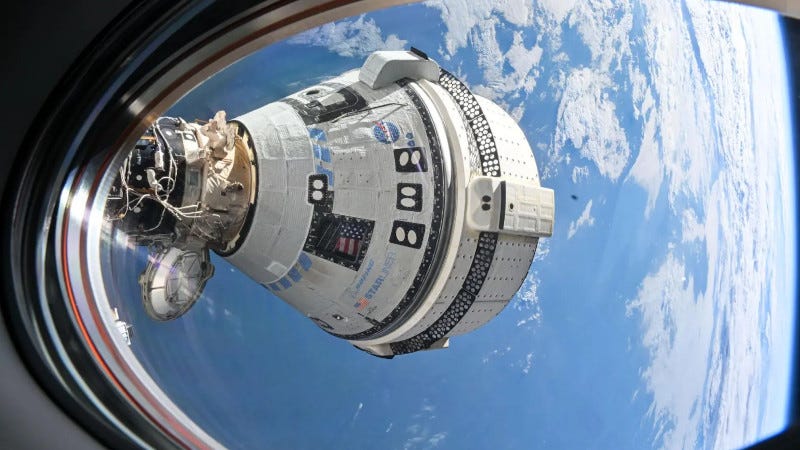
What This Means: A National Aeronautics and Space Administration (NASA) Office of Inspector General (OIG) report released June 30, 2026 confirms what the supply chain community has known for two years: NASA is operationally dependent on a single commercial crew provider through at least 2027, with Boeing’s Starliner certification now expected to slip to 2027 at the earliest. Helium leaks and propulsion failures remain unresolved as of March 2026. For program managers, government buyers, and investors with exposure to the commercial crew supply chain or the downstream low Earth orbit (LEO) station market, the single-provider condition is not a temporary inconvenience. It is the structural reality shaping every procurement, manifest, and capital allocation decision between now and the International Space Station’s (ISS) planned decommission in 2030. Readers managing crew transportation dependencies or commercial LEO exposure should verify their contingency plans reflect a 2027-or-later Starliner certification date, not the fall 2026 target NASA officials had previously cited.
Certification was supposed to happen in 2017. Both SpaceX and Boeing shook hands on that target when NASA awarded the Commercial Crew Transportation Capability (CCtCap) contracts in 2014, SpaceX receiving $2.6 billion and Boeing $4.2 billion to develop competing U.S.-based crew vehicles. The idea was straightforward: two certified providers mean redundancy, competition, and reduced reliance on Russia’s Soyuz.
SpaceX earned its human-rating certification in November 2020. Boeing still has not, as of the date of the OIG report issued June 30, 2026.
Nine years after the original target, the Boeing Starliner sits in an orbit of uncertainty: a crewed flight test in June 2024 classified as a Type A mishap, astronauts Butch Wilmore and Suni Williams stranded on the ISS for 286 days, and the next Starliner flight designated as an uncrewed cargo run with no launch date set. The OIG’s June 30 audit of NASA’s management of the Commercial Crew Program (CCP) lays out the timeline, the costs, and the institutional failures that produced this situation with unusual candor for a government accountability document.
For program managers and investors with commercial crew transportation exposure, the OIG report is not background reading. It is a risk map.
The Signal: What the OIG Actually Found
The audit, conducted from November 2024 through April 2026, covers three core findings that matter for decision-grade purposes.
One: Boeing’s certification will likely slip to 2027. NASA officials had cited fall 2026 as the anticipated certification window for Starliner. The OIG assessed that target as unrealistic given the current status of investigations, the unscheduled Starliner-1 launch, and the sequential certification steps that cannot be completed on an uncrewed cargo flight. Starliner will not receive human-rating certification until NASA and Boeing complete ongoing testing, resolve unresolved technical issues, complete a Certification Review, and fly a crewed Starliner-2 mission. With Starliner-1 carrying no crew, several of those certification boxes cannot be checked. The practical result: certification delays to 2027, leaving a window of perhaps three crewed post-certification flights before ISS decommission in 2030.
Below the paywall: how the OIG’s flight projections, questioned Boeing payments, and NASA workforce losses translate into concrete crew transportation and commercial LEO decision risk through 2030.
