


SPECIAL FOR THE BRAND: SPACE COLUMN
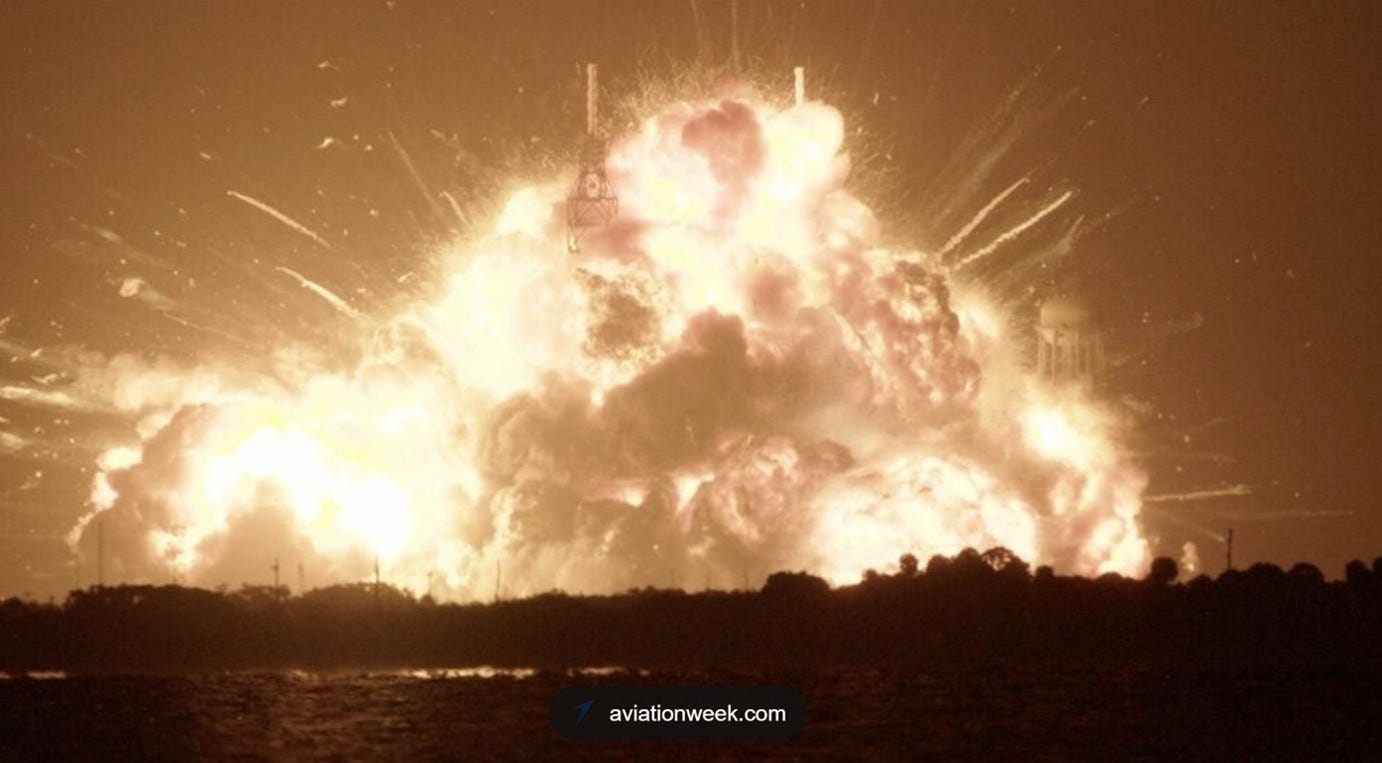
New Glen rocket explosion May 27
The modern space industry loves the word innovation. It celebrates disruption. It rewards speed. It romanticizes risk.
Until something explodes.
Then the conversation changes instantly.
Within minutes of the recent Starship booster issues involving SpaceX and the highly publicized New Glenn launch anomaly connected to Blue Origin, the industry shifted into a familiar cycle. Video clips flooded social media. Commentators rushed online. Analysts speculated. Investors watched closely. Competitors quietly observed. Customers began asking questions behind closed doors.
That is the reality of today’s space economy.
A launch anomaly is no longer simply an engineering event. It is a communications event. A reputation event. A brand event.
And for the companies operating throughout the space supply chain, those moments matter far more than many executives realize.
Most space supply chain firms still think of crisis communications as a public relations contingency plan sitting in a binder somewhere waiting for a bad day. That thinking belongs to a previous era. In today’s hyper-visible commercial space environment, crisis communications is no longer separate from brand strategy.
It is brand strategy.
The reason is simple. Modern space brands are built on trust under pressure.
Launch providers, propulsion firms, avionics manufacturers, software developers, component suppliers, testing facilities, logistics companies, and systems integrators all operate inside a tightly connected ecosystem. When a high-profile failure occurs, the ripple effects move rapidly across the entire network.
Customers begin evaluating supplier reliability.
Investors begin evaluating organizational stability.
Government agencies begin evaluating operational discipline.
The media begins evaluating credibility.
And the public begins forming opinions long before all the facts are known.
That last point matters.
In the space industry, perception now moves faster than technical analysis.
A company may not even be directly connected to a launch anomaly, but if it operates inside the affected supply chain, stakeholders still watch carefully to see how leadership responds. Silence becomes noticeable. Confusion becomes dangerous. Delayed communication creates uncertainty. Contradictory messaging damages confidence.
In contrast, organizations that have integrated crisis preparation into their broader brand strategy project something entirely different.
They project leadership.
That distinction can determine whether a company strengthens stakeholder trust during industry turbulence or quietly loses credibility behind the scenes.
The strongest space industry brands understand something many technical organizations still overlook. During a crisis, people are not only evaluating hardware performance. They are evaluating emotional stability, organizational maturity, and leadership confidence.
They are asking: Can this company manage pressure? Can leadership communicate clearly? Can the organization remain disciplined during uncertainty? Can this supplier still be trusted with mission-critical responsibilities?
Those are branding questions as much as operational ones.
That is why crisis communications planning must now be built directly into the strategic foundation of a space supply chain business.
Not after the incident.
Before it.
The companies that handle crises best rarely improvise. They prepare. They build communications protocols. They conduct scenario exercises. They train executives. They establish media procedures. They align legal, engineering, operations, and communications teams long before the first emergency meeting ever occurs.
That preparation becomes visible immediately when adversity arrives.
In many ways, crisis preparation functions as organizational infrastructure. Customers may never see it during normal operations, but they immediately notice its absence during disruption.
This is especially important inside the space industry where complexity creates constant vulnerability. Funding uncertainty, launch delays, program realignments, cybersecurity threats, supply chain shortages, regulatory pressure, and technical setbacks are no longer occasional disruptions. They are recurring features of the environment.
The companies that survive long term will not necessarily be the organizations that avoid every setback.
They will be the organizations that communicate with credibility while navigating them.
There is also a larger branding lesson emerging from events like Starship and New Glenn. The public often assumes brand reputation is built during moments of success. In reality, reputations are frequently defined during moments of instability.
Anybody can appear confident during a successful launch.
The real test begins when headlines turn negative.
That is when customers watch leadership behavior.
That is when investors evaluate emotional discipline.
That is when employees decide whether they believe in the mission.
And that is when the market determines whether a company is simply another vendor or a trusted long-term industry partner.
The modern space economy operates under a permanent spotlight. Livestream launches, instant commentary, social media analysis, and nonstop digital visibility have changed the rules entirely. Organizations no longer have the luxury of controlling information flow the way industries once did.
The narrative forms immediately.
Which means companies must be prepared immediately.
That preparation requires far more than technical excellence. It requires communications readiness embedded directly into the organization’s identity, leadership culture, and strategic planning process.
For space supply chain companies, this is no longer optional overhead. It is operational resilience. It is stakeholder protection. It is competitive positioning.
Most importantly, it is trust preservation.
Because in the modern space industry, the companies that communicate best during uncertainty often emerge stronger after the smoke clears.
About the Author

Michael Daily is the President of NewSpace Brand Builders, a strategic consultancy dedicated to advancing the branding, marketing, and communications excellence of the global space industry. With an extensive background in brand strategy, public affairs, and community strategy development, Daily established NewSpace Brand Builders to help organizations define their identity, strengthen their market position, and contribute to a sustainable and innovative space ecosystem. You can reach Mike at mike.daily@newspacebb.com or visit https://newspacebrandbuilders.com/
 | A guest post by
|