


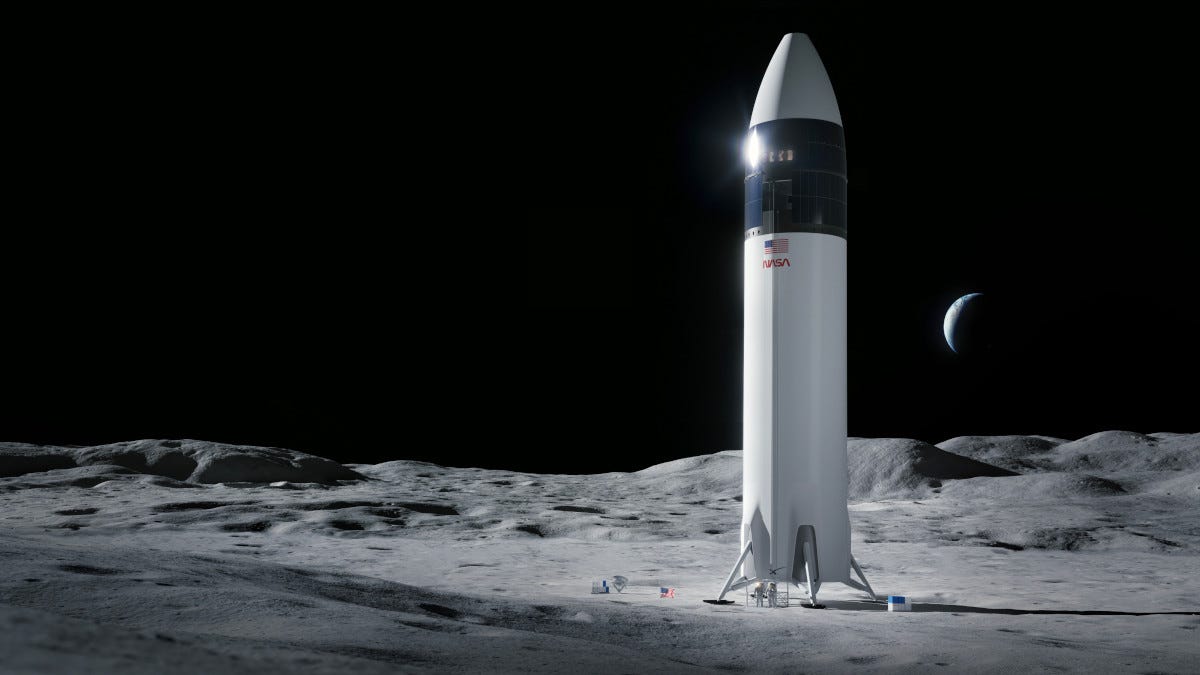
NASA’s own watchdog is raising serious concerns about the agency’s commercial lunar lander programs, and the findings touch everything from cost controls to crew safety.
The agency’s Office of Inspector General has issued audits covering both the Commercial Lunar Payload Services initiative, known as C-L-P-S, and the Human Landing Systems program, or H-L-S, which is developing crewed landers for the Artemis campaign.
On the C-L-P-S side, auditors found that costs had risen by more than 208 million dollars across the portfolio, with average schedule delays reaching at least 14 months per task order. NASA’s original delivery timelines were based on overly optimistic assumptions about the commercial market, assumptions that failed to account for supply chain constraints and technical development challenges. The average time from contract award to launch was running 44 months, compared to the 30-month target NASA originally set.
The firm-fixed-price contracting model NASA uses, which puts financial risk squarely on vendors, created enough pressure that one C-L-P-S contractor went bankrupt. Others continue to operate under financial strain.
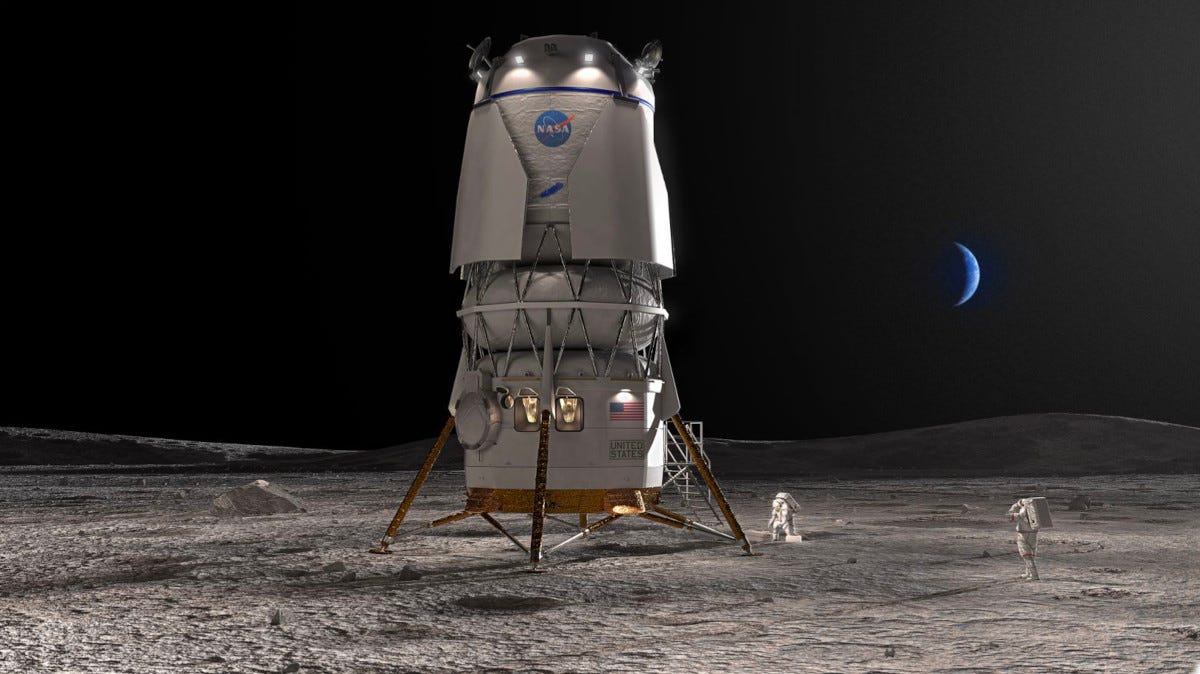
The Human Landing Systems program tells a more nuanced story. Auditors found that contracting costs had been largely controlled, the SpaceX H-L-S contract increased by just six percent, and the Blue Origin contract by less than one percent. But technical and integration hurdles remain, and the crew safety picture is incomplete.
Specifically, auditors found gaps in NASA’s testing posture and said crew survival analyses were not finished. And there is a live disagreement between NASA and SpaceX over whether the company is meeting the requirement for manual astronaut control during lunar descent, a potentially critical safety issue if something goes wrong during final approach.
NASA has confirmed that Artemis Three will include critical on-orbit tests, rendezvous and docking with one or both landers, as a precursor to Artemis Four, which would return humans to the lunar surface for the first time in more than 50 years.
-0-
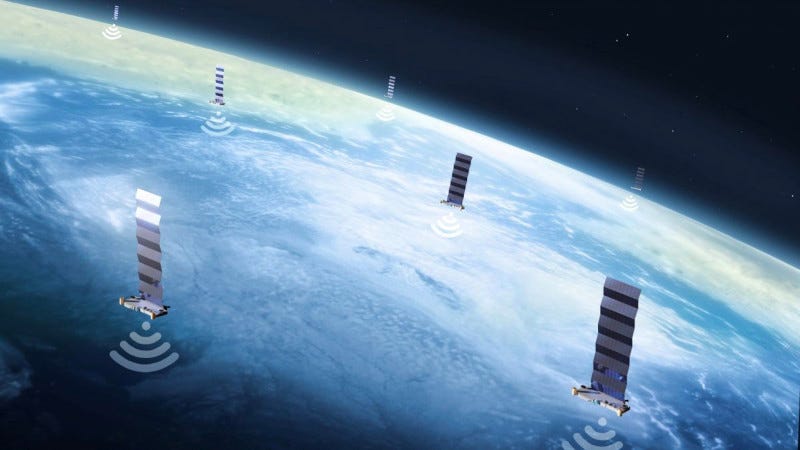
The aerospace industry has raised the bar for satellite operations, releasing what may be the most comprehensive orbital safety document yet published, and the timing is deliberate.
The American Institute of Aeronautics and Astronautics published Version 3-point-0 of its Orbital Safety Best Practices for Satellite Operators this week. The document carries signatures from Amazon, Eutelsat, Iridium Communications, and SpaceX, a cross-section of the industry that reflects both the document’s reach and its ambition.
The release coincides with ASCEND 2026, the A-I-A-A’s flagship conference running through this week in Washington, where orbital traffic management and space sustainability are front-and-center topics.
The document covers the full lifecycle of a satellite, from design through disposal, and is written for global applicability. It is not a government regulation. It is a voluntary framework, and the authors are explicit about why: technology evolves faster than rulemaking, and guidelines built around goals are more durable than rigid rules that can’t keep pace.
Some of the specific standards are worth noting. Satellites must be designed with reliable maneuvering capability and a radar cross-section large enough for tracking authorities to catalog them. Operators are expected to achieve a greater-than-90-percent probability of completing planned disposal. On orbit, operators are required to submit predicted position and velocity data to conjunction assessment authorities at least three times daily for low Earth orbit satellites.
The standard threshold for a required collision avoidance maneuver remains one-in-ten-thousand, but when a potential collision could produce more than 50 debris fragments, the recommended threshold tightens to one-in-one-hundred-thousand.
The disposal rule is direct: L-E-O satellites that cannot naturally decay within five years must be actively deorbited.
And the document takes a firm position on pre-launch transparency, requiring operators to publicly share planned orbits, launch cadences, and satellite counts before launch. The governing principle is this: if something is discoverable after launch, it should be shared before.
-0-
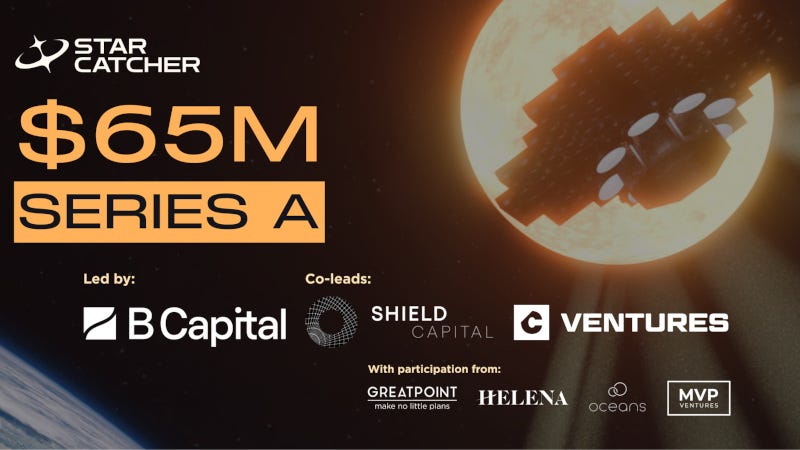
A Jacksonville, FL company just closed a major funding round to build what it’s calling the first power grid in space.
Star Catcher Industries has raised 65 million dollars in a Series A round — bringing total capital raised to 88 million dollars. The company uses optical power beaming to deliver electricity on demand to satellites in orbit, with no retrofit or custom hardware required on the receiving spacecraft. The first-ever space-based demonstration of that technology is scheduled to launch later this year.
I spoke with Star Catcher co-founder and C-E-O Andrew Rush about what this raise means for the program and what comes next.
(See Interview Transcript)
Andrew Rush is co-founder and C-E-O of Star Catcher Industries. Joining the board as part of the Series A round is General John “Jay” Raymond, the first Chief of Space Operations of the United States Space Force.

The satellite broadband race has a real second competitor now, and the stakes are significant. (Paywall)
Amazon Leo, the low Earth orbit broadband service formerly known as Project Kuiper, is moving toward a mid-2026 commercial launch. Amazon rebranded the initiative last November, retiring the Project Kuiper name in favor of Amazon Leo. The company currently has more than 240 satellites in space and is working toward a constellation of more than 3-thousand, authorized by the F-C-C and planned across five deployment phases.
The performance targets are competitive. Amazon Leo’s enterprise-grade terminal is designed to deliver up to one gigabit per second on downloads. Its standard residential terminal targets up to 400 megabits per second. Latency is expected in the 30-to-50 millisecond range, comparable to what Starlink delivers today.
But scale is the key variable. Starlink currently operates roughly nine-thousand active satellites and has years of operational head start. Amazon Leo is just entering the market.
Where Amazon may have its most meaningful edge is not in raw satellite count, it’s in ecosystem. Amazon Leo is being built with deep integration into Amazon Web Services, making it a natural connectivity layer for enterprises already running A-W-S cloud workloads. That positioning moves this competition out of a simple speed-and-price fight and into the enterprise infrastructure market, which is a very different battleground.
Amazon C-E-O Andy Jassy recently described the service as “on the verge of launching,” noting the company has already secured revenue commitments from enterprises and governments. The broader commercial rollout is expected throughout the rest of 2026.
-0-
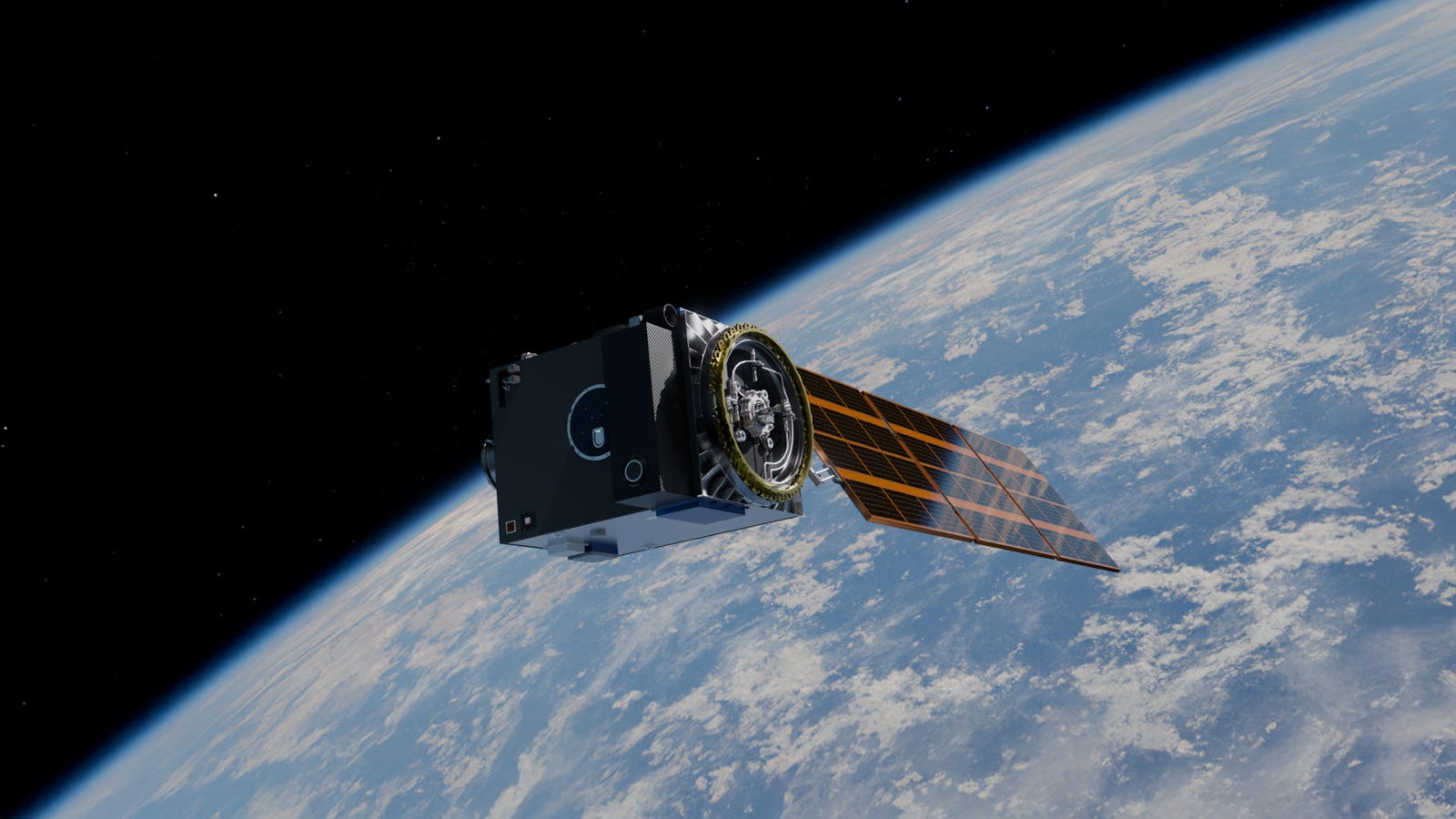
The in-space mobility sector keeps attracting serious capital, and the latest raise carries signals that go well beyond the headline number. (Paywall)
Portal Space Systems, based in Bothell, Washington, closed a 50-million-dollar Series A in April, valuing the company at 250 million dollars. The round was led by Geodesic Capital and Mach33, with participation from Booz Allen Ventures, ARK Invest, AlleyCorp, and FUSE. It follows a 17-and-a-half-million-dollar seed round, one of the largest publicly disclosed seed financings in the sector at the time.
The company was founded in 2021 by Jeff Thornburg, a former SpaceX engineer who helped develop the Merlin engine program. Its core technology is solar thermal propulsion, a system that concentrates sunlight directly to heat ammonia-based propellant, generating specific impulse approaching nuclear thermal performance levels, without a reactor and without the regulatory burden that comes with one.
Portal’s Supernova spacecraft is designed to deliver up to 6 kilometers per second of delta-v across orbital regimes from low Earth orbit all the way to cislunar space. Orbital maneuvers that currently take weeks using conventional propulsion can be executed in hours or days.
The investor mix tells the real story here. Booz Allen Ventures does not back science projects. Its director Travis Bales stated directly that the investment was made to, and this is a quote, “advance orbital warfare through the development of rapidly maneuverable spacecraft, something we know our customers need.” That is not investor relations language. That is a requirements statement delivered in a press release.
Portal also carries a 45-million-dollar Strategic Funding Increase award, known as a S-T-R-A-T-F-I, from the U.S. Space Force’s SpaceWERX program. That award preceded the Series A close. When the Space Force backstops a commercial round before private capital comes in, that sequencing is a procurement signal, not a coincidence.
The near-term proof point is Starburst-1, a smaller demonstration vehicle manifested on a SpaceX rideshare mission in the fourth quarter of 2026, designed to demonstrate rendezvous, proximity operations, and rapid orbital retasking. Eighty-one percent of Starburst and Supernova components are shared, a deliberate design decision that builds flight heritage for the full solar thermal system while generating near-term program revenue.
The supply chain risk is real and worth noting. Portal’s production depends on additive manufacturing vendors capable of working with advanced thermal materials to tolerances that legacy aerospace manufacturing does not routinely hold. That sub-tier supplier base is small and not yet publicly mapped. The company has a C-E-O-stated target of four spacecraft per month by end of 2027, a production rate that has not been verified against confirmed facility capacity or supplier commitments. That is where the program risk concentrates, and it is the detail that procurement and program management professionals should be tracking.
-0-
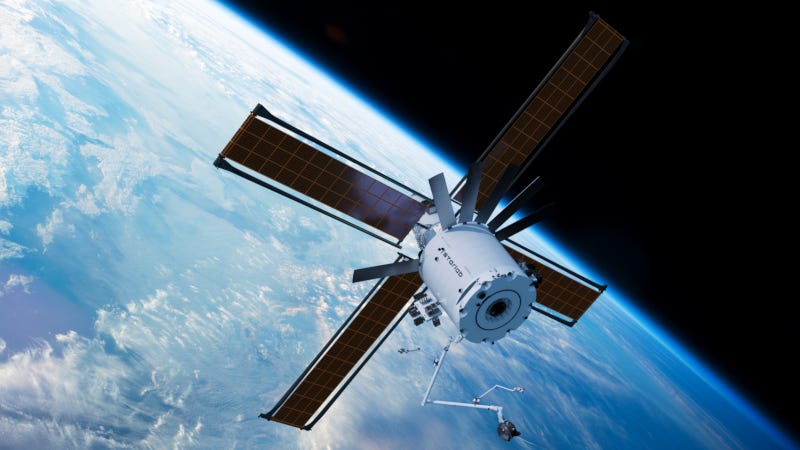
The commercial space station race is further along than most people realize, and a close look at Starlab’s production architecture reveals both how far the program has come, and where the risks are hiding. (Paywall)
On February 23rd, Starlab Space completed its Commercial Critical Design Review with NASA in attendance, the 28th milestone under its NASA Space Act Agreement. That review transitions the program from design into manufacturing and systems integration, and it positions Starlab for a milestone payment from NASA.
The hardware is already being built. Vivace Corporation, a New Orleans-based manufacturer, was under contract before the review closed. It was awarded the job in September 2025 to build Starlab’s primary aluminum structure, one of the largest single spaceflight structures developed for launch in the commercial station era. Production is underway at NASA’s Michoud Assembly Facility in Louisiana, the same facility that built the core stage for the Space Launch System.
The supply chain architecture is what the industry calls a best-of-class assembly, a deliberate strategy to use proven aerospace integrators for each major component. But that strategy creates a specific risk profile.
Vivace is a single-source contract for the primary structure. There is no publicly disclosed backup manufacturer. Leidos has been named as the sole assembly, integration, and testing provider, all at a single Alabama facility. And Airbus Defense and Space is not a minor partner in this program. It is the exclusive provider of technical design and engineering services, and co-owner of the European Starlab subsidiary.
Three single-source dependencies, primary structure, integration, and design authority, in a program targeting a 2029 launch. The NASA Commercial Low Earth Orbit Destinations Phase 2 award decision, which shapes the funding future of this program, remains in open flux as of this week.
Worth a Second Look
Multi-Country Supply Chain Delivers Critical Systems for ESA-China Solar Wind Mission
Flight-Proven Space Station Technology Powers New High-Power Satellite Bus Line
Record Launch Contract and Robotics Acquisition Expand Rocket Lab’s Mission Capabilities
Satellite Communication Service and Equipment Market Projected to Reach $86.92 Billion by 2030
The Space Industrial Base Capacity Gap (Paywall)


