




The bipartisan leadership of the House Science, Space, and Technology Committee is pushing back hard on the Federal Communications Commission.
Committee Chairman Brian Babin and Ranking Member Zoe Lofgren have sent a letter to FCC Chairman Brendan Carr urging the Commission to withdraw — or substantially narrow — a proposed rulemaking titled “Space Modernization for the 21st Century.”
The committee leaders say several provisions of the FCC’s Notice of Proposed Rulemaking go well beyond communications policy. Their letter warns that the NPRM would require satellite operators to, quote, take all possible steps to assess and mitigate collision risks and certify compliance with an FCC-established human casualty threshold — requirements they argue have nothing to do with spectrum management.
The letter is explicit on the legal question. Members write that the Communications Act of 1934 contains no clear congressional authorization empowering the FCC to regulate space safety, space traffic management, or broader non-communications space operations. They also cite recent Supreme Court decisions as reinforcing limits on federal agencies asserting authority Congress never granted.
And the stakes here are significant. The committee letter notes the proposed requirements would impact billions of dollars in commercial space activities and raise concerns under the 1967 Outer Space Treaty and existing national space policy.
The members are asking the FCC to either rescind the NPRM outright — or issue a new, narrower proposal confined strictly to radiofrequency communications licensing. No timeline has been set for the Commission to respond.
-0-
Rocket Lab is expanding again — and this time in two directions at once.
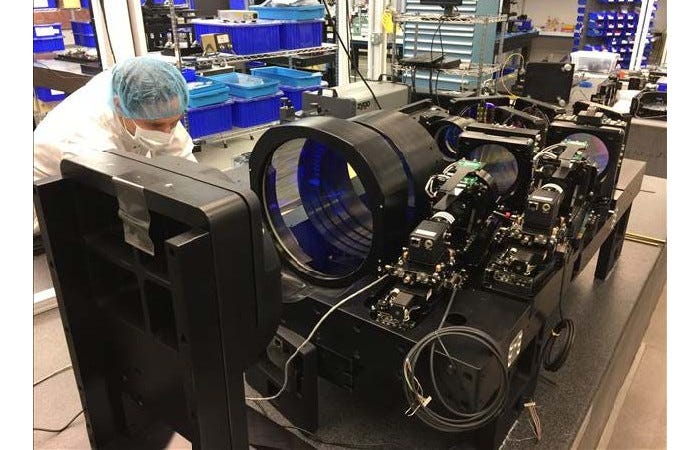
The company has announced the acquisitions of Optical Support Inc. — or OSI — based in Tucson, Arizona, and Precision Components Limited, known as PCL, based in Auckland, New Zealand.
OSI designs and manufactures custom high-precision optical and optomechanical instruments. Its systems are used in national security and commercial satellites, and the company’s resume includes contributions to NASA’s James Webb Space Telescope and Sphere Las Vegas. Rocket Lab says OSI will strengthen its vertical integration for programs like the Space Development Agency’s Proliferated Warfighter Space Architecture, while also positioning the company for next-generation initiatives including the Golden Dome missile defense system and future Mars exploration missions.
This acquisition follows Rocket Lab’s 2025 purchase of Geost (GEE-uhst), which formed the core of what is now called Rocket Lab Optical Systems. OSI was already a key supplier to Geost, so the integration should move quickly.
On the manufacturing side, the acquisition of Precision Components Limited in Auckland creates what Rocket Lab is calling the Auckland Machine Complex — a dedicated facility for high-volume, high-tolerance machined components. PCL has been a Rocket Lab supplier for more than 15 years.
Together, the two deals deepen Rocket Lab’s position as a vertically integrated prime contractor. The company currently holds a total contract backlog of 1.85 billion dollars across its launch and space systems businesses.
-0-

Redwire has released its fourth-quarter and full-year 2025 financial results — and the headline from the company’s leadership is that 2025 was, in their words, a transformational year.
Full-year revenue came in at $335.4 million dollars — a 10.3 percent increase over 2024. Fourth-quarter revenue was especially strong, jumping 56.4 percent year-over-year to $108.8 million dollars.
During the earnings call which was recorded and posted to the company website, Redwire Chairman and CEO Peter Cannito said the company is positioned well for the future.
“In 2025, Redwire transformed from a pure-play space provider to an agile, scaled, multi-domain space and defense tech company. We closed our transformational acquisition of Edge Autonomy in June 2025 and have been successfully executing on our integration plan to include the full assumption of Edge Autonomy into the Redwire brand,” Cannito said. “During 2025, Redwire moved up the value chain with five spacecraft platforms and multiple prime contracts in the US and Europe, and two mature combat-proven airborne platforms. We expanded our customer base to more than 170 civil, national security, and commercial space and defense tech customers, emphasizing our breadth and diversity. We added approximately 660 employees for an ending headcount of approximately 1,410 employees around the globe. We ended 2025 with record contracted backlog of $411.2 million, providing confidence as we move into 2026. And finally, strengthened our balance sheet and simplified our capital structure, ending with record year-end total liquidity of $130.2 million.
Along with that backlog, the company ended 2025 with a book-to-bill ratio of 1.52 for the fourth quarter — meaning it booked significantly more new business than it recognized in revenue during the period. Total liquidity at year-end was $130.2 million dollars, more than double where it stood at the end of 2024.
Among the highlights: Redwire landed a $44 million Phase 2 contract for DARPA’s Otter mission, which uses the company’s SabreSat platform in very low Earth orbit. The company also signed an eight-figure agreement to supply international berthing and docking mechanisms for The Exploration Company’s Nyx spacecraft, and delivered more than 100 uncrewed aerial systems to customers in seven countries following its June 2025 acquisition of Edge Autonomy.
Not everything was positive. Redwire posted a net loss of $226.6 million dollars for the full year, driven in large part by more than $130 million dollars in non-recurring charges. Adjusted EBITDA was also negative.
A piece of U.S. launch history has found a new home.
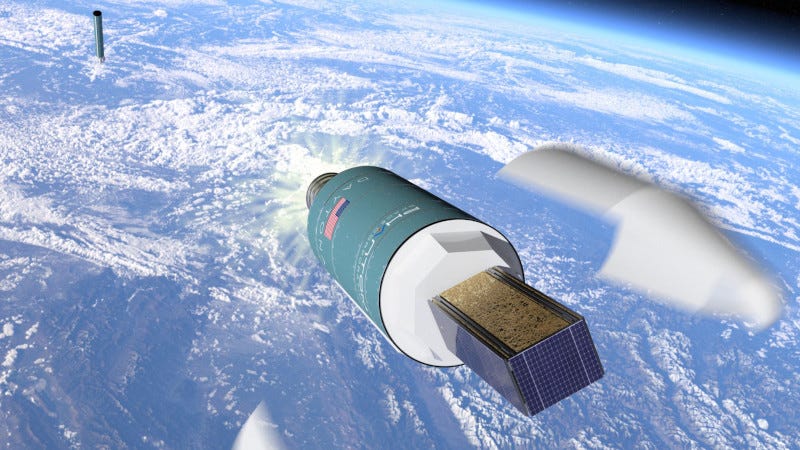
Phantom Space has acquired key assets and intellectual property from Vector Launch Inc. — including flight-proven design elements, engineering data, and proprietary technologies originally developed for Vector’s small-launch vehicle program.
Phantom plans to integrate those assets immediately into its Daytona launch vehicle — a two-stage, mass-manufactured rocket designed to deliver small satellites and spacecraft into orbit. Company officials say the acquisition reduces development risk and advances the path to orbital flight.
There is a personal dimension to this deal as well. Phantom Space was founded in 2019 by Jim Cantrell — who was also a co-founder of Vector Launch. So the acquisition, in a sense, brings these assets back to one of the people who helped create them.
The Daytona vehicle features a modular payload fairing capable of supporting a wide range of spacecraft — from CubeSats to ESPA-class payloads. The company says it has completed successful hot-fire tests of Daytona’s propulsion assemblies and plans to begin integration and qualification activities immediately, with stage-level testing and vehicle milestones scheduled throughout 2026.
Phantom was founded by two of the original five members who built SpaceX. The company’s broader vision includes launch, satellite production, and future orbital infrastructure through its Phantom Cloud constellation.
-0-

There is a potential major shift reshaping the satellite connectivity market.
A new report from Novaspace — the eighth edition of its Capacity Pricing Trends analysis — concludes that the satellite industry has entered what analysts are calling a Post-Capacity Era. The core argument: bandwidth is no longer the basis of competitive differentiation in this market.
The driver of that shift is familiar. Starlink’s vertical integration and aggressive cost compression are resetting expectations across the sector. With global supply rising and cost bases falling, capacity pricing is now on a structural downward trajectory. Data-driven applications are experiencing the steepest price declines, due largely to low-cost non-geostationary orbit supply. Legacy video markets are facing their own structural pressures as viewing habits continue to evolve.
The defining metric in this environment, according to Novaspace, is now cost per gigabyte. Starlink’s pricing — currently below 30 cents per gigabyte — is setting new industry benchmarks and pushing operators toward regional pricing strategies, promotional tiers, and more flexible service offerings. As satellite broadband approaches cost parity with terrestrial service in rural and underserved areas, the competitive landscape is expanding well beyond the satellite sector itself.
The report concludes that in a world where bandwidth is a commodity, the competitive advantage moves downstream — to the terminal, the hardware ecosystem, and the service layer. Companies that can innovate at the device and user experience levels, Novaspace says, will be the ones that lead this next phase of the market.
-0-

In Depth this week ... a $17 million funding round closed quietly in February, and on the surface, it looked like routine Series A news. But the details tell a different story — and if you work anywhere in the space supply chain, this one is worth paying attention to. (Paywall)
The company is Agile Space Industries, based in Durango, Colorado. It builds chemical propulsion systems — the thrusters that keep satellites in orbit, execute on-orbit maneuvers, and power in-space servicing vehicles.
What makes the funding round notable is who is behind it: Lockheed Martin Ventures. And this is not Lockheed’s first check to Agile. It’s their third — seed round, bridge round, and now Series A. That pattern is not casual portfolio diversification. It is a prime defense contractor systematically positioning itself ahead of what appears to be a serious supply constraint.
Here is the core problem. The domestic supplier base for chemical propulsion has not kept pace with demand. Proliferated low Earth orbit constellations, missile defense programs, and on-orbit servicing platforms are multiplying. The number of suppliers capable of building for those platforms at production scale is not. Supply chain leads are now reporting component lead times of 12 to 18 months across multiple subsystem categories, with integration delays cascading six to nine months downstream. Private equity consolidation of legacy propulsion assets is making competition thinner — and pricing pressure lighter — for the remaining players.
Agile’s answer to that constraint is speed through manufacturing innovation. Using additive manufacturing, the company has compressed design-to-tested-hardware timelines to approximately 19 weeks. Traditional propulsion procurement has historically required 18 to 24 months for the same process. The result: revenue has more than tripled over three years. Bookings are up sixfold.
And here is the detail that matters most for anyone in procurement or program management: the Series A round was oversubscribed. Agile turned capital away. The company had been cash-positive for 18 months before this raise. It did not raise because it needed the money — it raised because contracted backlog now exceeds production capacity.
Lockheed identified that dynamic early and built a real relationship before the market got crowded. For constellation operators, integrators, and primes still on the outside of that relationship — the window to get on the right side of this constraint is narrowing, quarter by quarter.
Paid subscribers can read the full analysis on The Journal of Space Commerce under the Capital and Investment tab. Other premium articles this week include an in-depth look into the $6 billion aerospace project pipeline in Florida, why it will take more than legislation to fix satellite manufacturing vulnerabilities, and the realistic economics of the Haven-1 Space Station.
-0-
Worth a Second Look
Strategic Investment Will Advance Satellite Communications, In-Space Data Processing
Agreement Reached to Advance In-Space Semiconductor Manufacturing
The $6 Billion Concentration (Paywall)


