



Federal Communications Commission Chair Brendan Carr says Space Bureau Chief Jay Schwarz will leave his post later this month, with Deputy Bureau Chief Jennifer Gilsenan taking over as acting chief during the transition.
Schwarz led the bureau, which handles licensing and policy for satellite and space-based communications, through a period of expanded processing targets and a rewrite of the agency’s space rules. On July 22, the commission voted to adopt a Report and Order replacing the decades-old Part 25 licensing framework with a new Part 100.
Carr credited Schwarz and Space Bureau staff with cutting the agency’s licensing backlog by 43% in Schwarz’s first year and by another 15% so far this year.
The commission’s announcement did not specify Schwarz’s exact departure date or his next role. Gilsenan will lead the bureau on an acting basis until a permanent successor is named.
-0-
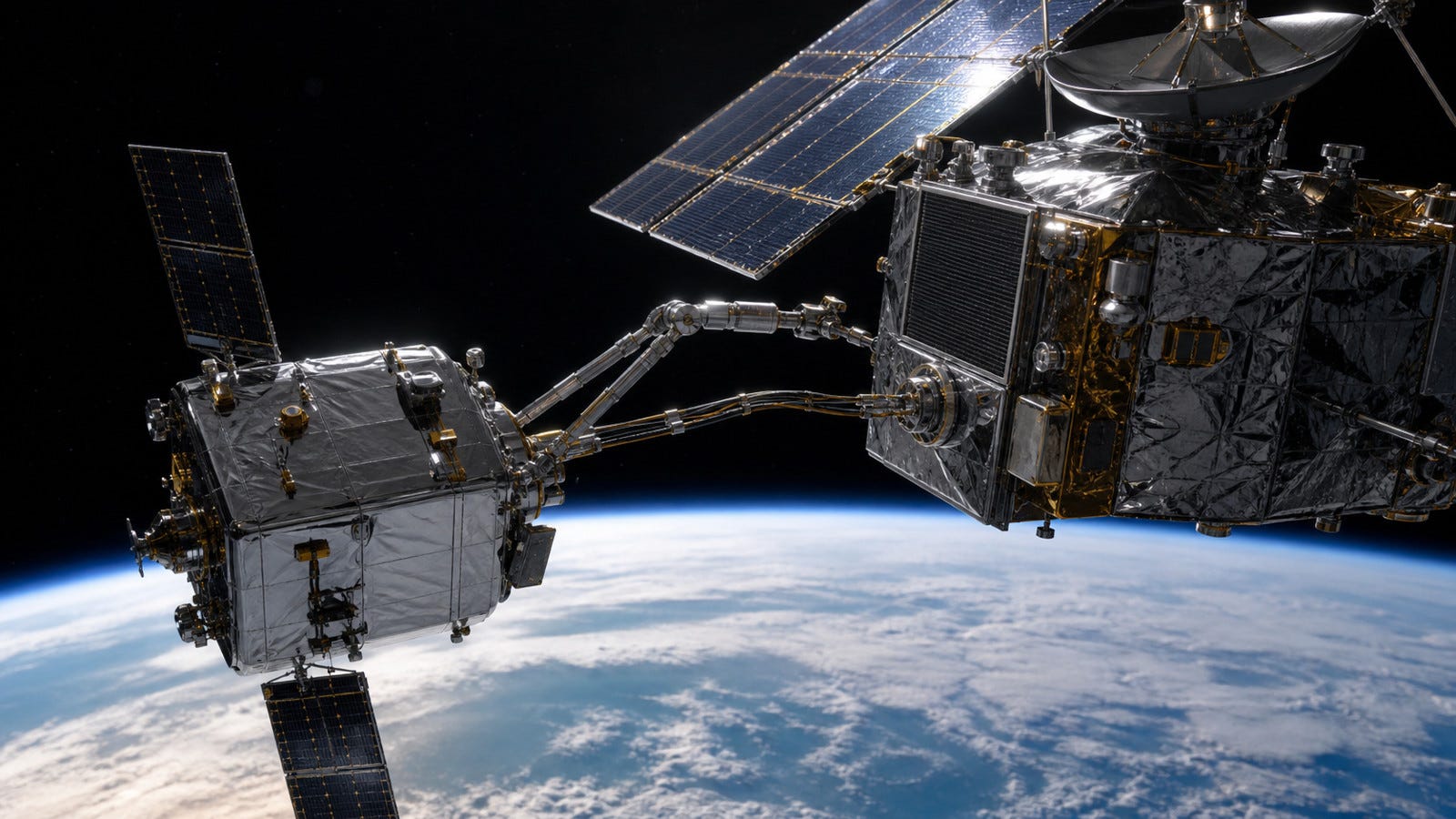
A new market forecast projects satellites that refuel, repair or extend the working life of other spacecraft will generate roughly $3 billion in cumulative revenue over the next 10 years.
The forecast comes from Novaspace, a Paris-based space industry research and consulting firm, in a report titled “In-Orbit Services Markets.” The firm says early demand is coming largely from government and defense agencies working to make satellite refueling a standing military capability.
Satellite refueling is expected to be the largest segment of that market, representing a projected $1.2 billion opportunity over the decade. Life-extension services delivered through docking hardware attached to a client satellite — a method the report calls “backpacking” — are projected to generate an estimated $860 million over the same period.
Novaspace says the sector remains at varying levels of maturity, ranging from early concepts to limited commercial operations, and that the model is based on more than 10 years of projected mission activity and dollar value.
-0-
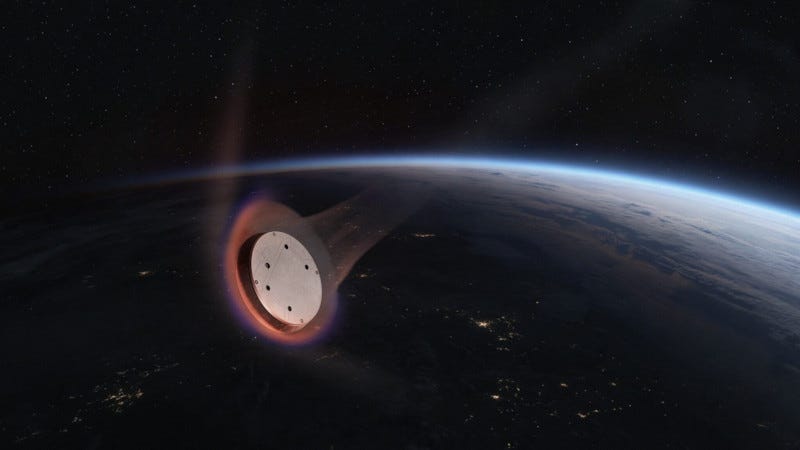
Redwire subsidiary Space Microgravity Development has signed a contract to fly up to 32 pharmaceutical research payloads aboard SpaceX’s new Starfall spacecraft in 2028.
The company, known as SpaceMD, says the mission would be the largest dedicated commercial microgravity research flight ever conducted. Under the agreement, SpaceMD’s payloads would fly a next-generation version of its Pharmaceutical In-Space Laboratory, or PIL-BOX, sized to fill the entire Starfall vehicle. The announcement did not disclose the contract’s value or which drug candidates would fly.
SpaceMD has flown 54 PIL-BOX units to the International Space Station since November 2023, with 12 more scheduled to launch between September and December of this year. The company says it has crystallized 45 unique compounds through that program, including insulin and molecules targeting cancer, cardiovascular disease, obesity and diabetes.
The announcement comes as the federal government’s mission-authorization framework for novel commercial space activities remains under development. Officials from the Commerce Department’s Office of Space Commerce addressed the deal in a recent panel discussion, saying that framework is advancing with input from industry and other federal agencies.
Taylor Jordan, Director of the Office of Space Commerce, said that commercial space activities will soon be moving beyond Earth observation and communications.
“Soon you will see on the Federal Register a call for applications to begin the process of authorizing all these new novel technologies,” Jordan said.
Gabriel Swiney, acting deputy director of the Office of Space Commerce, tied the announcement to a broader administration goal of drawing $50 billion in additional investment into the commercial space sector, calling the deal significant beyond the two companies involved.
“Obviously this is an enormous deal, not just for Redwire and for SpaceX and all involved, but for the entire space community because what it takes is to prove that this is possible,” Swiney said. “Prove that it is possible to use space and the capabilities that space can bring to do things that we’ve never done before in space. That’s what will unlock the rest of space for all the other companies and ultimately those American people and the benefits.That’s what will unlock the rest of space for all the other companies and ultimately those American people and the benefits.”

A new set of atmospheric-sensing satellites from PlanetiQ has finished manufacturing and testing, clearing a milestone toward a launch planned later this year.
The Golden, Colorado-based company builds and operates a commercial satellite constellation using GNSS radio occultation (Ah-cull-TAY-shen) , or GNSS-RO, technology to measure atmospheric conditions for weather forecasting and space weather monitoring. The new spacecraft are the next generation of PlanetiQ’s GNOMES satellites and carry the company’s Pyxis sensors, which PlanetiQ says can track signals from all four major GNSS constellations — GPS, BeiDou (bay-DOUGH), GLONASS and Galileo — using a 75-degree limb-sounding field of view.
PlanetiQ says its data is used by the National Oceanic and Atmospheric Administration, the European Centre for Medium-Range Weather Forecasts and the UK Met Office, along with the U.S. Air Force, Space Force and Navy.
The satellites are expected to ship for launch integration in the coming weeks. PlanetiQ did not specify a launch date, vehicle or site.
-0-
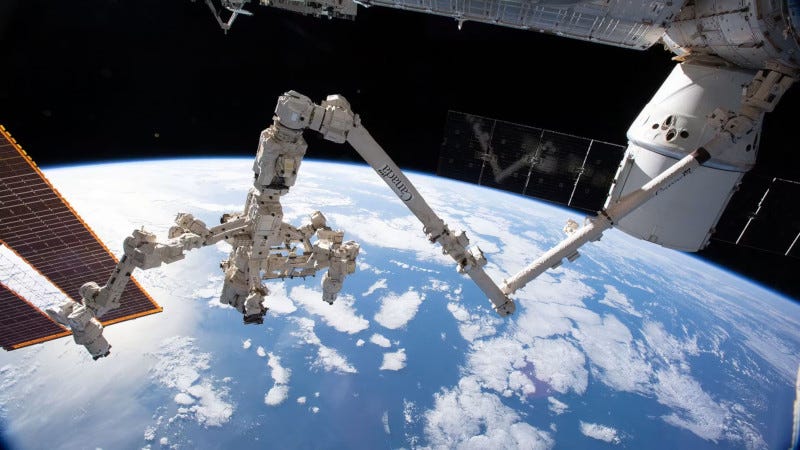
The Canadian Space Agency intends to redirect existing Canadarm3 investment to support the next phase of lunar exploration under NASA’s Artemis program.
Canadarm3, developed under contract with MDA Space, was originally conceived as Canada’s robotic contribution to Gateway, the lunar-orbiting station NASA announced in March it would pause in its current form as the agency shifts its Artemis architecture toward a surface-based moon base. Still, the underlying Canadarm3 technology will be kept in place, focusing the agency’s work with MDA toward lunar surface operations, including cargo transport, infrastructure deployment, scientific exploration, site inspection and astronaut assistance.
Canada’s minister of industry, Mélanie Joly, tied the move to broader economic goals, framing the investment as a way to build domestic companies, talent and capabilities. MDA Space CEO Mike Greenley welcomed the shift, citing the company’s four-decade history in space robotics following the Artemis II mission around the moon.
The agency’s release did not specify new funding, a signed contract amendment or a timeline for lunar deployment, describing the change only as an intention to adapt work already underway. Continued access to low Earth orbit, the agency said, remains part of Canada’s broader industrial base strategy.
-0-
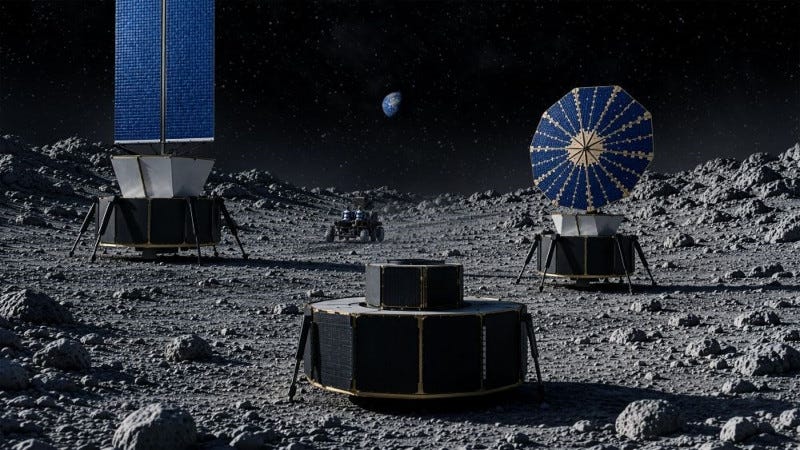
Northrop Grumman is developing three demonstration missions designed to test whether spacecraft systems can survive the two-week lunar night and support a sustained human outpost near the moon’s South Pole.
The missions, designated LID-1, LID-2 and LID-3, are intended to help NASA mature the power and data systems needed for a future Moon Base under the Artemis program. According to the company, the missions will repurpose hardware and technologies developed for the Habitation and Logistics Outpost, or HALO, a module Northrop Grumman built for Gateway. The company said HALO’s existing power, data and mechanical systems can now be applied to the new surface-focused demonstrations.
The demonstrations are designed to show that surface hardware can stay powered, protected and connected through the lunar night and periods of shadow — data NASA would use to plan future Artemis surface campaigns.
Northrop Grumman’s announcement did not include launch dates, mission costs, or the contract or funding vehicle under which the work is being performed.
-0-
You might also like:
European Commission, Satellite Operators Finalize Deal to Expand IRIS² Network
UK’s Copernicus Return Still Trails Program’s Annual Cost, Report Finds
Telesat Adds 69 Satellites to Broadband Network in Contract Expansion
Kepler Books Dedicated Neutron Launch For 2028 Satellite Expansion
The Regulatory Credibility Moat (Paywall)


