


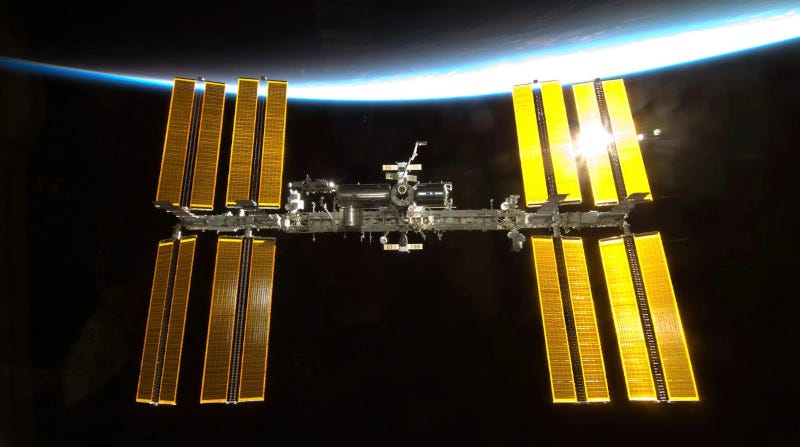
In the span of roughly twelve months, NASA’s Commercial LEO Destinations program — CLD — has been restructured, redirected, walked back, and redirected again. That’s not normal. It’s worth talking about why.
The CLD program was created in March 2021 under the Biden administration. The idea was straightforward: NASA would invest in privately built space stations, then become one of several paying customers — not the owner, not the operator. The agency would buy a seat at the table, not build the table.
That model held for four years.
Then, in July 2025, President Trump named Transportation Secretary Sean Duffy as acting NASA Administrator. Within three weeks, Duffy signed a new directive reshaping Phase 2 of the CLD program — shifting from firm fixed-price contracts to funded Space Act Agreements. The companies already under contract had not asked for that change.
In March 2026, confirmed Administrator Jared Isaacman unveiled a strategy called Ignition. Under that plan, NASA would purchase a government-owned core module, attach it to the International Space Station, and invite commercial partners to bolt their modules onto it. The free-flying commercial station concept — the original CLD premise — was effectively shelved.
Industry pushed back. Hard.
By the end of May 2026, NASA reversed course. Senior Advisor and Press Secretary Bethany Stevens posted on X that, quote, “The industry position will now shape the path forward as NASA proceeds with the original commercial strategy.” A draft RFP was expected to follow within weeks.
Here’s the thing about that sequence of events. It’s fast. By NASA standards, it is remarkably fast.
For comparison: NASA’s Constellation program — the post-Shuttle architecture intended to return Americans to the Moon — was authorized in 2005, funded for five years, and then cancelled in 2010 under the Obama administration. That cancellation triggered two years of congressional hearings, a legislative rescue of parts of the program, and the eventual creation of the Space Launch System. The cycle from policy to reversal took nearly a decade.
The CLD reversal, from Ignition to walking it back, took approximately ten weeks.
Jared Isaacman was confirmed as NASA’s 15th administrator on December 18, 2025, by a vote of 67 to 30. He is 42. He built an e-commerce payments company, flew two private orbital missions through SpaceX, and conducted the first spacewalk by a non-professional astronaut in 2024.
He is, in the clearest sense, not a career government official. That is not a criticism. It is a distinction.
The administrators who ran NASA through its middle decades — men like Daniel Goldin, who served under three presidents; Sean O’Keefe, a former Navy secretary and OMB director; Charles Bolden, a former astronaut and Marine general — all came from within established institutional frameworks. They understood budget cycles, Congressional authorization, and the pace at which a federal agency is designed to move.
Jim Bridenstine, confirmed in 2018 after a 50-to-49 Senate vote, was a congressman. He pushed commercial partnerships aggressively and was often at odds with the agency’s institutional culture.
Isaacman’s Project Athena agenda calls for reducing bureaucratic layers, increasing mission cadence, and extracting commercial value from space-based research. The language is the language of a company operating plan, not a federal agency’s strategic review.
That framing produces a different kind of decision-making. When industry told NASA the Ignition LEO plan didn’t work commercially, Isaacman’s team moved in weeks. Not quarters. Not fiscal years. Weeks.
The question the CLD reversal does not answer is whether speed alone is sufficient. The original CLD contractors invested years and engineering resources under one set of rules. Those rules changed twice in ten months. A draft RFP for the next phase is now expected mid-to-late summer 2026.
The ISS is still scheduled for deorbit in 2030. That date has not moved.
NASA’s FY2026 budget — the largest in nearly three decades after Congress rejected proposed OMB cuts — includes $272 million for the CLD program for the year, with $2.1 billion projected across the plan. That money exists. The acquisition path for spending it has changed three times.
What we’re watching with the CLD program is not simply a policy debate about space station architecture. It is a real-time test of whether an entrepreneurial operating tempo can function inside a federal procurement structure built for a very different pace.
And the outcome matters — for the companies that have been building toward this program, for the supply chains behind them, and for whether the United States maintains a human presence in low Earth orbit after 2030.
The draft RFP is expected this summer. We’ll be watching.


