

York Space Systems Reports Fourth Quarter and Full Year 2025 Results
Year-on-Year Growth of 52% Driven By Strong Execution as a Mission Prime

York Space Systems closed 2025 looking very much like a company graduating into the top tier of national security space suppliers, pairing rapid revenue growth with improving margins and a growing role as a mission prime for the Pentagon’s proliferated constellations. Revenue for the year climbed 52% to $386 million, powered largely by progress on two major contracts for the Space Development Agency’s Transport Layer Tranche 2. At the same time, gross margin expanded by 6.8 percentage points to 19.5%, lifting gross profit 133% to $75 million even as the company remained unprofitable on a net basis.
“2025 was the year York defined what a modern mission prime looks like.”
Dirk Wallinger, York Space Systems
Losses, however, are moving in the right direction. York’s net loss narrowed 15% to $84.5 million, and the adjusted EBITDA loss shrank 81% to just $8.3 million, strengthening management’s case that the business is scaling toward profitability. The company converted $319 million of backlog to revenue during the year and still exited 2025 with $543 million of remaining backlog, giving it meaningful visibility into future work.
“2025 was the year York defined what a modern mission prime looks like,” said CEO Dirk Wallinger. “We emerged as a leading provider to the Department of Defense’s Proliferated Warfighter Space Architecture, measured by spacecraft on orbit, number of contracts, and mission types. We delivered the first Tranche 1 Transport Layer satellites in-orbit, accelerated and executed the Dragoon mission in response to an identified agency need, and demonstrated in-plane and cross-vendor optical communications. We remain the only provider to demonstrate Link 16 from space and validated NASA’s shift to commercially procured communications through the BARD mission. We didn’t just win contracts, we delivered real capability on accelerated timelines, at scale, and at approximately half the cost of our competitors.”
“Our strong execution drove revenue up 52% year-on-year,” said CFO Kevin Messerle. “We continue to drive margins upwards and expect to deliver positive adjusted EBITDA in 2026. With a strong balance sheet further bolstered by our recent IPO, we believe we are well-positioned to scale as demand for our products and services continues to grow.”
Operationally, York leaned hard into its identity as an end‑to‑end mission provider for defense and civil customers. In 2025 it delivered 21 Tranche 1 Transport Layer satellites to orbit for the Proliferated Warfighter Space Architecture, becoming the first prime contractor to complete an on‑orbit delivery under that program and making contact with all spacecraft within hours of separation. Across the year, the company executed more than 100 mission demonstrations under NASA’s BARD mission, showcasing capabilities that ranged from in‑plane and cross‑vendor optical links to space‑to‑ground optical connectivity, K‑band links, orbit maneuvering, and what it describes as the only demonstrated Link 16 connection from space to ground.
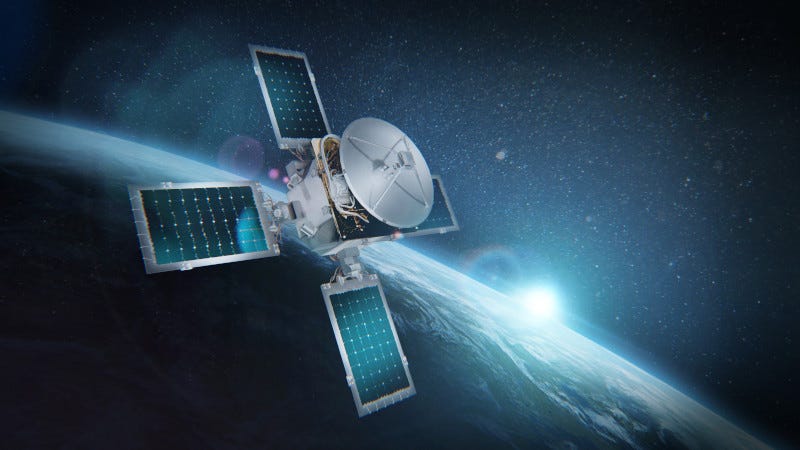
York also pushed its platform roadmap forward. It rolled out the higher‑power M‑CLASS spacecraft, designed to support payloads up to 8 kilowatts, positioning the company for larger, more demanding missions. The Dragoon mission became a flagship proof point for York’s rapid‑turn model: the company took it from contract signing to orbit in just seven months, a roughly 75% schedule reduction relative to the 30‑month timelines common in traditional space programs.
Mergers and acquisitions featured prominently as York worked to extend its architecture beyond buses and integration. In 2025, it acquired ATLAS Space Operations, bringing in a global ground station network and a software‑defined operations platform aimed at easing space‑to‑ground bottlenecks for proliferated constellations. The strategy continued into 2026: in February, York signed a $187 million commercial contract to build a constellation of more than 20 satellites on the new M‑CLASS platform, and in March it acquired Orbion Space Technology to internalize flight‑proven electric propulsion capabilities.
The company’s balance sheet is now anchored by a sizeable war chest following its public debut. As of December 31, 2025, York reported $162.6 million in cash and cash equivalents and $150 million of availability on its revolving credit facility, for total liquidity of $312.6 million. On January 30, 2026, it completed an initial public offering, selling $18.5 million at 34 dollars per share for $582.6 million in net proceeds; when combined with the undrawn revolver, that transaction lifted immediate post‑IPO liquidity to $895.4 million.
With that capital in hand, York is signaling confidence in its growth trajectory. For full‑year 2026, the company is guiding revenue to a range of $545 to $595 million, noting that more than 70% of the midpoint is already covered by existing backlog. Management is reiterating expectations that 2026 will mark a turning point into positive adjusted EBITDA, framing the past year’s performance as evidence that York’s combination of mass‑manufactured satellites, rapid schedules, and vertically integrated mission services is gaining durable traction in the defense and commercial markets.