

York Space Systems Acquires Orbion Space Technology
Strengthens Supply Chain with Flight-Proven Spacecraft Capability

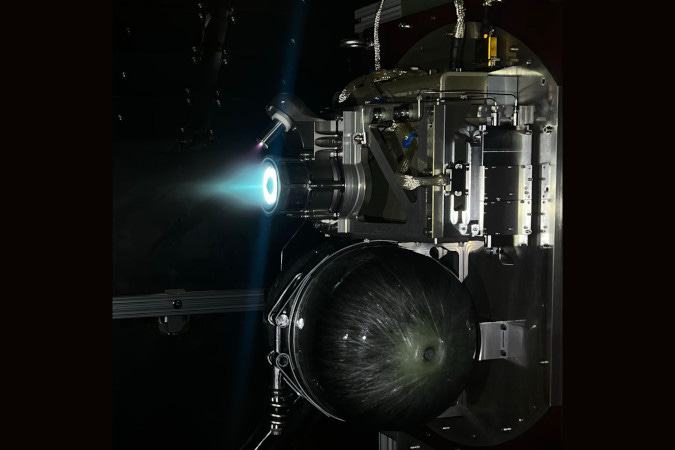
York Space Systems has acquired Orbion Space Technology (Orbion), a Michigan-based manufacturer of electric propulsion systems. The acquisition strengthens York’s integrated space ecosystem and directly supports the strategy the company outlined at the time of its initial public offering: aligning its technology roadmap, investing in domestic production capacity, and delivering systems that work reliably and at scale.
“Integrating this capability allows us to more tightly align propulsion with spacecraft design and mission operations.”
Michael Lajczok, York
Founded in 2016, Orbion designs and manufactures Hall-effect electric thrusters for constellation-scale satellite missions. Its Aurora propulsion systems are produced domestically and are already flying on York-built spacecraft supporting U.S. national security missions, including satellites operating as part of fielded military constellations.
“Orbion’s propulsion systems have already demonstrated reliable, repeatable performance on York spacecraft supporting operational missions,” said Michael Lajczok, CTO of York. “Integrating this capability allows us to more tightly align propulsion with spacecraft design and mission operations strengthening system-level performance while strengthening performance and long-term reliability as mission demands grow.”
“Orbion was built to deliver propulsion systems designed to perform reliably on orbit and to produce them in a factory that can meet the scale demands of prolific constellations,” said Brad King, co-founder and CEO of Orbion. “Our work with York has demonstrated what’s possible when propulsion is designed alongside the spacecraft and mission from the start. Joining York allows us to accelerate that approach and support the growing number of missions already being executed today.”
By aligning the technology roadmap, York’s Orbion acquisition reduces supply-chain risk of an historically scarce spacecraft subsystem, which improves schedule certainty and enhances its ability to deliver tightly integrated spacecraft platforms optimized for both current and next-generation mission requirements.
“This acquisition builds on an established, on-orbit relationship,” said Dirk Wallinger, founder and CEO of York. “Orbion propulsion is already operating successfully on York spacecraft today. This next step allows us to more closely align Orbion’s leading-edge technologies with the growing constellation-scale demands across the sector, expand production planning to meet strong market demand, and support customers across the full space ecosystem.”
Orbion will continue to operate as a wholly owned U.S. subsidiary of York, serving customers across the broader space industry. The combination provides a clear path to expanding Orbion’s production capacity in support of growing commercial and national security satellite demand.
The transaction follows York’s recent acquisition of ATLAS Space Operations, reinforcing a deliberate strategy to integrate critical mission capabilities across York’s space ecosystem, propulsion, ground operations, and end-to-end mission execution. Together, these acquisitions advance York’s long-term vision of delivering complete space mission solutions supported by a solid, secure, and robust U.S. supply chain.
“From propulsion to ground systems, we are deliberately strengthening the core capabilities that underpin mission success,” Wallinger added. “This is what we said we would do as a public company — invest in proven technologies, scale responsibly, and continue delivering operational capability on orbit.”
Today, York is executing at scale across national security and commercial missions, with more than 30 satellites currently on orbit, mission operations centers supporting five active missions, and two operational constellations. The company is preparing for its eighth launch overall, executing on its twelfth contract, and advancing work on its sixth constellation contract, underscoring York’s ability to deliver repeated, reliable performance across multiple programs while continuing to scale production and mission execution capacity.