


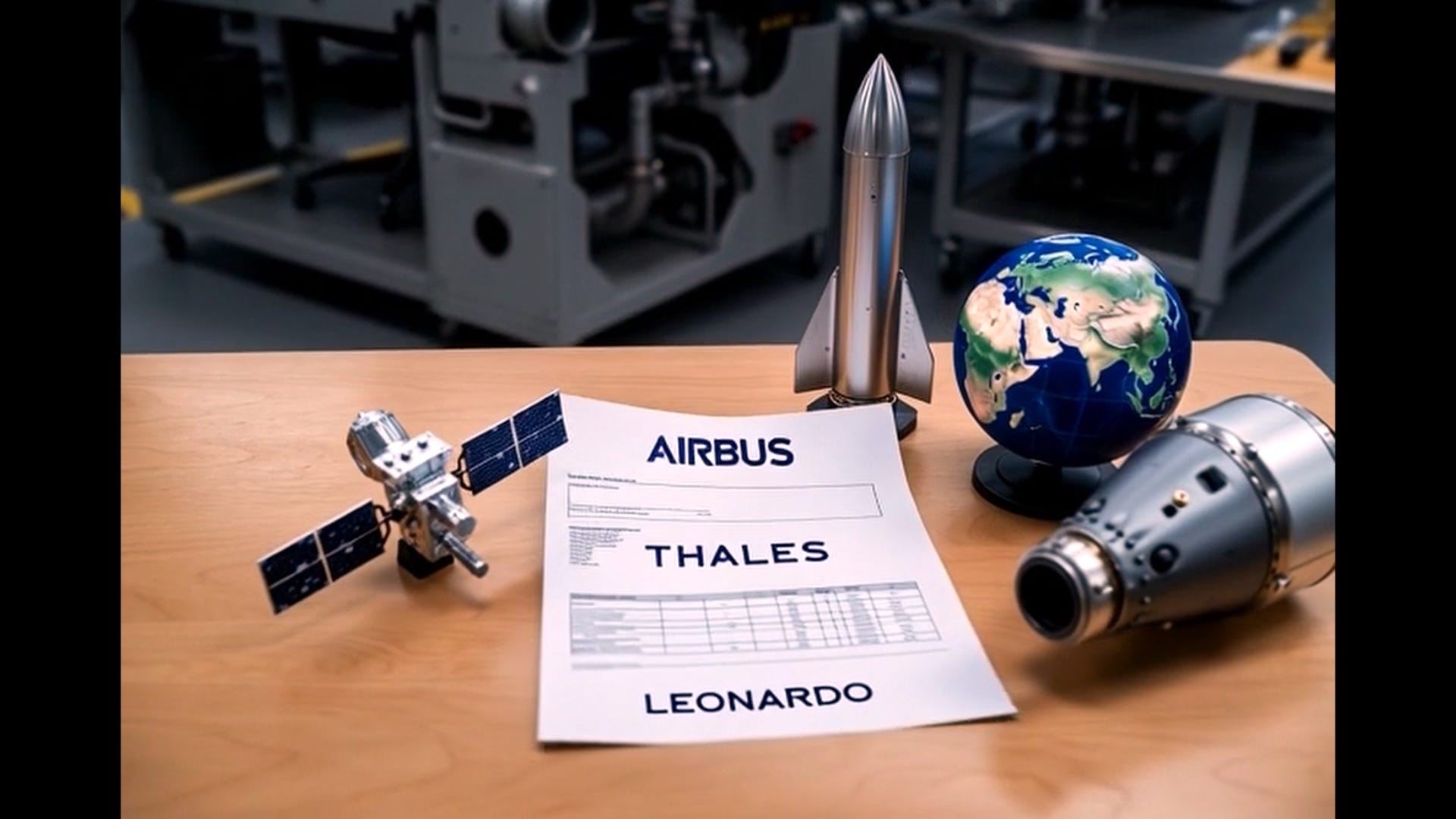
The Airbus-Thales-Leonardo joint venture promises European space sovereignty, but hundreds of small suppliers face a stark reality: unprecedented bargaining power concentrated in one entity that can now dictate terms, timelines, and technology access.
When Airbus Defense and Space, Thales Alenia Space, and Leonardo’s space division signed their memorandum of understanding in October 2025, European ministers celebrated a landmark moment for strategic autonomy. The combined entity would command roughly €13 billion in annual space revenues, pooling expertise across satellite manufacturing, navigation systems, and Earth observation platforms. Brussels finally had its answer to SpaceX and China’s space ambitions—a continental champion capable of competing at global scale.
But there’s another side to this story, one playing out in the procurement offices and contract negotiation rooms across Europe’s aerospace clusters. For the tier-2 and tier-3 suppliers who manufacture components, subsystem…
