

Voyager Technologies to Acquire Astrobotic in $300 Million Deal
Acquisition Adds Lunar Landers, Surface Power and Reusable Rockets to Denver Company’s Portfolio

Voyager Technologies has signed an agreement to acquire Pittsburgh-based Astrobotic Technology, Inc. for up to approximately $300 million in a combination of cash and stock, including contingent consideration.
“We are building the infrastructure foundation that will make America’s permanent presence on the Moon a reality.” Dylan Taylor, Voyager Technologies
The deal brings together a defense technology and space solutions company with a commercial lunar delivery operation founded nearly two decades ago. Astrobotic operates from facilities in Pittsburgh and Mojave, California, and holds contracts under NASA’s Commercial Lunar Payload Services program.
The transaction is subject to customary regulatory approvals and is expected to close by early July 2026.
“We are building the infrastructure foundation that will make America’s permanent presence on the Moon a reality,” said Dylan Taylor, Chairman and CEO of Voyager. “Achieving that vision requires robust operational systems that match the resilience necessary for critical, repeatable missions. With Astrobotic, Voyager is now a lunar platform that will have capability at every infrastructure layer needed to put Americans on the lunar surface and keep them there.”
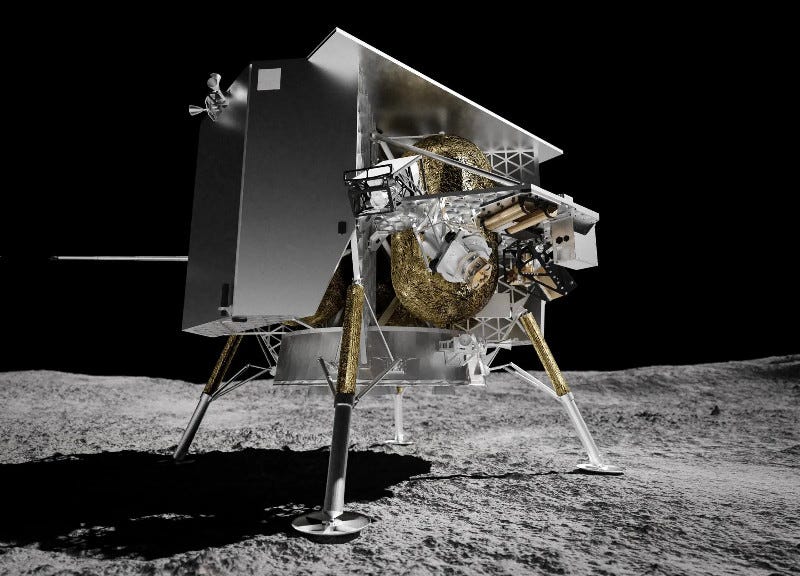
Under the agreement, Astrobotic’s full portfolio will transfer to Voyager at closing. That portfolio includes the Peregrine and Griffin lunar landers, the LunaGrid solar power distribution system, and reusable rocket programs. Astrobotic’s Pittsburgh facility will serve as the center of Voyager’s lunar program.
Griffin Mission One — recently designated by NASA as Moon Base II — is proceeding on schedule. Voyager said it intends to accelerate investment in both the lunar lander and reusable rocket programs following close.
The acquisition adds a surface delivery and power layer to capabilities Voyager has assembled through other means. The company holds a strategic investment in Max Space, which is developing expandable habitat architecture for long-duration stays. Voyager also produces a dust-mitigation coating and has lunar mission management and communications capabilities in-house, along with propulsion assets.
Together, the combined portfolio spans mission management, communications and propulsion; surface delivery via Peregrine and Griffin; surface power through LunaGrid; habitation through Max Space; dust mitigation; and in-situ resource production.
“Astrobotic was built to prove that commercial companies can deliver to the Moon,” said John Thornton, CEO of Astrobotic. “Joining Voyager gives that mission the scale and long-term commitment it has been building toward for nearly two decades. Our team, our technology and our homes in Pittsburgh and Mojave remain at the center of what we are building, and now we have a partner with the breadth of capabilities and resources to realize a continuous presence on the Moon.”
Voyager said the acquisition directly supports NASA’s Artemis program and NASA Administrator Jared Isaacman’s stated goal of a permanent American presence on the Moon by 2028.
Voyager hosted a shareholder and analyst call on June 2, 2026, to discuss the transaction. Presenting on the call were Taylor; Matt Kuta, President; Phil De Sousa, Chief Financial Officer; and Matt Magaña, President of Voyager’s Defense and Space Segment. A webcast replay is available at investors.voyagertechnologies.com.