

Vast Haven-1’s Critical Path
What a Q1 2027 Launch Requires from the Supply Chain — Starting Now

What This Means
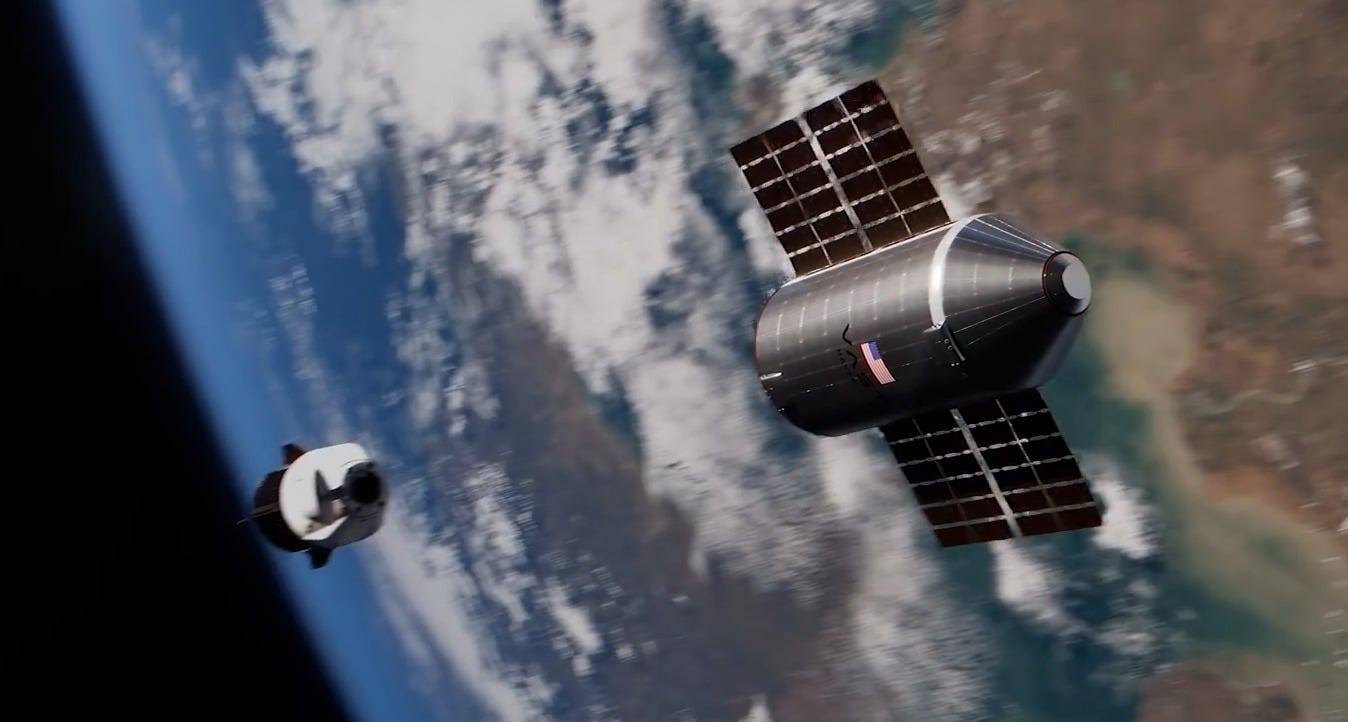
Haven-1 is not a station story. It is a supply chain race against a calendar that has already slipped once. Vast updated its launch readiness target to Q1 2027 in January 2026 after completing Phase 1 structural integration — and every week between now and that window is a week the supply chain either closes critical gaps or doesn’t. The components Vast sources externally — solar arrays, thrusters, docking hardware, avionics — sit at the exact intersection of the system-wide capacity crunch the Space Force Rapid Capabilities Office, Space Development Agency (SDA), and Lockheed Martin are simultaneously drawing from. Investors evaluating Vast’s National Aeronautics and Space Administration (NASA) Commercial Low Earth Orbit Destinations (CLD) Phase 2 bid, and supply chain leaders supporting any station or constellation program, need to map those dependencies before the next integration milestone closes sourcing options.
The Slip That Changed the Math
When Vast announced in January 2026 that Haven-1 would move from a May 2026 launch to no earlier than Q1 2027, the company framed it as a natural product of integration discipline, more data, greater certainty, progressively more precise timelines. That is accurate as far as it goes. But the supply chain implications of that framing deserve more scrutiny than they’ve received.
A slip of roughly nine months in a program that entered integration in late 2025 creates a specific kind of problem: the hardware that feeds Haven-1’s final assembly, solar arrays, propulsion units, avionics, docking mechanisms, now has to remain available and unallocated in a procurement environment that is pulling in the opposite direction. The broader commercial and defense space market is not standing still while Vast completes environmental tests. Every month the launch date extends is a month in which competing programs with deeper pockets and longer contract vehicles are absorbing the same constrained component supply.
Vast has publicly confirmed that nearly all of Haven-1’s primary structure is manufactured in-house at its Long Beach, California facility. The company has been explicit that solar arrays and thrusters are outsourced, two of the most capacity-constrained component categories in the current market. What has received less attention is the third layer: docking hardware, avionics, and mission computers. These are not incidental to launch readiness; they determine it.
What’s Outsourced, What’s at Risk
Vast’s vertically integrated build model is one of the company’s genuine differentiators. Founded in 2021, the company scaled to approximately 800 employees and completed primary structure welding in less than two years, a pace that most legacy station developers would consider implausible. The in-house manufacturing posture reduces Vast’s exposure to some of the sub-tier volatility that is currently affecting SDA contractors. But it does not eliminate external dependencies. It concentrates them.
Solar Arrays. Vast has confirmed that solar panels are externally sourced. This is the single most congested category in the current space hardware market. Space Systems Command (SSC) commander Lt. Gen. Philip Garrant identified solar panels explicitly as a cross-cutting supply chain challenge in February 2026, noting that the problem affects Space Rapid Capabilities Office (RCO), SDA, and SSC programs simultaneously. Lockheed Martin’s supply chain leadership echoed the concern, citing availability issues in solar panels alongside on-board processors, propulsion systems, and optical intersatellite links. For Haven-1, the question is not whether solar array supply is tight, it is. The question is whether Vast’s procurement position, secured before or after the January 2026 schedule slip, protected its delivery window or left it exposed.
The next section maps the qualified propulsion supplier field for crewed-rated station applications, assesses the avionics lead-time gap, and identifies what the LDA open-sourcing timeline means for hardware qualification before Q1 2027 — with specific decision questions for investors, supply chain leaders, and BD teams at component suppliers. Subscribers get full access.
