

Two New Satellites Launched by GHGSat
Teodor (C-14) and Laila (C-15) Fly Aboard Transporter 15

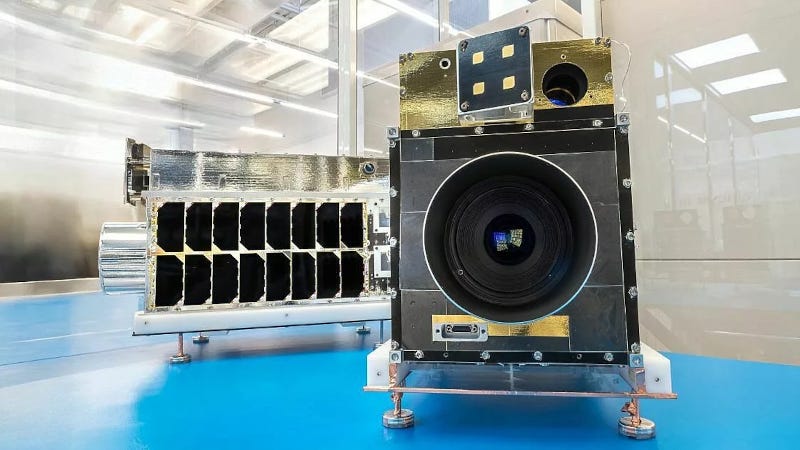
Teodor (C-14) and Laila (C-15) methane monitoring satellites were among the passengers aboard Space X’s Transporter 15 mission. Following GHGSat tradition, the satellites are named after employees’ children, representing the company’s commitment to creating a more sustainable future for the next generation.
“The momentum at COP30 around methane action is encouraging, but momentum only matters if it translates into measurable emissions reductions.”
Stephane Germain, GHGSat
The deployment significantly expands the company’s satellite constellation at a pivotal moment for climate action, as world leaders have pledged at COP30 to strengthen international methane reduction frameworks.
The new satellites boost GHGSat’s industry-leading daily monitoring capacity in asset-dense regions, enabling more frequent coverage of industrial facilities worldwide. With the ability to detect super-emitter events—exceeding 100 kg/hr—and pinpoint their sources to individual equipment, the expanded fleet delivers the precise data that operators, regulators, and investors require to measure and mitigate methane at scale, enabling global progress towards methane reduction.
“In the decade since the launch of our first satellite, we’ve built and scaled the world’s most sophisticated methane monitoring constellation, expanding global access to the comprehensive data needed to address emissions,” said Stephane Germain, GHGSat CEO. “The momentum at COP30 around methane action is encouraging, but momentum only matters if it translates into measurable emissions reductions. That’s where our satellites come in: turning pledges into verifiable results.”
To date, GHGSat has launched 16 satellites—15 focused on methane, and one honed for carbon dioxide—that collectively monitor millions of facilities annually, delivering alerts about emissions within hours of detection. Quick detection is critical, as methane leaks often indicate operational issues that cost industrial operators money while harming the environment. Rapid identification means rapid fixes—recovering lost revenue while protecting clean and healthy air for local communities.
The launch timing aligns with an intensifying focus on methane transparency at COP30. Government decision-makers are working to strengthen monitoring, reporting, and verification systems under the Global Methane Pledge, which commits signatories to collectively reduce emissions 30% by 2030. Independent satellite data provides the foundation for tracking progress against these commitments and builds confidence in reported reductions.
Methane’s outsized climate impact—more than 80 times the warming potential of CO2 over two decades—makes it both a critical threat and an immediate opportunity. Unlike carbon dioxide, which persists for centuries, methane dissipates relatively quickly, meaning near-term reductions deliver swift climate benefits. But capturing those benefits requires what space-based monitoring uniquely provides: frequent, accurate detection that enables rapid response.
The deployment advances GHGSat’s goal to nearly double its constellation by late 2026, responding to surging demand from energy companies, governments, and financial institutions. Clients including ExxonMobil, Aramco, the UK Space Agency, and UN organizations rely on GHGSat’s data to identify emissions hotspots, validate reduction efforts, and meet evolving regulatory requirements.