


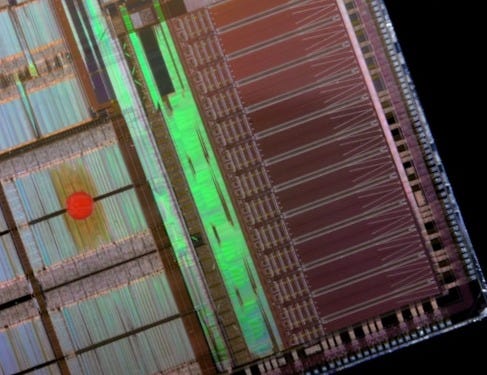
In late 2024, a procurement officer at a U.S. defense contractor delivered news that nobody wanted to hear. Lead times for radiation-hardened processors — the specialized computing brains at the core of military satellite flight computers — had stretched to 18 months. That was longer than it took some commercial satellite companies to go from blank sheet of paper to a working spacecraft in orbit. This scenario, reported across multiple SDA supply chain filings, was not hypothetical. It was the documented reality facing the Space Development Agency’s Proliferated Warfighter Space Architecture.
The Space Development Agency had ambitious plans. It was building out a constellation of hundreds of small LEO satellites designed to track hypersonic missiles and ballistic threats in real time. The model was modern, proliferated, and elegant. The supply chain behind the processors making it possible was none of those things.
This is the story of that gap, and why it matters now more than ever.
A Very Short List of Suppliers
Radiation-hardened processors are not like ordinary chips. They are built to keep computing accurately in environments that would cause a standard laptop to suffer bit-flips, latch-up faults, or total failure within hours. The radiation belts circling Earth, the cosmic ray flux at geostationary altitude, and the particle storms beyond low Earth orbit demand semiconductors that are either built with special process flows (rad-hard by process), fortified at the design level (rad-hard by design), or both.
The list of companies that can reliably deliver flight-qualified, radiation-hardened processors for defense and high-reliability commercial missions is short. Microchip Technology, Renesas, BAE Systems, and Frontgrade Technologies are consistently identified as core processor and digital IC suppliers for this market. A handful of specialty foundries, including select lines at GlobalFoundries, provide the critical manufacturing capacity behind many of these designs. The wider radiation-hardened electronics market, including memories, FPGAs, and power devices, is worth around 1.8 to 2.0 billion dollars today and growing. The processor-specific segment is smaller and more constrained, with analysts tracking it in the mid-hundreds of millions of dollars range today, growing toward roughly 800 million dollars by 2033.
For context, the iPhone semiconductor industry moves billions of dollars of chips in a single quarter. Radiation-hardened processors are, commercially speaking, a rounding error. That scale problem has consequences.
