

The SpaceX IPO and the Space VC Exit Problem
How a $1.75 Trillion Listing Reshapes the Venture Capital Stack

What This Means:
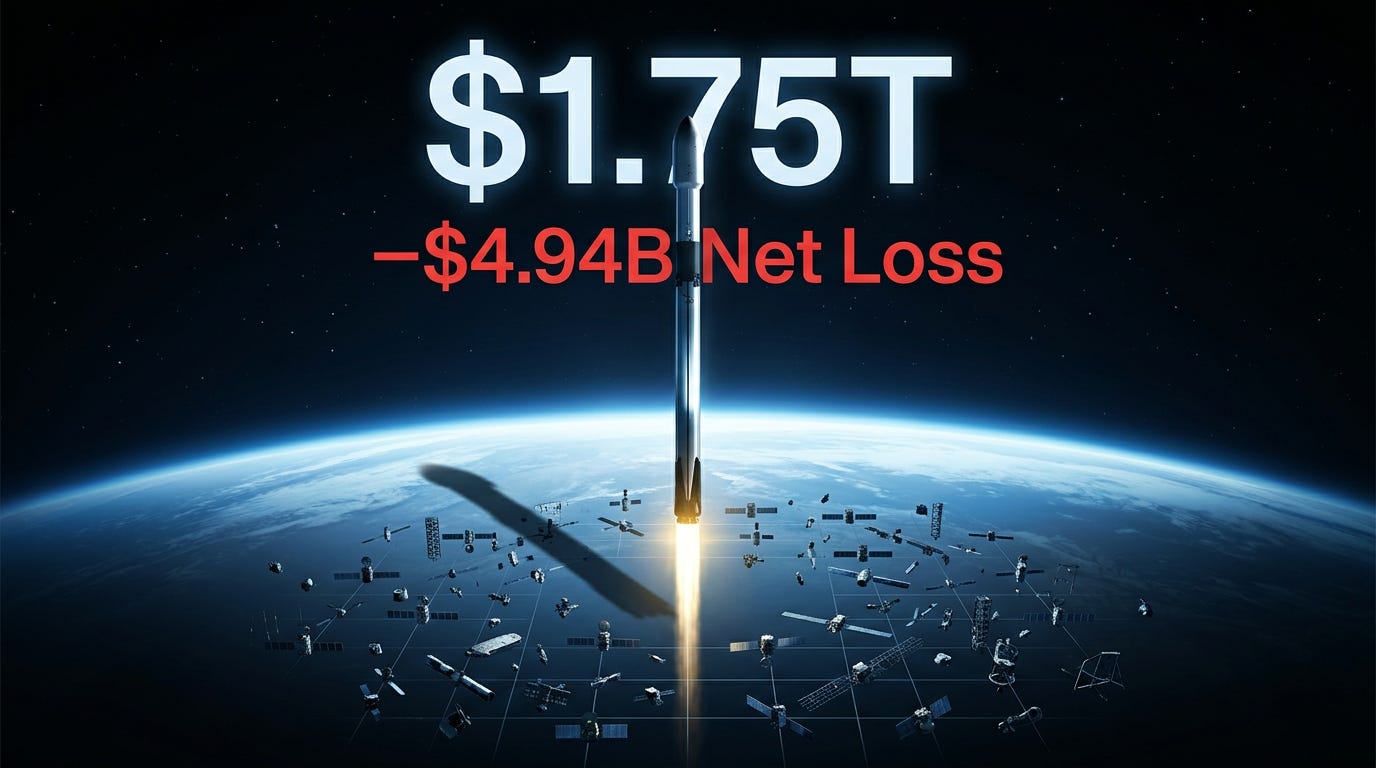
SpaceX’s confidential Securities and Exchange Commission (SEC) filing targeting a $1.75 trillion valuation is not simply the largest initial public offering (IPO) in history — it is a structural reset of the entire space venture capital stack. When the dominant player in a sector goes public at a multiple that exceeds the combined market capitalization of every other space company by an order of magnitude, the math that justified holding early-stage space positions for a decade changes overnight. Investors in space venture funds, and in direct positions across the sector, need to understand exactly how the exit calculus shifts before the roadshow launches in June 2026.
The Signal That Rewrites the Stack
On April 1, 2026, SpaceX filed its confidential S-1 registration with the SEC, targeting a valuation of $1.75 trillion to over $2 trillion and a capital raise of approximately $75 billion — nearly three times the previous record IPO set by Saudi Aramco in 2019, according to Bloomberg, CNBC, and Reuters. The roadshow is expected in June, giving investors a narrow window to position ahead of what will be the most consequential public market debut in the history of the commercial space industry.
That headline is not, by itself, the signal. The signal is buried in the valuation trajectory that brought SpaceX here. In May 2025, SpaceX was valued at roughly $350 billion in a private tender offer. By December 2025, that figure had risen to $800 billion. The February 2026 all-stock acquisition of xAI closed at a combined entity valuation of $1.25 trillion, according to Reuters and CNBC. By the April IPO filing, the target had reached $1.75 trillion — a 5x appreciation in less than twelve months driven by the xAI integration thesis, Starlink’s revenue maturation, and the market’s willingness to price an orbital AI and compute story at a premium no comparable public company has commanded.
What this trajectory tells a sophisticated investor is not that SpaceX is worth $1.75 trillion in any discounted-cash-flow sense. What it tells them is that the private market has been using SpaceX as the tent-pole around which every other space investment thesis has been constructed — and that tent-pole is now being handed to the public markets. The question for every investor in the space sector who is not holding SpaceX directly is the same: what happens to the relative attractiveness of your positions once the anchor company is public, liquid, and subject to daily price discovery?
The next section walks through the confirmed xAI loss structure, the co-founder departure timeline as a material risk factor, and the decision framework for each investor category — venture fund, public equity holder, and IPO participant. Subscribers get full access to the complete analysis and all decision questions.
