

The NATO Premium
What Dual-Use Space Funds Actually Cost Institutional Limited Partners

WHAT THIS MEANS
NATO’s Innovation Fund co-led SatVu’s £30 million Series B in February 2026 alongside the British Business Bank, Lockheed Martin Ventures, Molten Ventures, and four other investors — each carrying a different mandate and a different definition of a successful exit. For institutional Limited Partners (LPs) evaluating dual-use space infrastructure funds in 2026, the deal structure is more important than the deal size. NIF-style sovereign-linked vehicles can accelerate portfolio company revenue through allied government procurement pipelines, but they also introduce exit-path complexity and governance dynamics that traditional LP due diligence screens are not designed to catch. Before committing capital, allocators need to understand which dynamic dominates — and to ask their GPs, in writing, how they manage the conflict when the two diverge.
When NATO’s Innovation Fund wrote a check into SatVu’s £30 million Series B in February 2026, the headline was straightforward enough. A thermal imaging startup had raised money. NATO was backing space companies. Nothing about that sentence should surprise anyone who has been tracking the dual-use investment surge in European deep tech over the past two years.
But slow down and look at the full cap table — NATO Innovation Fund, British Business Bank, Space Frontiers Fund II, Presto Tech Horizons, Molten Ventures, Adara Ventures, Lockheed Martin Ventures, and Seraphim Space Fund all in the same round — and something more interesting comes into focus. That is not a funding announcement. That is a structural exhibit. Four distinct investor mandates, four different return expectations, and four different definitions of what a successful exit looks like, all holding equity in the same satellite company.
For institutional LPs evaluating dual-use space infrastructure funds in 2026, the SatVu round is not interesting because of its size. It is interesting because of what it reveals about how these funds are built, what they are actually optimizing for, and what that means for anyone sitting on the other side of the term sheet.
The Signal Behind the Round
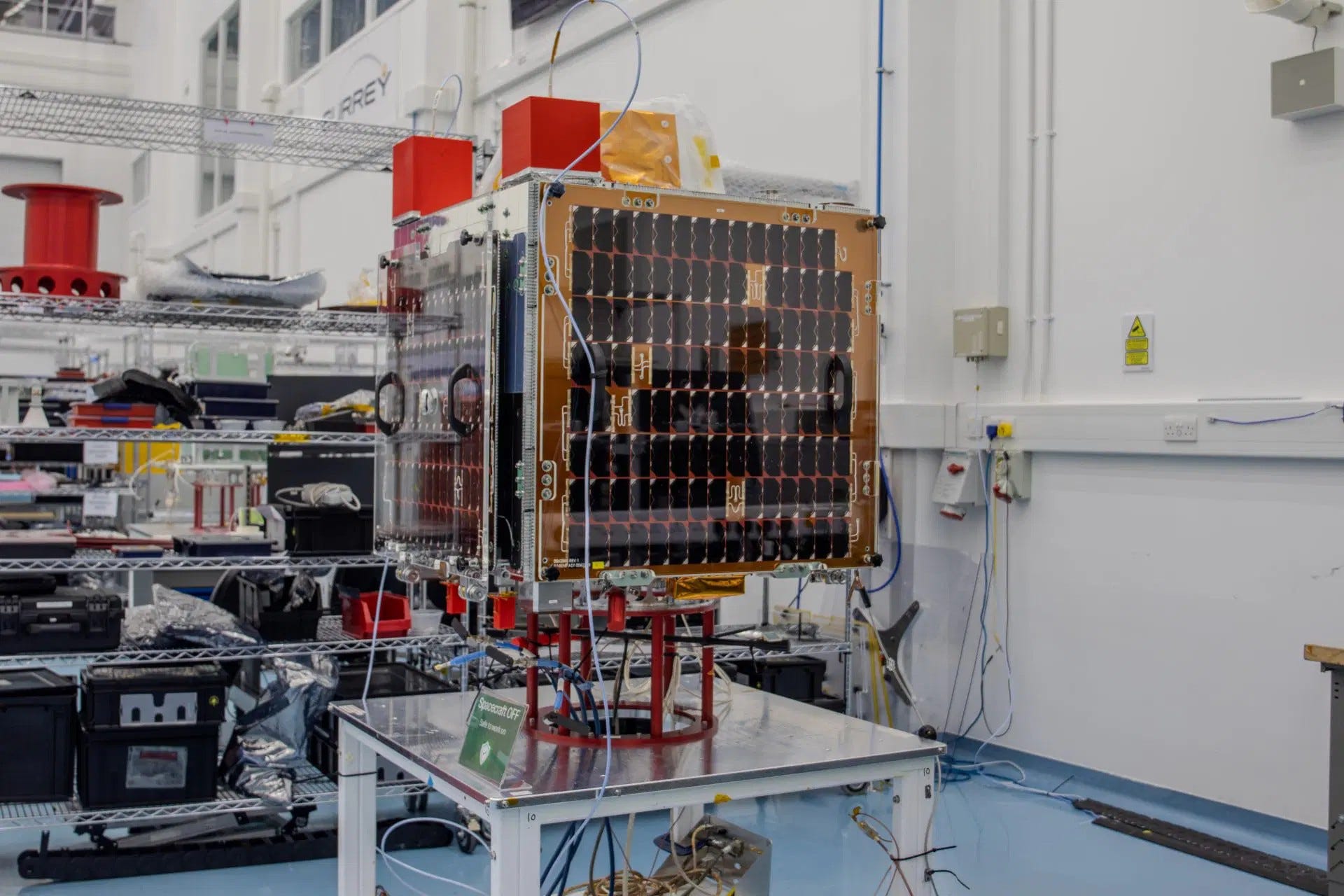
Start with the basics. SatVu closed its £30 million round in February 2026, bringing total equity raised to £60 million. The company builds high-resolution thermal infrared imaging satellites — its HotSat constellation captures heat signatures at approximately 3.5 meters resolution, day and night, in all weather conditions. The intelligence use case is well documented: HotSat-1 data has been used in analysis of activity at North Korea’s Yongbyon Nuclear Scientific Research Center. The climate use case is equally concrete — independent building energy verification, urban heat island mapping, industrial emissions monitoring.
That dual application is what made the cap table possible. Without genuinely credible use cases on both the defense and the ESG side, you do not attract the British Business Bank and NATO to the same table. You attract one or the other.
And with HotSat-2 now scheduled aboard SpaceX’s Transporter-16 mission targeting March 29, 2026, the NIF investment is already on the verge of its first concrete validation point. If HotSat-2 achieves orbit, NIF’s procurement-pipeline thesis moves from strategic intent to operational reality on an unusually fast timeline for a two-year-old fund.
The NATO Innovation Fund’s participation is the signal worth examining. NIF is, by its own description, the world’s first multi-sovereign venture fund — €1 billion committed by 24 NATO allied countries, investing from seed to Series B, with check sizes ranging from approximately €1 million to €15 million. Since becoming operational, NIF has moved at significant pace: as of mid-2025 the fund had completed 19 direct investments and nine fund-of-fund commitments, and it made at least three additional investments in February 2026 alone — SatVu (February 22), TYTAN Technologies’ €30 million Series A in European air defense AI (February 24), and Uplift360’s €7.4 million seed round in advanced materials (February 6). That is not a fund in formation mode. That is a fund in active multi-sector deployment, and the accelerated pace is itself an LP-level signal.
NIF operates independently of NATO’s command structure. But its investment mandate is anchored to a specific objective that standard VC funds do not carry: strengthening the defence and resilience of the alliance. That sentence, lifted from NIF’s own public communications, is the sentence that every LP due diligence process should stop and examine before continuing.
