


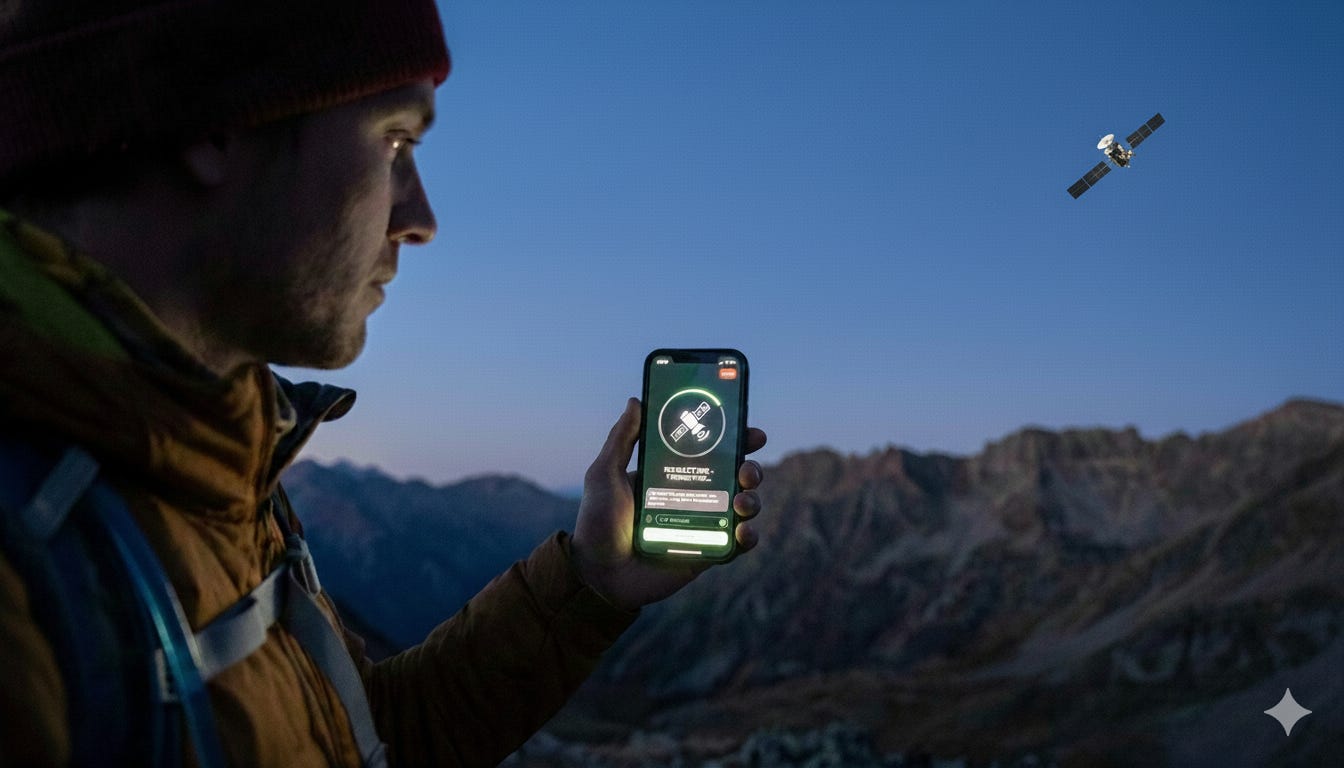
The race to connect every smartphone on Earth directly to satellites is no longer a theoretical exercise. It’s happening now, and three very different strategies are colliding in 2026 in ways that will determine who captures a market projected to explode from $3.62 billion today to $43 billion by 2032.
Elon Musk’s Starlink already has 657 satellites operational and T-Mobile customers sending texts from dead zones across America. AST SpaceMobile just launched its sixth BlueBird satellite on December 23rd and plans to deploy up to 60 spacecraft by year-end to deliver nationwide coverage. Meanwhile, Viasat and the European Space Agency signed a partnership in late 2024 to design a LEO constellation that would give Europe its own horse in this race—a strategic play that’s less about 2026 and more about not ceding the entire market to American companies.
These aren’t just competing technologies. They’re competing bets on what consumers actually want, what physics allows, and what regulators will tolerate. The market opportunity is real—60% of mobile users say they’d pay $5 to $10 more per month for satellite connectivity, and half would switch carriers to get it. But turning that demand into sustainable business models requires solving problems that span orbital mechanics, spectrum law, and smartphone economics simultaneously.
The question isn’t whether direct-to-device satellite connectivity will happen. It’s which architectural approach wins, and 2026 is the year we’ll start getting answers.
The Market That Everyone Suddenly Wants
