

Strategic Partnership Aims to Advance Expandable Space Habitats
Voyager and Max Space Collaborate to Accelerate Deep-Space Human Exploration

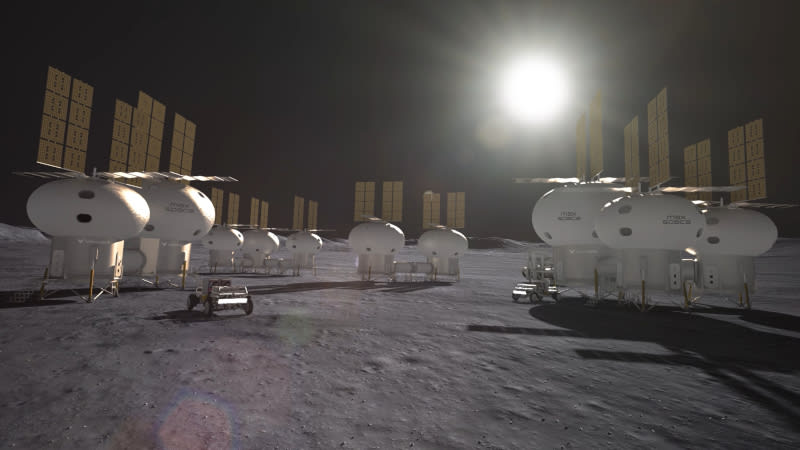
A strategic partnership to advance expandable space exploration technology, serving as the cornerstone of future lunar and deep-space exploration efforts for habitation and storage has been announced by Voyager and Max Space.
“This technology reflects a fundamental shift in how humanity will live and work in space.”
Dylan Taylor, Voyager
The collaboration brings together Voyager’s experience delivering mission-critical space systems and infrastructure with Max Space’s high-volume, low-mass expandable structure technology, creating a scalable approach to human operations on the lunar surface and critical to humanity’s expansion to Mars and beyond. The effort supports a growing national and commercial emphasis toward a sustained human presence and operational continuity beyond low-Earth orbit.
“This technology reflects a fundamental shift in how humanity will live and work in space,” said Dylan Taylor, chairman and CEO, Voyager. “The Moon is no longer a single destination or a flags-and-footprints exercise. It is the next operational domain in a growing space economy that spans exploration, science, national security and commercial development, where sustained operations require infrastructure designed for endurance, scalability and industrial execution.”
“Expandable structures represent a step change in how surface infrastructure can be delivered and deployed,” said Saleem Miyan, co-founder and CEO, Max Space. “Our structure is an evolutionary leap over previous generations, and it’s the only expandable technology with 40 years of on-orbit experience designed into it. Its architecture embodies increased capability, scalability and versatility that are essential for sustained deep-space human activity and to unleash the Lunar and Martian economies.”
The phased development path includes ground validation and in-space demonstrations later this decade, with the goal of enabling operational lunar and Mars capabilities aligned with NASA’s exploration timelines. The partnership emphasizes early risk retirement, interoperability and commercial scalability as guiding principles.