

Strategic Investment Aims to Advance Permanent Lunar Habitat Infrastructure
Voyager Technologies Announces Significant Investment in Max Space

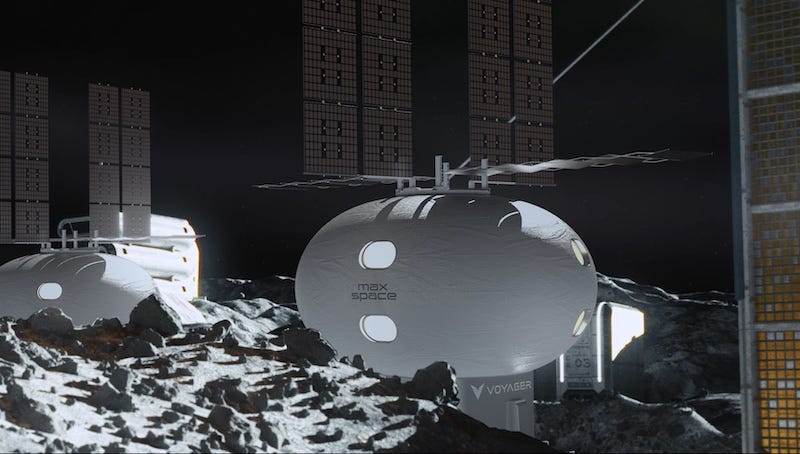
A multi-million-dollar strategic investment by Voyager Technologies in Max Space aims to advance the development of next-generation expandable space habitats supporting sustained lunar operations and future deep-space missions. The company will also support internal research and development efforts to accelerate engineering, manufacturing scale-up and mission integration activities.
“Expanding human presence beyond low-Earth orbit requires infrastructure that is scalable, resilient, and purpose-built for permanence.”
Dylan Taylor, Voyager Technologies
Max Space’s expandable habitat technology launches compactly and expands up to 20 times its stowed volume at its destination. The architecture enables significantly more usable floor area per kilogram delivered, optimizing human productivity and operational flexibility in a gravity environment. Flexible geometries allow optimization for evolving mission needs, from early surface missions to long-duration lunar habitation.
“Expanding human presence beyond low-Earth orbit requires infrastructure that is scalable, resilient, and purpose-built for permanence,” said Dylan Taylor, chairman and CEO of Voyager. “Our investment in Max Space aligns directly with our strategy to deliver mission-ready systems that extend American strength into cislunar space. By pairing Voyager’s integrated platform with Max Space’s expandable habitat architecture, we are accelerating the transition from demonstration missions to durable lunar capability.”
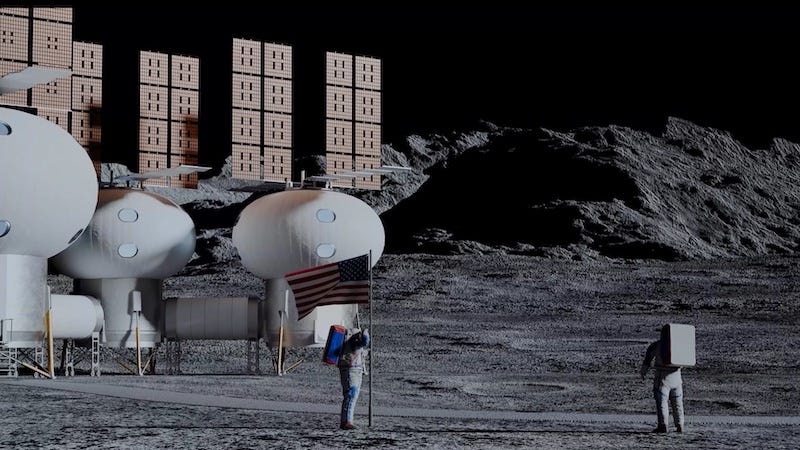
“Max Space was built to solve the hardest problem in lunar exploration: delivering safe, scalable, and permanent human space at an economically viable mass,” said Saleem Miyan, co-founder and CEO of Max Space. “Voyager’s investment is a powerful validation of our expandable habitat thesis and long heritage in orbit. Together we are building habitats designed not just to reach the moon but to stay there.”
This initiative directly supports NASA’s historical Artemis Program and aligns precisely with Administrator Isaacman’s announcement to be on the Moon to stay by 2028. Max Space delivers critical enabling infrastructure, maximizing livable volume, enhancing crew safety, and reducing the cost and complexity of surface deployment. It complements Voyager’s broader lunar roadmap, including cislunar mission management, surface logistics, propulsion, power systems, and future surface infrastructure, reinforcing a shared vision of the Moon as an operational domain, not a temporary destination.