


NASA has selected Stoke Space for a new collaboration focused on advancing upper stage re-entry capabilities for Nova, the company’s fully and rapidly reusable medium-lift rocket. The work falls under NASA’s Space Technology Mission Directorate through an Announcement of Collaboration Opportunity intended to accelerate U.S. space technology and bolster a competitive space economy.
Under the collaboration, Stoke Space and NASA Ames Research Center will work on entry, descent and landing technologies tailored to a reusable second-stage architecture for Nova.
The effort will draw on Ames’ hypervelocity free-flight test capabilities as well as the agency’s aerodynamics and guidance, navigation and control expertise to refine how Nova’s upper stages return through Earth’s atmosphere.
Nova is designed to provide responsive transportation to, through and from space, with both stages built for rapid re-use rather than conventional expendable operations.
Stoke Space has engineered its upper stage to return from orbit and be reused, a configuration the company says could open new options for orbital research and commercial innovation.
Stoke executives have pointed to emerging markets such as microgravity manufacturing that require dependable return of cargo to Earth, not just affordable launch capacity. The company says Nova’s reusable upper stage is intended to make routine microgravity operations and cargo return more practical and consistent at scale.
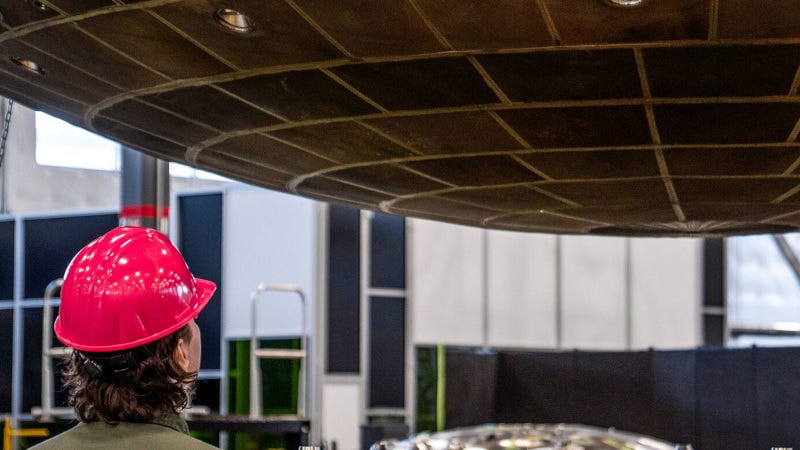
The new collaboration extends a history of NASA support for Stoke Space technology development. In 2020, the company received a Small Business Innovation Research award from the agency to pursue a novel rocket engine configuration. That effort produced the Stage 2 Andromeda integrated engine and a regeneratively cooled re-entry heat shield for the Nova upper stage.
Stoke Space describes the current work with NASA as a next step toward closing the loop on fully reusable launch and routine Earth return. Company leaders have framed that goal as foundational to enabling a more dynamic commercial space economy.