

Space-Traffic Management and SSA Policy
What SpaceX’s Stargaze Signals for the Future of Orbital Governance

Why This Matters
SpaceX’s Stargaze system represents a pivotal shift in how orbital traffic will be monitored and managed just as global space governance faces a funding crisis and escalating congestion risks. By offering faster, denser, near–real-time tracking of low Earth orbit than existing government systems, Stargaze could become the de facto backbone of space situational awareness — but it also concentrates critical safety infrastructure in the hands of a single commercial operator. With U.S. civil space‑traffic management potentially defunded and international rules still undeveloped, decisions made in the next 1–2 years will determine whether future orbital safety relies on coherent public policy or a patchwork of proprietary systems and fragmented norms.
The Orbital Crowding Crisis Is No Longer a Future Problem
Low Earth orbit has crossed a threshold. With more than 18,000 cataloged objects and an estimated 500,000 to 700,000 lethal non-trackable debris fragments already circling the planet, the question of who governs orbital traffic is no longer abstract — it is operationally urgent and commercially consequential. The accelerating deployment of mega-constellations has compressed decision timelines for collision avoidance from days to hours, and in some cases, to minutes. In December 2025, a Chinese satellite made an unannounced maneuver near a Starlink spacecraft, underscoring a key vulnerability in current space traffic management (STM) infrastructure: operators cannot protect their assets if they do not know what other operators are doing.
Against this backdrop, SpaceX unveiled Stargaze in February 2026 — a novel, constellation-based space situational awareness (SSA) system that has landed at the center of a much larger policy debate about who should own, fund, and operate the infrastructure that keeps satellites from colliding. For C-suite executives, investors, government procurement teams, and policy professionals, the Stargaze announcement is not just a technology story. It is a signal about the future architecture of orbital governance, the commercial SSA market, and the regulatory risk environment that every satellite operator must now navigate.
What Stargaze Is — and Why It Matters
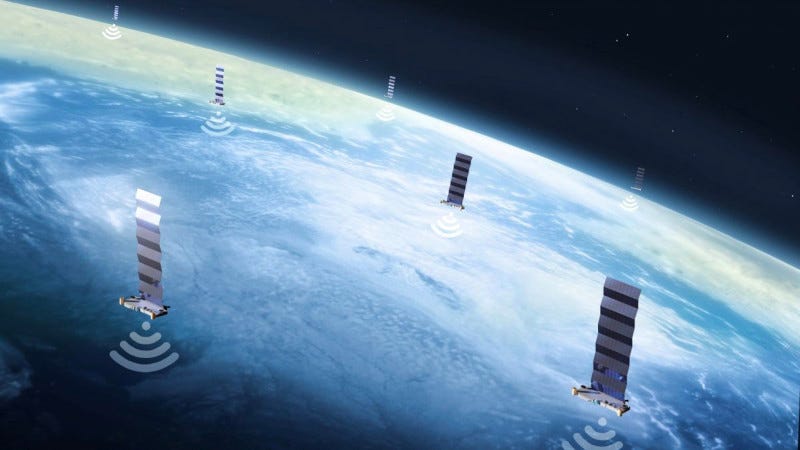
Stargaze is operationally distinct from anything previously available in the commercial or government SSA ecosystem. Traditional SSA relies primarily on ground-based sensors that observe individual satellites only a few times per day, generating inherent uncertainty in orbital predictions and leaving wide windows during which maneuvers go undetected. Stargaze bypasses this limitation entirely by repurposing the approximately 30,000 star trackers already embedded across the Starlink constellation — sensors originally designed for satellite orientation — to continuously observe nearby objects in LEO. The result is approximately 30 million transits detected per day, producing a dense, constantly refreshed positional map of LEO activity.
