

Space Station Research Yields Progress on Cancer Drugs, Heart Disease Treatments
ISS Pharmaceutical Experiments Return to Earth with Results That Could Improve Drug Formulations and Manufacturing

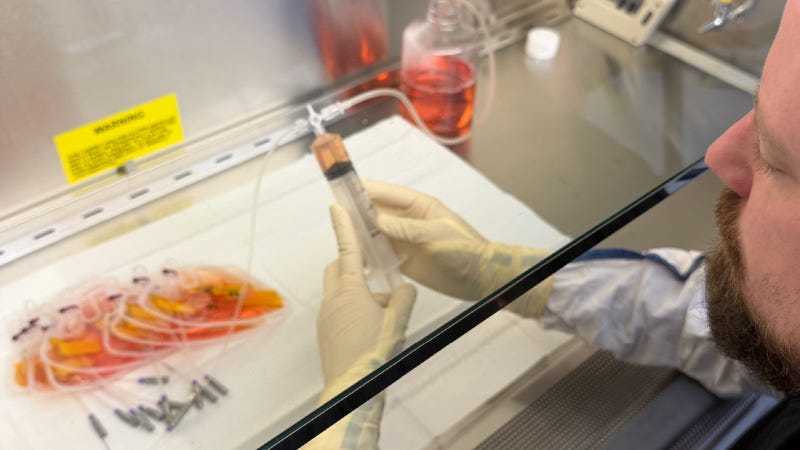
Five pharmaceutical and biotech investigations conducted aboard the International Space Station have wrapped up on-orbit operations, with all experiments returning to Earth on June 17, 2026. The investigations — focused on cancer therapeutics, drug crystal formation, and heart disease — were carried out by Redwire in partnership with leading pharmaceutical and academic researchers.
Four of the investigations used the Redwire PIL-BOX platform, a system that leverages the microgravity environment aboard the ISS to grow small-batch crystals of pharmaceutically relevant molecules. The fifth investigation used Redwire’s Multi-Use Variable-Gravity Platform (MVP) to study the cardiac effects of bacterial pneumonia.
Advancing Cancer Treatments
Aspera Biomedicines, a company specializing in cancer stem cell targeted therapies, used PIL-BOX to advance the development of Rebecsinib, an ADAR1 inhibitor. Results from the investigation could enable new drug formulations offering broader cancer treatment options, marking the second spaceflight investigation Redwire has conducted for Aspera.
Bristol Myers Squibb (BMS) partnered with Redwire for the third time, using PIL-BOX to grow crystals of large-molecule compounds — complex therapies derived from living organisms that target specific biological processes and treat diseases that small-molecule drugs often cannot address.
Improving How Drugs Are Made
Rowan University researchers used PIL-BOX to study how microgravity affects crystal formation in pharmaceutical products, with the goal of improving production processes on Earth. In a novel approach, Rowan incorporated a second component into a host molecule to generate what researchers are calling pharmaceutical alloys — a technique that could allow drug makers to fine-tune a medication’s properties.
A second investigation conducted for Purdue University used PIL-BOX to examine how microgravity influences the crystallization of several pharmaceutical compounds targeting cancer, cardiovascular conditions, and anti-aging. These latest investigations bring the total number of PIL-BOXes flown to date to 54.
A New Look at Heart Disease
A biotech investigation led by researchers at the University of Alabama at Birmingham (UAB) used Redwire’s MVP platform to study heart disease caused by the bacteria responsible for community-acquired pneumonia (CAP). The investigation, designated MVP-Cell-09, examined how pneumonia damages heart tissue, identified factors that increase bacterial virulence, and aims to pave the way for new treatments. Heart tissue samples returned from the station are now being analyzed by the UAB research team.