

Space Situational Awareness Takes Center Stage at UN Space Committee Session
U.S. TraCSS System Showcased as Global SSA Coordination Advances

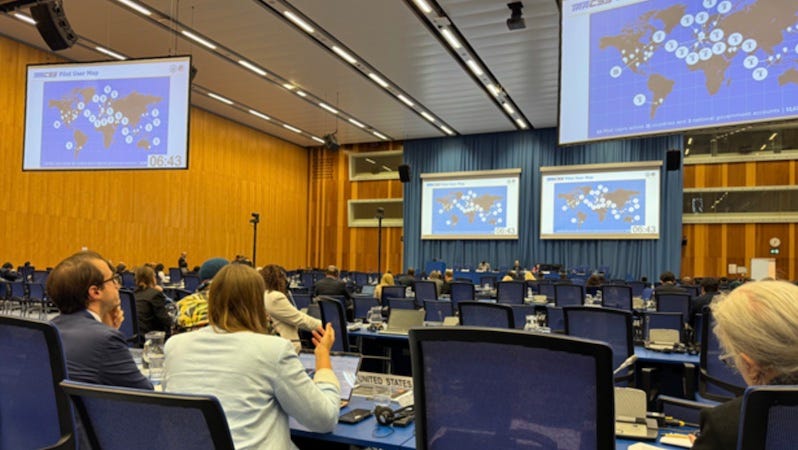
Space situational awareness coordination emerged as a key focus at the 69th Session of the United Nations Committee on the Peaceful Uses of Outer Space (COPUOS), with the United States presenting a progress update on its civilian space traffic management system and an international expert group releasing draft recommendations aimed at preventing on-orbit collisions.
Staff from the Office of Space Commerce (OSC) participated as members of the U.S. delegation, including OSC Policy Director Gabriel Swiney and Head of International SSA Coordination Dr. Mariel Borowitz.
The centerpiece of OSC’s technical engagement was a presentation by Borowitz on the Traffic Coordination System for Space, known as TraCSS. The system is being developed to provide basic space situational awareness data and services to U.S. and foreign civil and private space operators in support of spaceflight safety.
A significant milestone was highlighted during the session: TraCSS has begun onboarding foreign “National Government Accounts,” a major step toward realizing OSC’s stated “Vision for Global Space Situational Awareness Coordination.” The system is designed to provide a foundation for international coordination as the number of satellites and operators in orbit continues to grow.
The 69th COPUOS session also featured the debut of draft recommendations from the Expert Group on Space Situational Awareness of the Working Group on the Long-Term Sustainability of Outer Space Activities. The SSA Expert Group, established in 2025, is studying approaches to enhance international cooperation and information exchange regarding space traffic.
The group’s draft recommendations focus on what it has identified as minimal operational information-sharing requirements to prevent collisions in space:
Spacecraft operators should be encouraged to share their contact information with appropriate SSA systems.
Spacecraft operators should be encouraged to share, on a voluntary and mutually accepted basis, their orbital information and satellite attributes with existing SSA systems and/or other operators at the national, regional, or international level, as appropriate.
According to the Expert Group’s workplan, the group will finalize, consolidate, and present its full recommendations throughout 2027.
The 69th Session of COPUOS took place in June. The committee serves as the primary United Nations body for overseeing international cooperation in the peaceful exploration and use of outer space.