

Space Force Awards $3.2M Contract to Advance On-Board Space Domain Awareness Processing
Scout Space Technology to Enable Near-Real-Time Resident Space Object Tracking for Warfighters

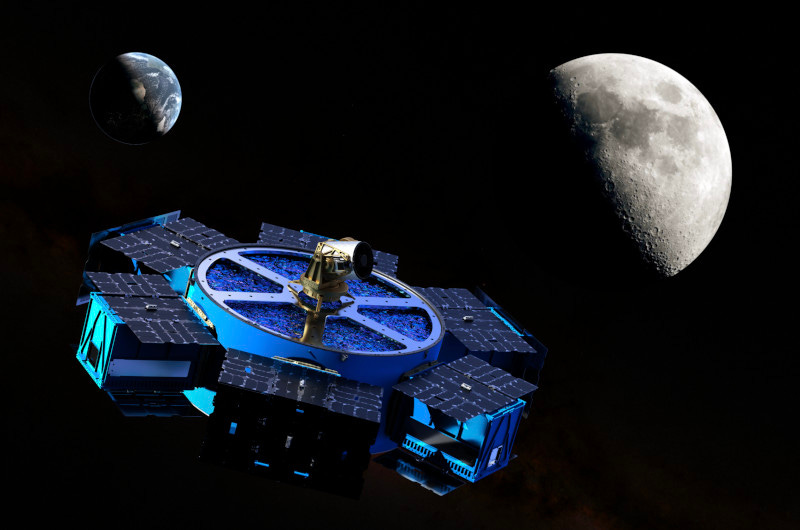
A $3.2 million Tactical Funding Increase (TACFI) Sequential Phase II contract to develop advanced on-board data processing for space domain awareness has been awarded to Scout Space Inc. by the United States Space Force Space Systems Command Space Safari Office. The contract builds on a successful Phase II effort and targets near-real-time tracking and identification of resident space objects in support of tactical operations.
“Our Phase II validated our approach and demonstrated the potential of our technology.”
Philip Hover-Smoot, Scout Space
The contract is structured with $1.6 million each from SpaceWERX and a private match from Scout Space. The initiative centers on the development of a prototype data management system designed to improve the tracking and custody of resident space objects — any natural or man-made objects in Earth orbit — using novel proprietary techniques built on Scout’s existing sensing payloads, which are already augmenting the Space Surveillance Network.
“Our Phase II validated our approach and demonstrated the potential of our technology,” said Philip Hover-Smoot, CEO of Scout Space. “With this next phase, we are expanding on that success to develop and demonstrate algorithms that incorporate more robust detection, association, and intent estimation into a broader self-protect suite.”
A key deliverable under the contract is the creation of a Minimum Viable Product for data assimilation that integrates advanced processing and data exploitation algorithms, developed in close collaboration with government stakeholders. The MVP will incorporate Scout’s Owl gimbaled space domain awareness payloads, which are designed to enhance space autonomy and tactical intelligence by leveraging on-board perception data.
The work is intended to deliver actionable intelligence to warfighters with minimal latency — addressing a persistent challenge in space situational awareness where data must currently be routed through ground systems before it can be acted upon. Scout’s approach moves a meaningful portion of that processing to the spacecraft itself, compressing the decision loop for space domain operations.
Hover-Smoot expressed confidence in meeting the program’s timeline. “We are confident in our ability to complete this project within the 24-month timeframe,” he said. “Our cost proposal is reasonable, with matching funds in place to ensure effective use of the government’s investment.”
The TACFI contract mechanism, administered through SpaceWERX — the innovation arm of the Space Force — is designed to bridge the gap between promising small business technology demonstrations and full-scale operational deployment. TACFI awards typically follow a successful Phase II Small Business Innovation Research effort and carry increased funding to accelerate prototype development and transition to operational use.
Scout Space’s Phase II work demonstrated the utility of its sensing payloads in augmenting the Space Surveillance Network, the primary system the U.S. military uses to track objects in Earth orbit. The new contract expands on those findings by adding capabilities for object identification, custody maintenance, and intent estimation — functions that go beyond basic tracking to provide richer situational awareness for space operators.
The Space Safari Office at Space Systems Command, headquartered at Los Angeles Air Force Base in El Segundo, California, focuses on rapid acquisition of innovative space capabilities. Its role in administering the TACFI award reflects the Space Force’s continued investment in commercial and startup-sector technology to address space security challenges.