


The U.S. Space Force has added $28 million to an existing contract with Impulse Space, funding two additional missions meant to demonstrate rapid maneuvering in orbit.
“As space operations become increasingly complex, maneuverability on orbit is no longer a luxury, but a necessity.”
Eric Romo, Impulse Space
Space Systems Command’s Space Safari Office awarded the Small Business Innovation Research Phase III contract extension Aug. 12. It covers the VICTUS SALO 2 and VICTUS SALO 3 missions and builds on Impulse Space’s existing contract supporting the upcoming VICTUS SALO 1 and VICTUS SURGO missions.
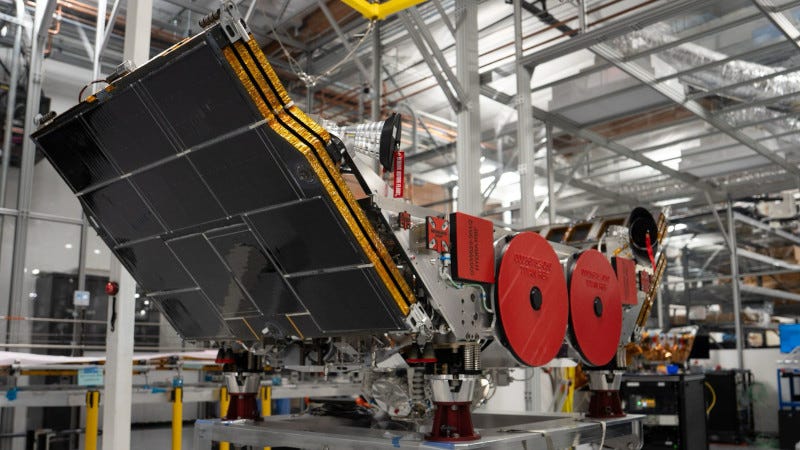
Under the extension, Impulse Space will deliver two Mira spacecraft to Space Systems Command to host government-supplied payloads during missions in low Earth orbit. The Mira platform uses eight Saiph thrusters powered by a chemical propulsion system and is rated for up to 1,901 mph (850 meters per second) of delta-v carrying a 220-pound (100-kilogram) payload.
VICTUS SALO 2 and 3 will follow VICTUS SALO 1, which is currently targeted to launch in 2027.
“As space operations become increasingly complex, maneuverability on orbit is no longer a luxury, but a necessity,” said Eric Romo, Impulse Space president and chief operating officer. “Mira’s agile, high delta-v capabilities can support the United States Space Force’s work to increase the tactical responsiveness of assets on orbit through these missions.”
Impulse Space, founded by Tom Mueller, builds two spacecraft platforms: Mira, an orbital maneuvering vehicle, and Helios, a kick stage designed to move payloads to higher orbits.