

Space-Based Data Storage Moves Toward Commercial Scale
Second Payload Added as StarVault Prepares for First Operational Service Flight

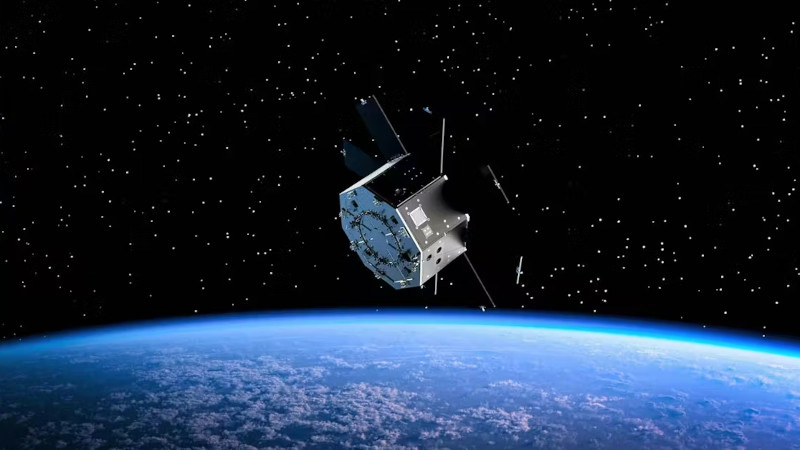
A commercially operated data storage service hosted in orbit is moving from demonstration to early scaling, as Lonestar Data Holdings, working with spacecraft manufacturer Sidus Space, advances plans for a second dedicated payload aimed at expanding capacity and redundancy for off‑planet data storage.
“With StarVault, we are not just launching a new category — we are scaling it.”
Steve Eisele, Lonestar Data Holdings
The service, known as StarVault, is scheduled to fly its first operational payload on a satellite mission no earlier than fall 2026. The addition of a second payload signals preparation for sustained service rather than a single proof‑of‑concept mission, a step that aligns with broader efforts to establish space‑based digital infrastructure as a commercial market.
StarVault is designed to store encrypted data aboard orbiting spacecraft, positioning space as an alternative layer for data protection alongside terrestrial cloud and data center systems. The concept is largely aimed at customers facing heightened concerns over data sovereignty, cyber risk and physical vulnerability of Earth‑based infrastructure.
The first payload is slated to launch aboard LizzieSat‑4, a satellite currently in production. The follow‑on payload would fly on a later mission, expanding both coverage and resilience of the initial network. Together, the payloads are intended to form the foundation of an orbital data storage architecture capable of incremental growth.
“Demand for off-planet data security has exceeded expectations,” said Steve Eisele, chief executive of Lonestar Data Holdings. “With StarVault, we are not just launching a new category — we are scaling it.”
The companies describe StarVault as the world’s first commercially operational, space‑based sovereign data storage service. The system combines cryptographic key management with data storage hosted beyond Earth, a structure intended to reduce exposure to terrestrial disruptions ranging from cyberattacks to natural disasters and geopolitical events.
The move to add a second payload reflects a transition from experimental missions toward repeatable commercial deployment. According to the companies, earlier missions — including flights to Earth orbit and lunar destinations — were used to test and validate the technical approach ahead of the first operational launch.
Carol Craig, founder and chief executive of Sidus Space, said the expanded scope reflects growing confidence in assembling and integrating complex, mission‑specific payloads for commercial customers. “The expansion highlights the strength of our engineering processes and our ability to support increasingly complex payload integrations,” Craig said. “Sidus is designed to deliver scalable space hardware through proven manufacturing, integration, and mission execution.”
The first StarVault payload remains under construction, with launch targeted no earlier than fall 2026. The additional payload is intended to increase redundancy and capacity as service moves beyond an initial activation phase and toward recurring commercial availability.
Company officials say interest in space‑based data storage has emerged primarily from government entities, financial institutions and operators of critical infrastructure — sectors where regulatory requirements, jurisdictional control of data and continuity of operations are increasingly linked to national and economic security.