

Series D Round Pushes Impulse Space Past $1 Billion in Total Funding
Redondo Beach Firm to Scale Manufacturing and Hiring to Meet Demand for Post-Launch Orbital Mobility

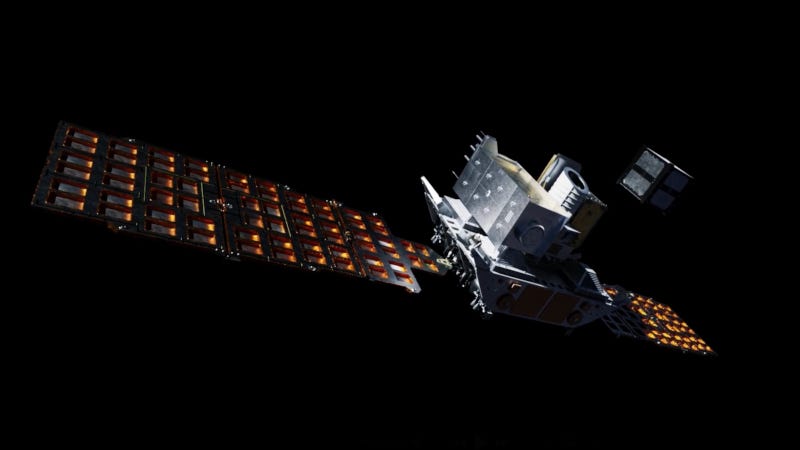
A $500 million Series D funding round has been closed by Impulse Space, the Redondo Beach, California-based in-space mobility company, pushing its total capital raised to more than $1 billion.
“We’re building more than spacecraft: we’re building the economic and technical engine that will power humanity’s expansion into space.”
Tom Mueller, Impulse Space
The round was co-led by 137 Ventures and BANNER VC. Additional participants include Founders Fund, Lux Capital, and Linse Capital. Impulse said it will use the proceeds to expand manufacturing capacity and grow its workforce, which has more than doubled over the past year.
The company currently has more than 200 open positions spanning propulsion, avionics, autonomy, spacecraft systems, manufacturing, and mission operations. Facilities include offices in Redondo Beach and Boulder, Colorado, a government affairs presence in Washington, D.C., and a growing test complex in Mojave, California.
Impulse designs, builds, and operates spacecraft and propulsion systems engineered specifically for movement after launch — orbital transfers, repositioning, and rendezvous and proximity operations. The company has flown three missions and holds hundreds of millions of dollars in customer contracts across commercial, civil, and government sectors.
“We’re building more than spacecraft: we’re building the economic and technical engine that will power humanity’s expansion into space,” said Tom Mueller, founder and CEO of Impulse Space. “From Earth orbit to the Moon and beyond, the ability to move quickly, precisely, and affordably on orbit is the fundamental capability that will unlock a true space age.”
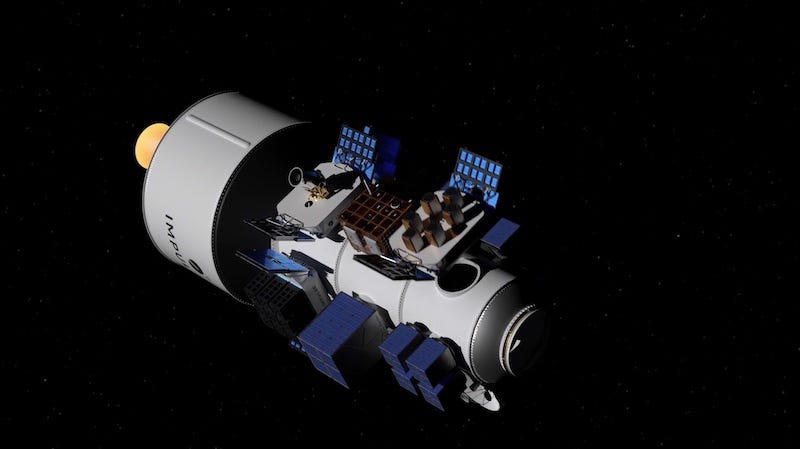
The company’s current fleet includes Mira, a precision maneuvering spacecraft that has executed multiple missions including record orbit changes and autonomous rendezvous operations, and Helios, a high-energy kick stage scheduled for first flight in 2027. Helios is designed to move payloads from low Earth orbit to medium Earth orbit, geostationary orbit, heliocentric trajectories, and lunar destinations on timelines and at costs the company says are substantially lower than conventional approaches.
Alongside its spacecraft, Impulse is developing three propulsion systems: Saiph, for precision maneuvering and orbital repositioning; Deneb, for high-energy long-distance transport; and Rigel, a throttleable engine for applications including landers and responsive maneuvering. A Caravan rideshare program is also designed to reduce the cost of access to higher-energy orbits such as geostationary.
The company’s investors framed the round as a bet on post-launch mobility as a structural gap in the existing space supply chain.
“Tom helped transform access to space at SpaceX, and now he’s tackling the industry’s next major challenge: in-space mobility,” said Justin Fishner-Wolfson, Managing Partner at 137 Ventures. “Mobility in space is strategic and will define the next phase of the space economy, and Impulse is building the infrastructure to make that possible.”
Adam Ramada, Managing Partner at BANNER VC, said the round reflects a broader shift in how operators are thinking about orbital architecture. “As activity in orbit increases, in-space mobility becomes foundational,” Ramada said. “Impulse is building the infrastructure that enables the next layer of growth for the space economy.”
Mueller, who previously served as SpaceX’s first Vice President of Propulsion, founded Impulse in 2021. The company’s Mira spacecraft has demonstrated autonomous rendezvous and proximity operations — capabilities increasingly sought by both commercial operators and government customers for satellite servicing, inspection, and deployment missions.
Eric Romo, President and COO of Impulse Space, said the funding positions the company to meet demand without slowing execution. “Demand for in-space mobility is exceptionally high, and we’re growing our team and production to address it head on,” Romo said.
The next scheduled milestone is the first flight of the Helios kick stage in 2027.