


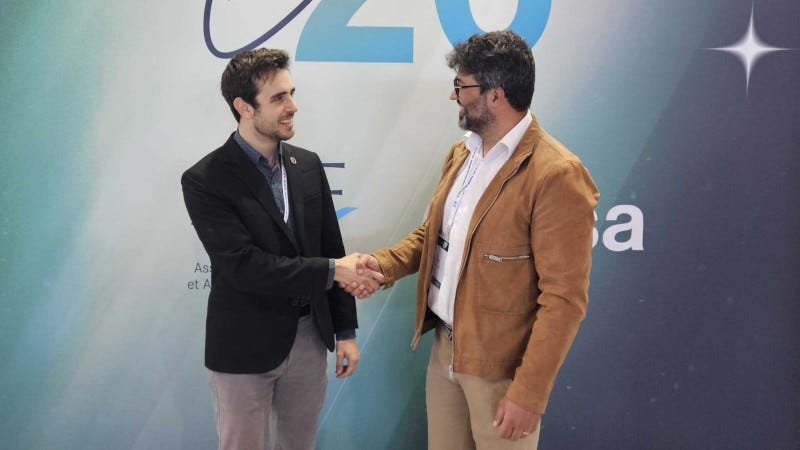
A ground-based satellite refueling demonstrator is being prepared by Orbit Fab and Thales Alenia Space that both companies say is intended to validate a new architecture for electric propulsion systems designed to be serviced in orbit.
“Integrating our RAFTI technology with their electric propulsion expertise is a natural combination.”
Jacob Geer, Orbit Fab
The project, known as REEF – short for Refuellable Electric Engine Flatsat – will focus on fluid interfaces and operational procedures for refuellable propulsion, according to a May 26 news release from Orbit Fab. The Flatsat demonstrator was announced at the Space Propulsion conference in Bari, Italy, on May 20.
Teams from Orbit Fab and Thales Alenia Space in the United Kingdom will collaborate on the program, which is supported by the UK Space Agency’s National Space Innovation Program. The initiative aims to advance what participants describe as more sustainable and resilient space operations by extending spacecraft lifetimes and improving operational flexibility.
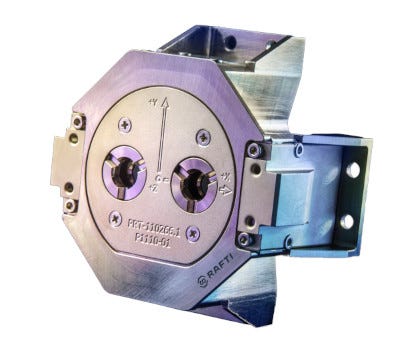
Orbit Fab will integrate its Rapidly Attachable Fuel Transfer Interface, or RAFTI, into the REEF architecture. The fluid transfer port has emerged as a standardized refueling interface on commercial spacecraft, and the company has positioned it to replace traditional satellite service valves with minimal impact on cost, mass or volume.
Jacob Geer, managing director for Orbit Fab in Europe, said the partnership is intended to demonstrate the viability of refuellable satellites equipped with electric propulsion. “We are delighted to be partnering with Thales Alenia Space in the UK on this important project,” Geer said. “Integrating our RAFTI technology with their electric propulsion expertise is a natural combination, and one that will help demonstrate the viability of refuellable satellites for the next generation of missions using electric propulsion. As the demand for longer-lasting and more sustainable spacecraft grows, collaborations like this are essential to making in-orbit refueling a reality for operators across Europe.”
Orbit Fab describes REEF as a step toward a future in which spacecraft are designed from the outset to be serviced, upgraded and refueled on orbit. Company officials say refueling and servicing can support a circular economy in space by reducing waste and maximizing the value of existing orbital assets. Thales Alenia Space will bring what Orbit Fab characterizes as world-class expertise in spacecraft propulsion subsystems to the program. The company said the work on REEF is intended to further advance satellite propulsion technology while supporting mission life extension and operational resilience.
The UK Space Agency framed its support for REEF as part of a broader effort to build what officials call a foundation for an on-orbit economy. “NSIP is proud to support UK companies with world‑class expertise in building the foundations of a thriving on‑orbit economy,” said Iain Hughes, head of the National Space Innovation Program at the UK Space Agency, in the Orbit Fab news release. “By enabling reuse, extending mission lifetimes and unlocking a circular approach to space, partnerships like this are driving a more sustainable, resilient and commercially dynamic future for the sector.”
The REEF effort builds on Orbit Fab’s wider refueling infrastructure, which includes what the company describes as the first fuel depot already in orbit and four refueling missions planned over the next two years. Those missions will include both refueling demonstrations and services to satellites equipped with the RAFTI interface.
Orbit Fab said RAFTI is available under an open license and has become a de facto industry standard satellite refueling interface. Spacecraft manufacturers can use the interface for ground fueling before launch and design missions to receive propellant in orbit later in their operational life.
Orbit Fab is headquartered in Colorado and operates additional facilities in the United Kingdom.