

Record Launch Contract and Robotics Acquisition Expand Rocket Lab’s Mission Capabilities
Confidential Customer Books Five Neutron and Three Electron Flights as Company Acquires Motiv Space Systems

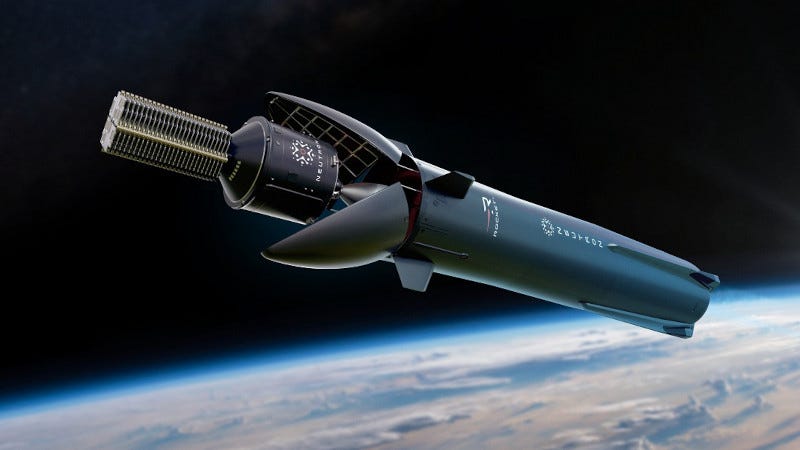
A confidential customer has booked the largest launch contract in Rocket Lab Corporation’s history while the company simultaneously agreed to acquire a space robotics firm, pairing a major commercial milestone with a strategic move to vertically integrate spacecraft components.
“This record launch contract sends a clear signal: the space industry needs more launch capacity and it needs it from launch providers who know how to deliver.”
Sir Peter Beck, Rocket Lab
The multi-launch agreement covers five dedicated Neutron launches and three dedicated Electron launches, with missions baselined between 2026 and 2029. The deal brings Rocket Lab’s total launch manifest to more than 70 missions and values the company’s overall backlog at more than $2.2 billion. Missions will lift off from Rocket Lab Launch Complex 1 in New Zealand and Launch Complex 3 in Virginia. Pricing aligns with Rocket Lab’s average selling price for Neutron and Electron; remaining terms are undisclosed.
Neutron’s commercial launch manifest is now filling up through to the end of the decade — a milestone reached before the reusable medium-lift rocket’s inaugural launch.
“This record launch contract sends a clear signal: the space industry needs more launch capacity and it needs it from launch providers who know how to deliver,” said Rocket Lab founder and CEO Sir Peter Beck. “Operators are moving fast to establish infrastructure on orbit, government customers are modernizing their space capabilities, and new technology is being developed to test in space — and all of it needs the type of reliable, frequent access to orbit that Electron provides and Neutron will soon deliver.”
The new contract surpasses Rocket Lab’s previous launch contract record, set earlier this year with a $190 million agreement for a block buy of 20 hypersonic test flights with its HASTE launch vehicle for the Department of War. Together with other contracts secured in the first quarter of 2026, Rocket Lab has now sold more launches in the first three months of the year than in all of 2025. The company has completed 87 Electron launches to date and characterizes itself as the world’s second most active launch provider.
The company’s tri-vehicle approach covers small satellite launch with Electron, hypersonic testing with HASTE, and medium-lift constellation and national security missions with Neutron, which is also designed to eventually support human spaceflight.
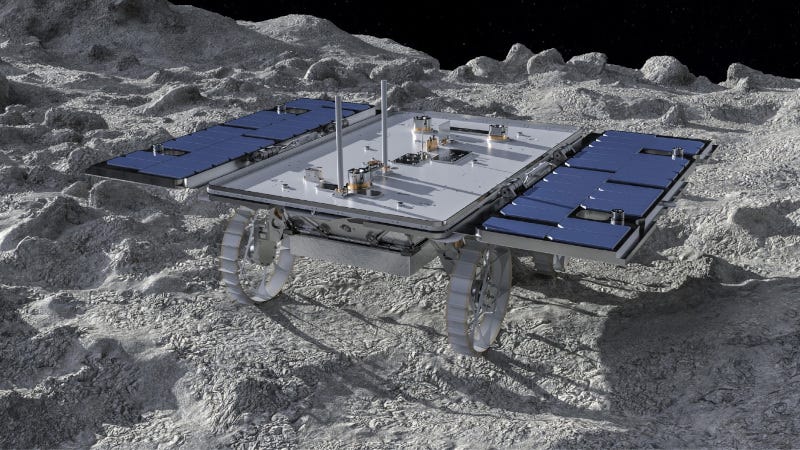
On the same day, Rocket Lab signed a definitive agreement to acquire Motiv Space Systems, a Pasadena, California-based company specializing in space robotics, motion control systems, and precision mechanisms for spacecraft. Upon closing, Motiv will be rebranded as Rocket Lab Robotics. The transaction is expected to close in the second quarter of 2026, subject to customary closing conditions.
Motiv is known for its advanced multi-degree-of-freedom robotic arms, actuators, and drive electronics deployed on some of the most demanding space missions, including NASA’s Mars Perseverance rover, the CADRE lunar rovers, and precision mechanisms supporting scientific instruments and spacecraft subsystems.
The acquisition advances two strategic objectives. First, it adds Mars-proven robotics heritage for advanced planetary and national security missions, positioning the company to pursue future lunar and planetary exploration contracts, including a potential commercial Mars Sample Return mission. Second, it closes one of the final gaps in Rocket Lab’s vertical integration strategy by bringing in house costly and supply-constrained spacecraft components — specifically solar array drive assemblies (SADAs), antenna and propulsion gimbals, filter wheels, focus mechanisms, and precision drive electronics.
These components are often expensive and supply-constrained, creating production bottlenecks for companies building satellite constellations at scale. By bringing them in house, Rocket Lab aims to reduce external dependencies, lower costs, accelerate production timelines, and improve quality control for both its own programs and its customers.
“Motiv has built a stellar reputation for delivering reliable, high-performance robotics and mechanisms that thrive in the harshest space environments,” Beck said. “Our acquisition strategy is simple but proven and effective: we identify the best space technologies that have struggled to scale, and we bring them into the Rocket Lab ecosystem. By applying our resources, expertise, and manufacturing scale, we make these technologies more accessible and affordable for the global space industry. We’re excited to bring that same approach to Motiv’s world-class products.”
Motiv CEO Chris Thayer welcomed the move. “We’re excited to join Rocket Lab. It’s a natural next step for Motiv and allows us to scale what we’ve built and support a growing customer base,” Thayer said. “We’ve focused on delivering mission-critical robotics and motion control systems for some of the most demanding space missions, and this positions us to expand that work into new mission areas.”
Motiv’s team of 50 engineers and technicians will join Rocket Lab, and the company’s Pasadena manufacturing facilities will be added to Rocket Lab’s network of advanced space manufacturing and development sites in California, Virginia, Colorado, Maryland, New Mexico, Arizona, Canada, Germany, and New Zealand.