

Radar Tracking Experiment Completed by Aurora Spaceplane
Demonstration Conducted by Dawn Aerospace and New Zealand’s Defense Science and Technology

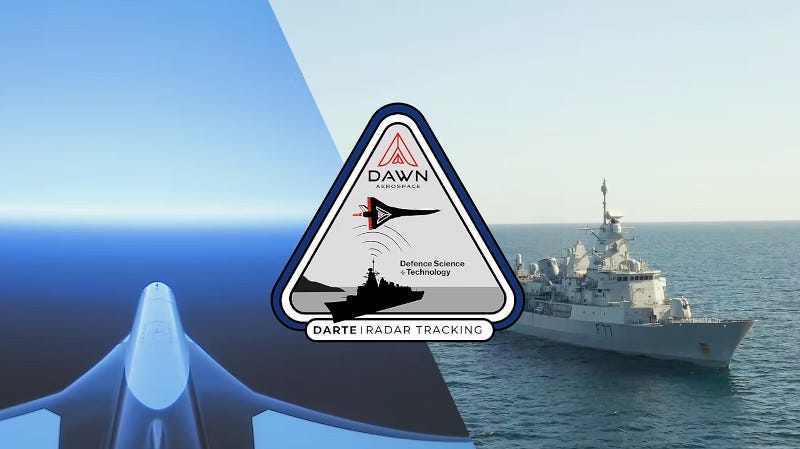
DARTE - a joint mission involving NZDF | Defense Science & Technology (DST), the New Zealand Defense Force, the Royal New Zealand Navy, and the Dawn Aerospace suborbital spaceplane ‘Aurora’, has been successfully conducted.
“DARTE shows the value of New Zealand industry, defense capability and national infrastructure working together with purpose.”
David Galligan, DST
The Dawn Aerospace Radar Tracking Experiment (DARTE) evaluated the radar’s ability to detect and track a high-altitude, high-speed air vehicle under controlled conditions. By conducting the experiment domestically, the New Zealand Defense Force (NZDF) gained real-world performance data without relying on overseas test ranges. In this mission Aurora was flown in custom flight profiles from Tāwhaki National Aerospace Center, while HMNZS Te Kaha, a naval frigate, tracked the vehicle using its onboard radar systems.
DARTE highlights the value of emerging technologies research underway in New Zealand, at the intersection of industry, science and defense, representing the first operational step in using reusable rocket-powered aircraft architecture for repeatable high-performance trajectories. Future vehicles in the Aurora program are designed to reach speeds above Mach 3.5 and altitudes over 100 km.
“DARTE shows the value of New Zealand industry, defense capability and national infrastructure working together with purpose,” said DST Director David Galligan.
By flying repeatable high-performance trajectories, Aurora provided a controllable and repeatable test vehicle to simulate trajectory profiles relevant to maritime surveillance and defense evaluation.
“We built Aurora because few reusable platforms in the world can match this performance envelope. It brings a completely new level of rapid, repeatable testing to the table for both civil and national security evaluations,” said Stefan Powell, CEO of Dawn Aerospace.
Developing this capability domestically also contributes to New Zealand’s sovereign aerospace capability, allowing defense and research organizations to conduct advanced flight testing within New Zealand rather than relying solely on overseas infrastructure. Building this capability locally helps retain government investment within the New Zealand economy while strengthening national technological capacity and supporting collaboration with international partners and allied research programs.