

Partnership Aims to Advance How Data Moves on Satellites
Gilmour Space Selects Transcelestial Lasers for High-Speed Data Transmission

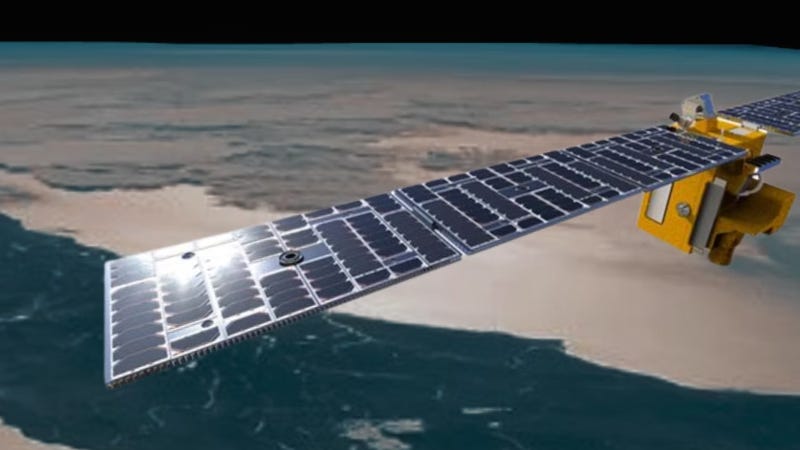
A long-term strategic partnership has been formed to bring laser communications capabilities to advance how data moves on satellites. Gilmour Space will collaborate with Transcelestial to fly a Transcelestial terminal and support an in-orbit demonstration designed to validate the performance of wireless laser communications in real operating conditions.
“Satellites are not just sensors in orbit anymore but are becoming full blown orbital data centers, and the network layer is now falling behind.”
Rohit Jha, Transcelestial
The planned flight comes as satellite operators face a growing mismatch between how much data spacecraft can collect and how quickly they can deliver it to users on the ground, especially as sensors become more capable, data and connectivity workloads become more bandwidth and time sensitive.
“Satellites are not just sensors in orbit anymore but are becoming full blown orbital data centers, and the network layer is now falling behind. I am proud to share that industry leaders like Gilmour Space are thinking ahead and partnering with us to change that for the AI-era. Gilmour Space’s satellite capabilities are rapidly expanding, and their bus is going to be one of the first in the world to be laser comms enabled by default. This capability puts them ahead of most bus manufacturers in the world and we are quite excited to see what this unlocks for the industry. To solidify that, we are also rapidly launching our first demonstration this year. Super excited to work with the Gilmour team,” said Rohit Jha, CEO and Co-Founder of Transcelestial.
Transcelestial’s laser communications technology unlocks a new infrastructure layer for data to move from satellite-to-satellite and satellite-to-ground, also delivering unmatched security in the point-to-point communication which is impervious to jamming and has baked in Post Quantum Cryptography enabled for Quantum-safe communications.
The terminal delivery is scheduled for May 2026, ahead of the planned demonstration to be launched on the SpaceX Transporter-18 mission later in the year.
Beyond the initial downlink demonstration, the companies plan to explore how optical links can support future satellite networking needs, including satellite-to-satellite connectivity to enable more resilient, lower-latency constellations.
They will also explore opportunities to strengthen the enabling infrastructure around optical communications, including the potential to co-host an Optical Ground Station in Queensland and jointly pursue Australian R&D grants for future demonstrator missions and super advanced network capabilities.
“One of the key limitations in satellite operations is data transmission from the platform to the ground,” said Mark Grimminck, Head of Satellites at Gilmour Space. “Laser communication links are one of the clearest paths to relieve that bottleneck, and our collaboration with Transcelestial is about proving how it performs in real operations. We’re focused on making it easier for satellite customers to adopt next-generation communications options without taking on unnecessary integration risk.”