


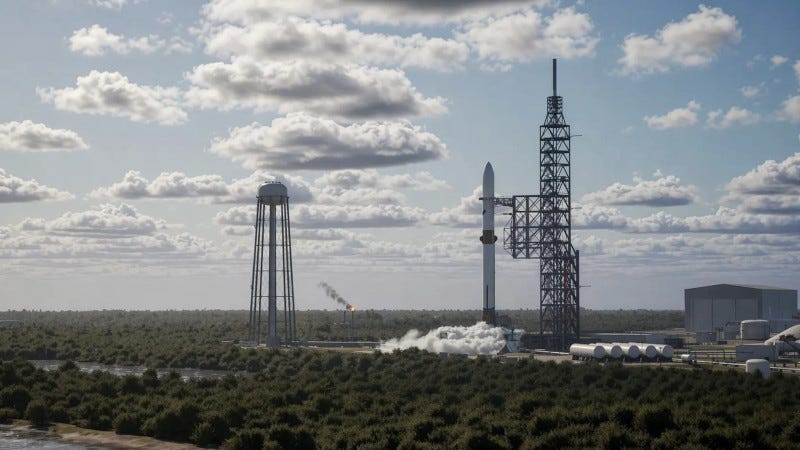
Blue Origin plans to return its New Glenn heavy-lift rocket to flight by the end of this year, following a pad-side anomaly during a hotfire test in late May at Launch Complex 36 in Florida.
“The vehicle is highly instrumented with extensive data from multiple camera angles and sensors, giving us confidence in our ability to identify and correct the root cause.”
David Limp, Blue Origin
In an open letter posted to the Blue Origin website, CEO Dave Limp said the company is rebuilding its launch operations around a horizontal and vertical hybrid integration concept rather than restoring the pad to its previous configuration. He said the goal is to create a common approach that can be used across multiple pads for New Glenn’s nine-engine first stage and four-engine upper stage vehicle.
Limp said the May 28 incident destroyed the lightning protection tower, the transporter-erector and associated hydraulic hardware at LC-36. But he said Blue Origin’s tank farm, integration facility, vehicle access tower and water tower remained in good condition, allowing the company to move directly into cleanup and reconstruction.
“We continue to actively investigate the cause of the anomaly,” Limp said in the online post. “The vehicle is highly instrumented with extensive data from multiple camera angles and sensors, giving us confidence in our ability to identify and correct the root cause. Early analysis points to the aft section of the first stage.”
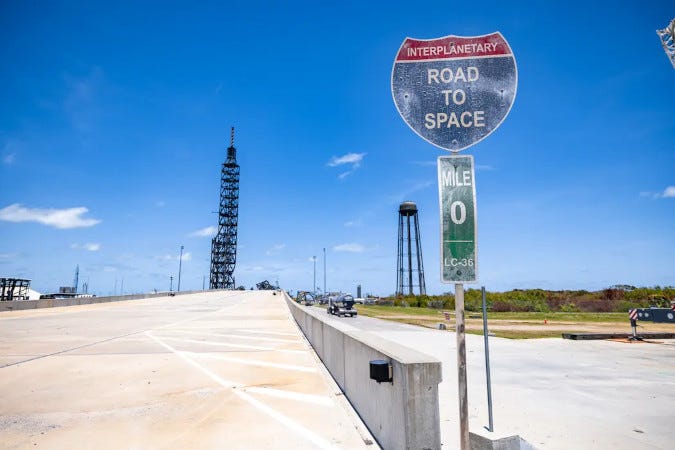
Pad cleanup and debris removal are complete, and reconstruction work is underway, according to the company. Blue Origin relocated the test article nicknamed “Never Tell Me the Odds” and three GS2 stages from the integration facility as part of the recovery.
The revised launch operations concept builds on infrastructure already in place at LC-36, with vehicles mated horizontally in existing facilities and then rolled out on a transporter to the pad. Once at the pad, a crane will raise New Glenn into vertical position, place it on a refurbished launch table and connect umbilicals from the main tower. Payloads will follow a similar path. Under the new concept, payloads will be transported to the pad base and lifted onto the stacked launch vehicle, where payload umbilicals are engaged before the crane clears the pad for launch.
Blue Origin laid out a five-phase recovery plan that it said will culminate in flight readiness. The first two phases, securing the site and conducting recovery and cleanup, are complete. The company is now working through design and major repairs associated with the new operations concept before moving to systems integration and final launch preparations.
Limp said extensive instrumentation on the test vehicle, including camera coverage and sensors, is helping engineers determine the root cause of the anomaly. Early analysis points to the aft section of the first stage, according to the release, but the investigation is ongoing. He said response from government and commercial customers has been strong, including national security and civil space partners working on lunar missions and commercial operators focused on global connectivity. Limp said that support underscores the importance of reliable heavy-lift launch capacity.
Blue Origin said it continues to build New Glenn vehicles at its manufacturing facilities and is maintaining flight readiness while pad reconstruction continues. The company said it intends to return the vehicle to flight by the end of 2026.