

NASA Inspector General Questions $127.9 Million in Payments as Boeing Starliner Certification Slips to 2027
Audit Finds Overconfidence, Schedule Pressure, and Workforce Gaps Put ISS Crew Transportation at Risk Through 2030

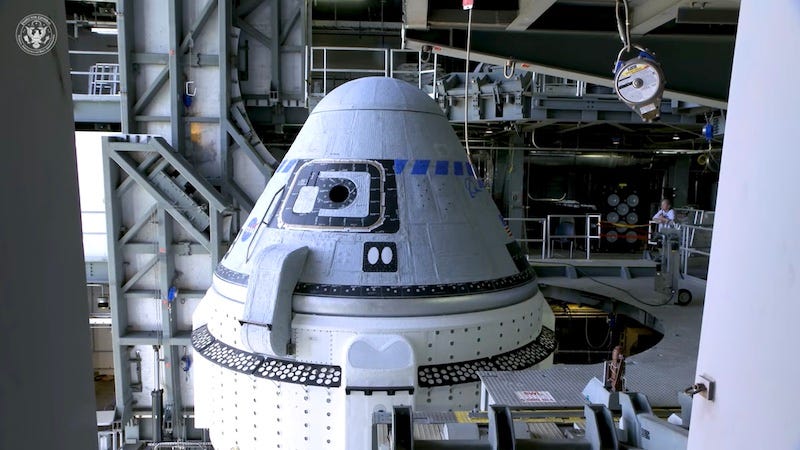
A NASA Office of Inspector General audit of the agency’s Commercial Crew Program released June 30 found that Boeing’s Starliner capsule will not achieve human-rating certification until 2027 at the earliest, leaving the agency with insufficient contracted flights to fully crew the International Space Station through its planned 2030 decommission.
The report, IG-26-011, examined NASA’s management of the CCP and the performance of its two providers — Boeing and SpaceX — over more than a decade of development. NASA has invested more than $9.8 billion in the program since 2014, including approximately $8.7 billion in contract awards and an additional $1.1 billion in related program funding.
SpaceX received human-rating certification for its Crew Dragon capsule and Falcon 9 launch vehicle in 2020 and has since completed 12 crewed missions to the ISS. Boeing has not. Three flight tests — two uncrewed and one crewed — have left the Starliner capsule and its Atlas V launch vehicle uncertified after six years of accumulated delays.
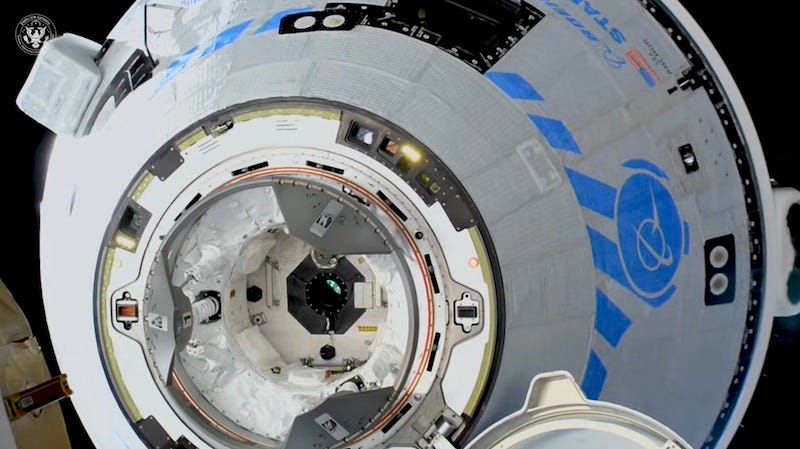
The crewed flight test, designated CFT, launched in June 2024 carrying NASA astronauts Barry “Butch” Wilmore and Sunita “Suni” Williams on what was planned as an 8-day mission. The mission stretched to 286 days after multiple technical failures during flight and docking. Boeing identified approximately 100 in-flight anomalies and flight observations. NASA transferred Wilmore and Williams to the SpaceX Crew-9 Dragon mission, which returned them to Earth on March 18, 2025. NASA classified the CFT mission as a Type A mishap — its most severe designation, reserved for events comparable to the Challenger and Columbia Space Shuttle disasters.
Three technical problems drove the failures and remain central to Boeing’s certification challenge: helium leaks in the service module, propulsion system thruster failures, and parachute anomalies. As of March 2026, the helium leaks and propulsion system failures remain unresolved.
During CFT, five of seven thrusters in one service module “doghouse” — the exterior compartment housing propulsion hardware — failed due to overheating. Commander Wilmore took manual control of the vehicle after automated systems lost six degrees of freedom of spacecraft control. NASA and Boeing later determined that testing at the White Sands Test Facility in New Mexico could not fully replicate the conditions encountered in space. Some testing can only be validated in microgravity.
The OIG identified three root causes for Starliner’s ongoing problems. NASA was overconfident in Boeing’s use of heritage systems — previously flown spaceflight components — and relied on that experience without requiring sufficient integrated testing. That overconfidence led NASA to accept unrealistic launch and flight test schedules. Boeing announced more than 30 different target launch dates for the CFT mission over five years. The pressure to maintain those dates contributed to hardware and software deficiencies going unaddressed. In addition, NASA did not exercise its contractual rights to access Boeing’s flight simulator training data, leaving the agency unable to fully analyze simulation failures.
The OIG also found that NASA took 21 months to classify the CFT mission as a Type A mishap, not issuing that designation until February 2026. The Aerospace Safety Advisory Panel had previously criticized NASA’s mishap reporting requirements as ambiguous, particularly regarding events that occur during testing. The delay created downstream costs and slowed resolution of safety issues.
On costs, the audit questioned $127.9 million in payments to Boeing for a Starliner-3 mission that is far from certain to fly — in addition to the $43 million questioned in a 2019 report on the same program. NASA has also spent $17 million to accelerate SpaceX flights originally planned for the Starliner. Boeing’s contract, initially awarded at $4.2 billion in 2014, has since been reduced to $3.7 billion after a 2025 modification removed two post-certification missions, cutting the total number of ordered Starliner flights from six to four. SpaceX’s original $2.6 billion contract has grown to $4.9 billion, primarily due to a 2022 modification adding eight additional post-certification missions.
The next Boeing flight, Starliner-1, will carry cargo rather than crew. No launch date has been scheduled. NASA said it will not schedule that flight until ongoing investigations into helium leaks and propulsion system failures are complete. Human-rating certification, if achieved, would follow that flight — leaving a narrow window before the ISS is decommissioned.
NASA faces a workforce constraint that could compound these challenges. The OIG found that staffing reductions may slow technical resolution, limit oversight capacity, and further delay certification schedules.
The OIG issued six recommendations, calling on NASA to defer milestone payments to Boeing for Starliner-3 until human-rating certification is complete; develop a schedule for the next Starliner flight based on completed investigations; ensure CFT findings are documented and resolved; establish a central process for crew simulation testing data; clarify mishap reporting requirements; and use workforce assessments to guide hiring for critical program roles. NASA management concurred with all six recommendations and described corrective actions.
With roughly four years remaining in the ISS’s planned operational life, the window for Boeing and NASA to recover value from their Starliner investment continues to narrow.