

NASA ‘Ignition’ Priorities Applauded by Voyager Technologies
Commends Administrator Isaacman for Bold and Visionary Directives

NASA recently announced a series of transformative agencywide initiatives in an event it dubbed “Ignition”, which is drawing praise from some in the industry. Voyager Technologies believes the company is strongly positioned to support NASA’s Ignition event directives, which outlined the agency’s updated priorities for a permanent lunar presence, commercial low-Earth orbit and deep space exploration.
“Starlab and our lunar investments are part of the same grand strategy to build the infrastructure and operational foundation that allows humans to live and work in space permanently.”
Matt Kuta, president, Voyager
The announcements reinforce the strategic direction Voyager has already been executing against, from its February 2026 lunar initiative and investment in expandable habitat technology to its continued progress with Starlab as a bridge to the next generation of American presence in orbit.
“NASA, under the direction of Administrator Isaacman, has laid out a clear vision for where America is going in space, and its core tenets map directly to what we’ve been building,” said Dylan Taylor, chairman & CEO, Voyager. “Lunar infrastructure, sustained human presence in low-Earth orbit and the defense and national security technologies that underpin it all – this is Voyager. We are a committed partner with NASA on its Ignition directives and will help build next-generation infrastructure on time and within budget.”
NASA’s phased approach to building a permanent lunar base, anchored by an accelerated cadence of commercial deliveries and long-term surface infrastructure, is directly aligned with the company’s strategy. Voyager is focused on delivering the foundational infrastructure for sustained human and robotic lunar operations, spanning cislunar mission management, surface logistics propulsion, power systems and habitation. Its recent investment into Max Space, a world leader in expandable habitat technology, further validates the infrastructure-first approach the company has been advancing.
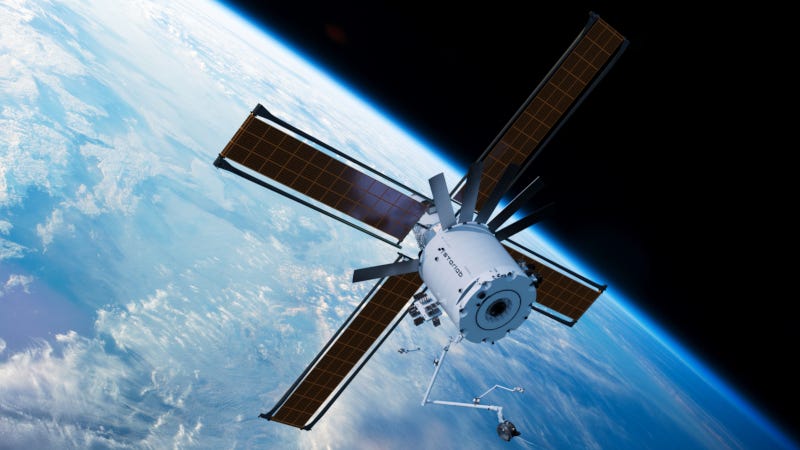
Starlab, Voyager’s space station project, is not only a commercial LEO destination but may also serve as a steppingstone in building the operational experience, systems integration and crew capabilities that sustained lunar missions will demand. The technologies, logistics frameworks and human spaceflight operations developed through Starlab directly support the longer arc of NASA’s exploration architecture, including its ambitions beyond the Moon.
NASA described the International Space Station as a “world-class orbital laboratory” that has enabled more than 4,000 research investigations and supported more than 5,000 researchers. Designed to meet the needs of government, international and commercial markets, Starlab is being designed to have the scale required to serve the same ISS research community. Notably, commercial customers have already significantly oversubscribed Starlab’s commercial payload space, demonstrating the market NASA envisions – where it is one of many customers purchasing commercial services among a larger commercial ecosystem. This early commercial traction with Starlab showcases the benefits of its design and business model compared to other solutions available in the market.
NASA’s Ignition announcements included a request for information, opening March 25, 2026, on a potential alternative ISS-anchored approach to the LEO transition, and the final path has yet to be determined.
“Starlab and our lunar investments are part of the same grand strategy to build the infrastructure and operational foundation that allows humans to live and work in space permanently,” said Matt Kuta, president, Voyager. “NASA’s directives today point in the same direction we’ve been moving. We are innovative, nimble and built for exactly this kind of pivotal moment. Voyager looks forward to partnering with NASA to provide feedback on both options for the LEO transition articulated in the Ignition event. Given Voyager’s deep technological capabilities and operational track record with NASA, we are strongly positioned for either approach NASA selects.”