

Military Satellite Research Project Contract Inked by EDA
Private Consortium Will Explore the Very Low Earth Orbit (VLEO) Region in Space

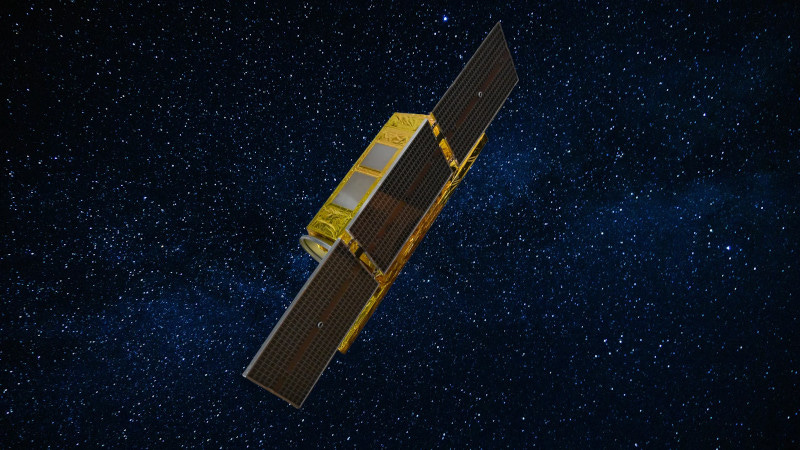
The European Defense Agency (EDA) has signed a €15.65 million (≈$18 million) research contract with an industry consortium to explore the Very Low Earth Orbit (VLEO) region in space. The research and technology project, funded by five Member States, is exploring one of the most promising and technically demanding frontiers in space.
The project, called VLEO-DEF, will design the first European military satellite concept specifically for VLEO, an orbital region roughly 250 to 350 kilometers (≈155-217 miles) above Earth. Operating closer to the planet allows satellites to capture far more detailed images, a key advantage for intelligence, surveillance and reconnaissance missions. Signals also travel a shorter distance, allowing faster delivery of information to military commanders. The project will run for 36 months.
Satellites orbiting hundreds of kilometers above Earth already underpin modern defense, but EDA now wants to bring them even closer to the planet. Operating in VLEO presents technical challenges. At such low altitudes, the atmosphere still creates significant drag that slows satellites down. Staying in orbit therefore requires advanced propulsion, specialized materials and new satellite designs. The project aims to prepare a future flight experiment to demonstrate key technologies in orbit, including propulsion systems designed for sustained operations in VLEO.
The initiative brings together five Member States — Spain, France, Luxembourg, Portugal and Slovenia — alongside a consortium of 17 European industrial and research organizations.
The consortium is led by the Spanish aerospace engineering company SENER. Other participants include: DEIMOS, Airbus Defense and Space, and SATLANTIS from Spain; INEGI, GEOSAT, and OMNIDEA from Portugal; INTEGRASYS, SPARC, LIST, RAFINEX, EMTRONIX, GRADEL, and GOMSPACE from Luxembourg; EXOTRAIL and Thales Alenia Space France from France; and SKYLABS from Slovenia.
VLEO-DEF is not EDA’s first step into this field. In 2024, the agency began the LEO2VLEO project involving Austria and the Netherlands which will build a constellation of three satellites capable of maneuvering between traditional Low Earth Orbit and Very Low Earth Orbit. The aim of that program is to demonstrate how satellites could temporarily descend into VLEO for specific missions before returning to higher orbit.
VLEO-DEF, instead of testing orbital maneuvers, focuses on designing a satellite specifically optimized for operating in Very Low Earth Orbit and developing the technologies needed to sustain missions in this demanding environment.