

Microbial Nutrient Absorption Identified as Barrier to In-Space Biomanufacturing
ISS Research Points to Bioreactor Design as Key to Unlocking Orbit-Based Material Production

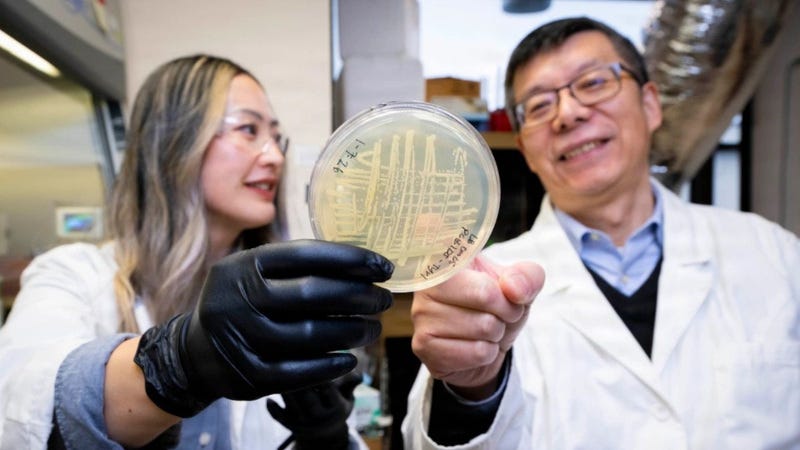
Engineered bacteria sent to the International Space Station to produce a radiation-shielding pigment failed to absorb nutrients normally in microgravity, a finding that researchers say identifies both the core obstacle and a potential path forward for manufacturing biological materials in orbit.
“The biggest takeaway is that if we want to manufacture materials using microbes in space, we have to solve the issue of how nutrients get into cells.”
Zheng Wang, MELSP
The results come from the Melanized Microbes for Multiple Uses in Space project, known as MELSP, which launched to the ISS in November 2023. The research was sponsored by the ISS National Laboratory and published in the journal npj Microgravity.
Zheng Wang, principal investigator of MELSP and a research biologist at the U.S. Naval Research Laboratory, said the findings cut to the heart of what must be solved before microbial production in space becomes viable.
“The biggest takeaway is that if we want to manufacture materials using microbes in space, we have to solve the issue of how nutrients get into cells,” Wang said.
The MELSP team engineered strains of Escherichia coli, the workhorse bacterium of industrial biotechnology, to produce melanin. The pigment blocks radiation, neutralizes harmful chemicals, and remains stable under extreme temperature and pressure conditions. Those properties make melanin a candidate material for protecting both astronauts and spacecraft systems on long-duration missions beyond low Earth orbit, where resupply from Earth becomes increasingly costly and infrequent.
The engineered bacteria carried the complete genetic pathway for melanin synthesis. In microgravity, however, the spaceflight environment disrupted how cells absorbed nutrients and responded to metabolic stress. After the flight, researchers found that much of a key nutrient remained unused, indicating the bacteria could not take in what they needed to complete the production process. The genetic machinery was present and functioning. The raw material simply was not reaching it.
Ground-based testing reinforced the finding. Collaborator Cheryl Nickerson, a microbiologist at Arizona State University, conducted parallel experiments using a NASA-developed Rotating Wall Vessel bioreactor, a device designed to simulate certain aspects of microgravity fluid dynamics on the ground. Those experiments produced patterns consistent with what was observed aboard the ISS, pointing to nutrient transport and fluid mixing as the central engineering challenges for microbial production in weightless environments.
Without the convective mixing that gravity drives in Earth-based bioreactors, nutrient gradients form around cells. The bacteria sit in a depleted microenvironment even when the surrounding medium contains adequate supply. Solving that problem, the research suggests, will require active circulation systems designed specifically for microgravity conditions.
The investigation also included fungal strains selected for their resilience in extreme environments. All fungal samples survived spaceflight and continued producing steady levels of melanin throughout the mission, a result that stood in contrast to the bacterial performance. That outcome positions fungi as candidates for future space-based biomanufacturing applications, though the MELSP research did not define a development timeline or commercial pathway for fungal production systems.
The bacterial and fungal results together help define the design requirements for the next generation of biological production systems built for use in orbit. Future bioreactors may need to actively circulate nutrients, manage cellular stress, and compensate for the absence of gravity-driven fluid dynamics that terrestrial cells rely on. The findings give engineers a specific problem to solve rather than a general performance gap to close.
Materials produced through microbial processes in orbit could eventually include radiation-shielding compounds, medicines, and other consumables needed during deep-space missions, reducing dependence on Earth resupply. The economics of that production model depend on demonstrating reliable yields in a microgravity environment. MELSP did not achieve that with its bacterial strains, but the research team characterized the barrier as an engineering problem rather than a fundamental biological one.
The MELSP findings are reported in the current issue of Upward, the official magazine of the ISS National Laboratory. The full research paper appears in npj Microgravity.