

Media Architecture and Earned Coverage
How Space Companies Build and Lose Industry Credibility Through Communications

Brand: Space Column 6.21.26
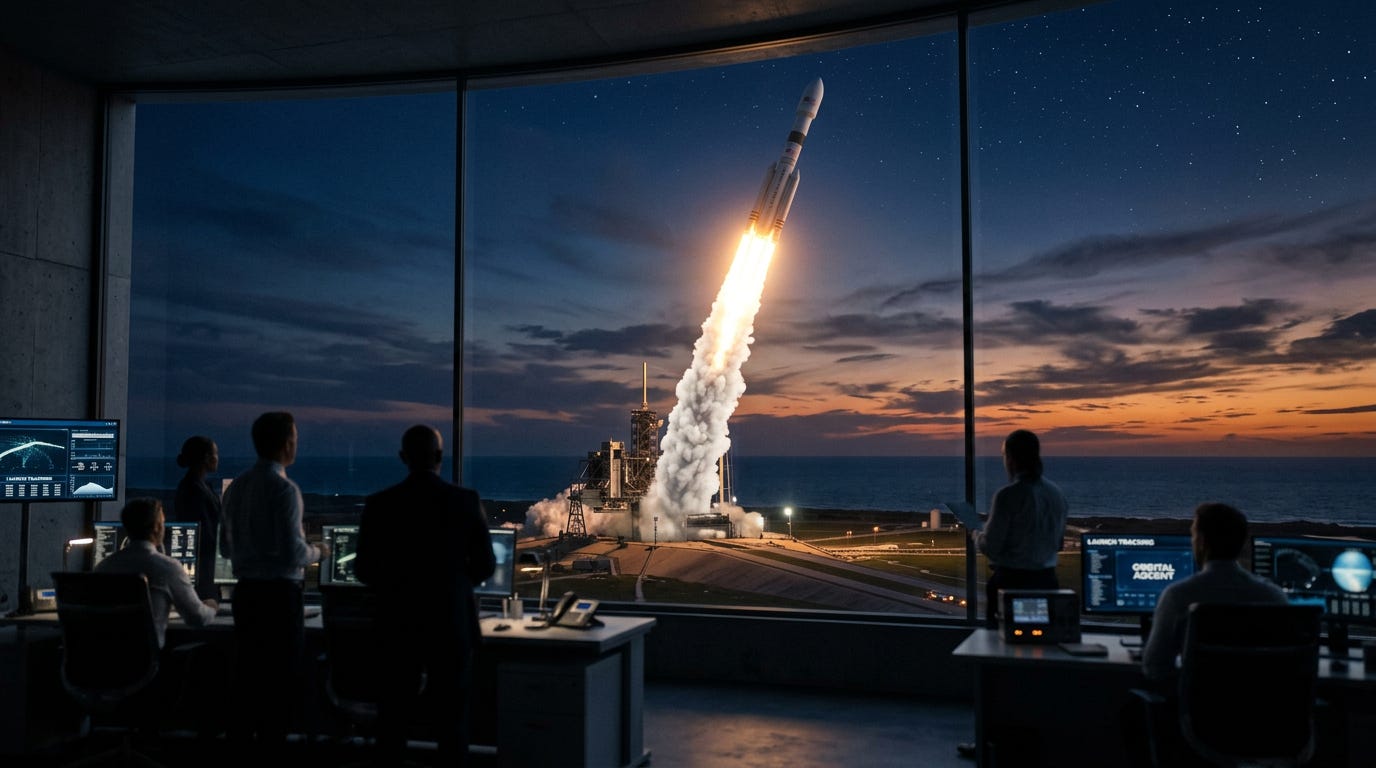
In the modern space economy, technology may launch rockets, but credibility launches companies.
Every week, a new space venture emerges claiming to revolutionize launch systems, satellite communications, propulsion technologies, orbital logistics, lunar infrastructure, or space resource development. Many of these organizations possess talented engineers, innovative concepts, and ambitious visions. Yet only a small percentage will achieve lasting recognition and trusted positions within the space ecosystem.
The difference is often not technological capability. It is communications credibility.
Within the increasingly crowded NewSpace marketplace, investors, customers, regulators, policymakers, industry partners, and media organizations make judgments about organizations long before products reach operational maturity. Those judgments are shaped by what I refer to as a company’s media architecture-the deliberate structure of messages, spokespersons, media relationships, thought leadership platforms, stakeholder engagement activities, and earned media opportunities that collectively define how an organization is perceived.
Companies that build strong media architectures create trust, visibility, and influence. Those that neglect communications often find themselves struggling for recognition despite possessing exceptional technical capabilities.
Understanding Media Architecture
Media architecture is more than public relations.
It is the strategic framework through which an organization communicates its value proposition, demonstrates expertise, validates claims, and establishes credibility among stakeholders.
Effective media architecture consists of several interconnected components:
Executive thought leadership
Consistent messaging
Industry analyst engagement
Trade media relationships
Conference participation
Technical publications
Customer success stories
Digital content ecosystems
Crisis communications preparedness
Third-party endorsements
Together, these elements create an integrated credibility platform that reinforces organizational authority.
In the space sector, where technologies are complex and development timelines often span years, stakeholders frequently rely upon communications signals to assess organizational maturity and reliability.
Simply stated, perception often precedes performance.
Why Earned Media Matters
Space industry audiences are naturally skeptical.
Investors have witnessed numerous startups fail to deliver on bold promises. Government agencies must carefully evaluate contractor reliability. Customers seek confidence that suppliers can fulfill commitments. Journalists have become increasingly cautious about reporting unsubstantiated claims.
This is where earned media becomes critical.
Unlike paid advertising, earned media is generated through independent coverage by journalists, analysts, trade publications, podcasts, and industry influencers. Because it originates from third parties rather than the company itself, it carries significantly greater credibility.
When a respected aerospace publication profiles a company’s breakthrough propulsion technology, readers perceive validation. When an independent journalist interviews company leadership regarding industry trends, audiences recognize expertise. When customers share success stories, prospective buyers gain confidence.
Earned coverage serves as external confirmation that a company’s claims deserve attention.
In many cases, earned media becomes the bridge between technical innovation and marketplace acceptance.
Building Credibility Through Consistent Communications
One of the strongest examples of successful media architecture can be found in the evolution of SpaceX.
Long before routine launches became commonplace, SpaceX invested heavily in public visibility. The company consistently communicated mission objectives, technical milestones, launch outcomes, failures, lessons learned, and future goals.
Importantly, communications were aligned with measurable achievements.
When launch failures occurred, company leaders acknowledged setbacks, discussed corrective actions, and demonstrated transparency. As technical successes accumulated, credibility increased.
The result was not simply media attention.
The result was trust.
Investors, government customers, commercial partners, and the public came to associate SpaceX with engineering excellence, innovation, and execution.
The company’s communications architecture reinforced its technical accomplishments rather than attempting to substitute for them.
The Power of Industry Thought Leadership
Another effective credibility-building strategy involves thought leadership.
Many successful space companies establish authority by contributing to industry discussions rather than exclusively promoting products.
Executives publish articles. Engineers present technical papers. Subject matter experts participate in conferences and podcasts. Leaders engage in discussions regarding regulations, workforce development, sustainability, space traffic management, and emerging technologies.
These activities position organizations as contributors to the broader space ecosystem.
For example, satellite operators frequently gain visibility by publishing insights regarding orbital congestion, spectrum management, or emerging commercial applications. Launch providers often establish credibility by discussing industry trends, safety practices, and operational challenges.
Organizations become recognized not merely for what they sell, but for what they know.
That distinction significantly influences stakeholder trust.
How Companies Lose Credibility
Just as credibility can be built, it can also be rapidly destroyed.
The most common communications failure in the space industry is the gap between promises and performance.
Some organizations announce revolutionary technologies years before demonstrating operational capability. Others release exaggerated market projections, unrealistic schedules, or unsupported technical claims.
Initially, these announcements may generate media attention.
However, when milestones are repeatedly missed, stakeholders begin to question organizational competence and honesty.
The credibility deficit grows with every missed commitment.
The space industry offers numerous examples of companies that attracted substantial publicity and investment based upon ambitious projections but later struggled to meet expectations. In many cases, communications became disconnected from operational reality.
Eventually, media narratives shifted from innovation to skepticism.
Once that transition occurs, rebuilding trust becomes exceptionally difficult.
The Dangers of Communications Vacuums
Another credibility risk emerges when organizations fail to communicate at all.
Many technically oriented startups assume that superior engineering will naturally attract customers, investors, and media attention.
Unfortunately, technology does not speak for itself.
When companies remain invisible, stakeholders often fill information gaps with assumptions.
Potential investors may question leadership capability. Customers may perceive operational immaturity. Journalists may overlook the company entirely in favor of more visible competitors.
Silence rarely creates credibility.
In competitive markets, silence often creates irrelevance.
Crisis Communications and Reputation Resilience
The true strength of a media architecture is often revealed during periods of crisis.
Launch failures, technical anomalies, regulatory investigations, workforce reductions, cybersecurity incidents, and program delays are inevitable challenges within the space sector.
Organizations with established credibility frequently recover more quickly because stakeholders already possess a reservoir of trust.
Transparent communication, rapid response, and consistent messaging help preserve confidence.
Conversely, organizations that attempt to conceal problems or avoid accountability often experience amplified reputational damage.
Stakeholders may forgive mistakes.
They rarely forgive deception.
The Future of Space Industry Credibility
As the global space economy continues to expand, competition for stakeholder attention will intensify.
Thousands of companies will compete for investment capital, government contracts, media visibility, technical talent, and customer trust.
In that environment, communications will increasingly become a strategic differentiator.
The organizations that succeed will not simply build innovative technologies. They will build credible narratives supported by evidence, transparency, expertise, and meaningful stakeholder engagement.
Their media architecture will serve as an extension of their operational performance.
The organizations that fail will often discover that visibility without credibility is temporary, and publicity without substance is unsustainable.
Ultimately, earned media is not about generating headlines.
It is about generating trust.
And in the space industry, trust remains one of the most valuable assets any organization can place into orbit.
About the Author

Michael Daily is the President of NewSpace Brand Builders, a strategic consultancy dedicated to advancing the branding, marketing, and communications excellence of the global space industry. With an extensive background in brand strategy, public affairs, and community strategy development, Daily established NewSpace Brand Builders to help organizations define their identity, strengthen their market position, and contribute to a sustainable and innovative space ecosystem. You can reach Mike at mike.daily@newspacebb.com or visit https://newspacebrandbuilders.com/
 | A guest post by
|