

M-Code GPS Receiver Enters Production as Successor to Long-Serving DAGR
NavGuide Offers Drop-In Upgrade to More Than 650,000 Deployed Units, Available to Allied Nations via Foreign Military Sales

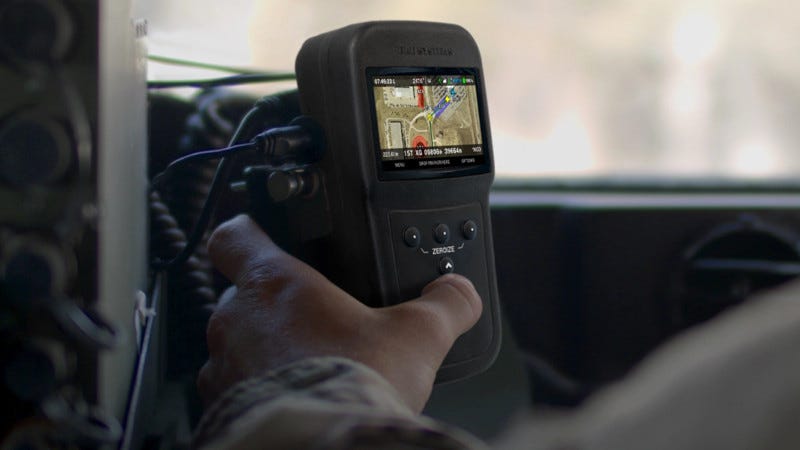
Production and initial deliveries are underway for NavGuide, a portable M-Code GPS receiver designed by BAE Systems to replace the Defense Advanced GPS Receiver (DAGR) across the U.S. military and allied armed forces. Manufactured by BAE Systems, the new receiver provides secure positioning, navigation, and timing (PNT) for vehicle, handheld, and sensor applications — and is backward compatible with existing DAGR mounts, cables, and accessories.
“NavGuide is more than just a replacement for DAGR.”
Luke Bishop, BAE Systems
The DAGR, which has been deployed in more than 650,000 units globally since 2004, has concluded production after more than two decades of service. NavGuide is designed to slot directly into those existing installations without hardware modifications or mission interruptions, enabling a rapid, low-friction transition to M-Code capability across the force.
“NavGuide is more than just a replacement for DAGR,” said Luke Bishop, director of Navigation and Sensor Systems at BAE Systems. “Built on the same trusted foundation for easy installation and transition, it delivers a more resilient, user-friendly M-Code GPS solution. Now in production, NavGuide gives warfighters the precise positioning data and situational-awareness tools they need to stay effective in modern, contested, multi-domain operations.”
NavGuide leverages the advanced M-Code GPS signal, which provides enhanced protection against jamming and spoofing compared with legacy GPS signals. The receiver features a compact, lightweight design with a full-color user interface, waypoint navigation, and a moving-map display intended to improve situational awareness in the field.
M-Code is a military-specific encrypted GPS signal that offers significantly greater resistance to interference and adversarial manipulation than standard GPS. It is part of the U.S. military’s broader GPS modernization program, designed to ensure reliable PNT capability in contested and degraded environments — a growing priority as electronic warfare capabilities among near-peer adversaries have expanded.
The integration pathway from DAGR to NavGuide is designed to reduce fielding time and cost. BAE Systems has already completed NavGuide integration on more than 30 existing vehicle platforms, with an average installation time of under two minutes. No modifications to existing cables, mounts, or vehicle software are required, allowing fleets to adopt M-Code capability without costly platform recertification or extended downtime.
For handheld and dismounted applications, NavGuide preserves the same form factor and operational familiarity as the DAGR — a characteristic that reduces training burden and simplifies logistics for units transitioning to the new system. The receiver supports a range of applications across all services, from individual soldier navigation to vehicle-mounted and sensor-integrated platforms.
NavGuide is available to all U.S. armed forces branches and to allied nations through the U.S. government’s Foreign Military Sales program, extending M-Code-capable navigation to partner nations. BAE Systems has previously delivered selective availability anti-spoofing modules — an earlier generation of protected GPS technology — to more than 45 countries, establishing a broad international customer base from which NavGuide demand is expected to grow.
The receiver is manufactured at BAE Systems’ engineering and manufacturing facility in Cedar Rapids, Iowa, the company’s central hub for military GPS product development and production.
BAE Systems said it will continue to provide support for all legacy DAGR units already in service, maintaining sustainment and lifecycle services for the installed base as the broader transition to NavGuide proceeds.
The rollout coincides with heightened U.S. and allied focus on GPS resilience amid documented increases in GPS jamming and spoofing incidents in contested operational theaters. M-Code-capable receivers are central to that response, providing signal security, accuracy, and anti-jam performance that legacy GPS receivers are not designed to deliver.