

Launch Schedule Shifted by Rocket Lab
‘Bridging the Swarm’ Mission now Next for Liftoff

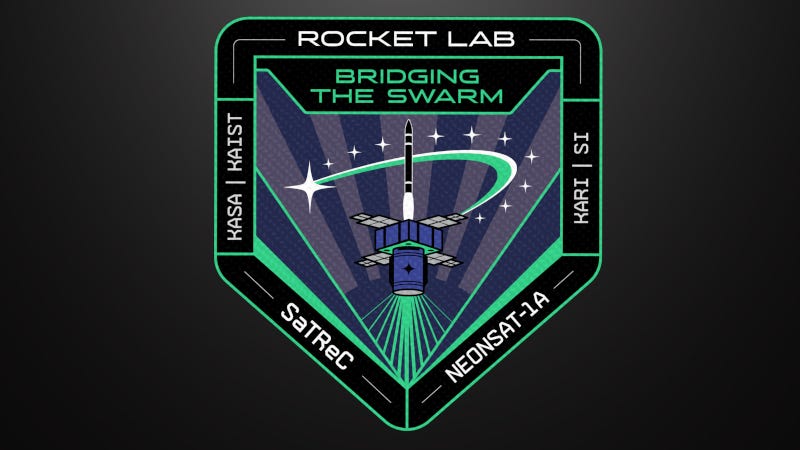
Rocket Lab is expediting a dedicated Electron mission for the Korea Advanced Institute of Science and Technology (KAIST) and is scheduling the launch from Launch Complex 1 in less than 24 hours’ time.
The mission, named ‘Bridging The Swarm’, is scheduled to launch no earlier than Thursday, December 11 UTC (Dec 10 ET) from Rocket Lab Launch Complex 1 in New Zealand. The mission now precedes the upcoming launch for the Japan Aerospace Exploration Agency (JAXA).
This launch rescheduling is a demonstration of Rocket Lab’s operational efficiency, responsiveness, and flexibility to meet the ever-evolving needs of its customers, while continuing to launch more missions every year to support a growing manifest. ‘Bridging The Swarm’ will be Electron’s 19th launch of the year, closely followed by the ‘RAISE and Shine’ mission for JAXA. With these missions Rocket Lab well exceeds the Company’s 2024 launch tally of 16 missions.
The launch window for ‘Raise and Shine’ has been pushed to December 13 in New Zealand.
‘Bridging The Swarm’ is a dedicated launch for the Satellite Technology Research Center (SaTReC) at the Korea Advanced Institute of Science and Technology (KAIST). The mission will deploy NEONSAT-1A, an advanced Earth observation satellite equipped with a high-resolution optical camera to monitor natural disasters along the Korean Peninsula. NEONSAT-1A is a sub-satellite of KAIST’s NEONSAT satellites, which altogether will form two orbital planes of a constellation in a sun-synchronous orbit.
The first of the NEONSAT satellites, NEONSAT-1, was launched and deployed by Rocket Lab during the April 2024 mission ‘Beginning Of The Swarm’, and has been successfully carrying out its Earth-monitoring objective. The new NEONSAT-1A satellite will be deployed to validate KAIST’s advanced satellite’s capability, boost operational utility, and pave the way for the single NEONSAT satellite to become a constellation – thus fulfilling the mission’s name, “Bridging the Swarm”. More NEONSAT satellites are scheduled for launch in 2026 and 2027.
The NEONSAT program is a collaboration across multiple Korean academic, industry, and research institutions: SaTReC, which is leading the system architecture design and engineering; the Satrec Initiative(SI), a satellite manufacturer that has successfully developed a number of remote sensing satellites for low Earth orbit; and the Korea Aerospace Research Institute (KARI), which is managing the mission’s ground segments for the NEONSAT program. The NEONSAT program is funded by the Korean government’s Ministry of Science and ICT (MSIT) and is supervised by Korea AeroSpace Administration (KASA), a newly established agency overseeing the development of aerospace technology and preparing for space-related hazards in the Republic of Korea.
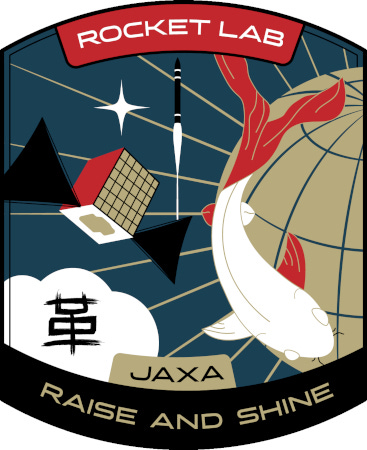
The ‘RAISE and Shine’ mission will deploy JAXA’s RApid Innovative payload demonstration SatellitE-4 (RAISE-4) spacecraft, a single satellite that will demonstrate eight technologies developed by private companies, universities, and research institutions throughout Japan. “RAISE And Shine” is the first of two dedicated launches for JAXA’s Innovative Satellite Technology Demonstration Program, an initiative by the agency to demonstrate new and innovative capabilities and technologies developed by Japan’s space economy. The second dedicated launch on Electron for the program is scheduled to take place from Q1 2026. The missions are Rocket Lab’s first dedicated Electron launches directly contracted with JAXA, emphasizing Electron’s importance to reliable global space access for both domestic and allied international space agencies.