

Investment Firm Backs Bid To Build Post-ISS Space Station
Neither Side Discloses Size Or Terms Of The Stake

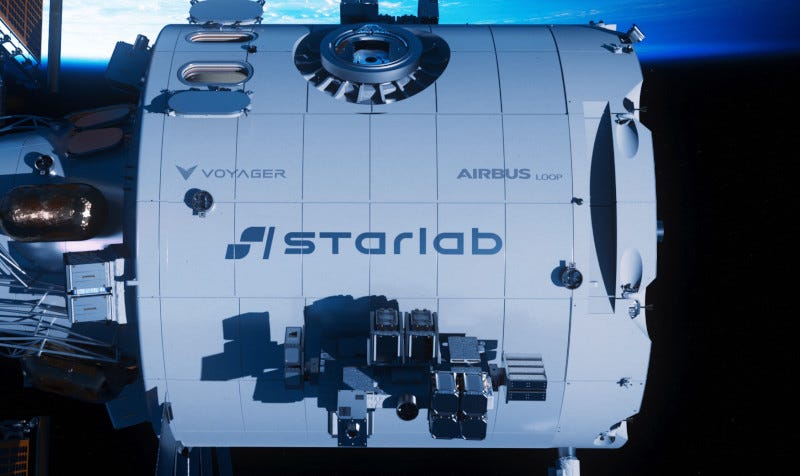
A venture capital firm has taken a stake in the company developing a commercial space station meant to replace the International Space Station, though neither party disclosed how much money changed hands.
“The United States needs a continuous human presence in low-Earth orbit after the ISS — that’s not a vision, that’s a requirement.”
Matt Kuta, Voyager
Starlab Space and Global Venture Management announced the investment Wednesday. Starlab is a joint venture led by Voyager Technologies (NYSE: VOYG) alongside Airbus, Mitsubishi Corp., MDA Space, Palantir Technologies and Space Applications Services, with Hilton, Journey, Northrop Grumman and Ohio State University listed as strategic partners. Global Venture Management, based in San Juan, Puerto Rico, describes itself as a venture capital and private equity firm that gives accredited investors access to pre-IPO companies.
The announcement did not specify the investment amount, whether it took the form of equity or another instrument, or what stake Global Venture Management now holds. The release characterized the deal only as adding to “a deepening pool of institutional capital” backing Starlab.
“The United States needs a continuous human presence in low-Earth orbit after the ISS — that’s not a vision, that’s a requirement,” said Matt Kuta, president of Voyager. “Starlab is how we meet it. Every investor who backs this program is helping build the infrastructure that makes the orbital economy American-led.”
Starlab is one of several commercial stations competing to take over crewed research and manufacturing in low-Earth orbit as NASA moves toward retiring the ISS. Wednesday’s announcement follows a similar strategic investment Starlab disclosed in May from 1789 Capital.
“We invest at the intersection of transformational technology and generational market opportunity,” said Damian Maggio, fund manager at Global Venture Management. “Starlab is precisely that — a platform that will define how the orbital economy is built, accessed and owned. This is infrastructure for the next century.”