

In-Space Mobility Supply Chain, From Mira to Helios
Where Impulse Space Sources Its Critical Sub-Tiers

What This Means
Impulse Space just raised $500 million to scale what it calls in-space mobility infrastructure, and the supply chain behind that ambition is still being built. The gap between Mira’s flying hardware and Helios’s development pipeline creates a defined window for propulsion, structural, and avionics sub-suppliers to qualify into a program that is, by design, under-sourced at the sub-tier level. Supply-chain leaders and investors who map their positioning now will have a concrete advantage before Impulse’s build rate scales.
Impulse Space closed its $500 million Series D on June 2, 2026, co-led by 137 Ventures and BANNER VC, with participation from Founder’s Fund, Lux Capital, and Linse Capital, bringing its total capital raised to more than $1 billion. The funds are earmarked for vehicles, propulsion systems, and operational architecture, a broad mandate that signals Impulse is actively expanding its manufacturing and supply base, not just headcount. That scope creates a specific class of procurement decisions that sub-tier suppliers and investors need to understand before the build rate accelerates.
The Two Vehicles Driving the Map
Impulse operates two distinct vehicle programs with different maturity profiles and, therefore, different sub-tier sourcing windows. Mira, the company’s last-mile maneuvering spacecraft for low Earth orbit (LEO), has flown multiple operational missions, delivering satellites from rideshare drop points to their final orbital destinations. Its flight heritage means the propulsion, avionics, and structural sub-tiers feeding Mira are either qualified or actively in qualification, a supply chain in execution mode.
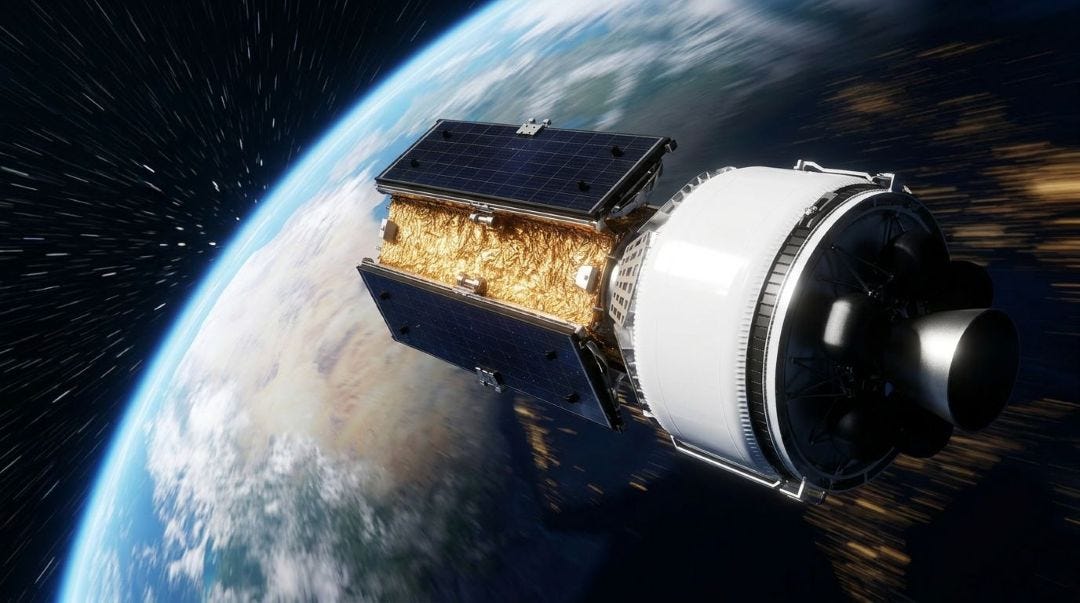
Helios is a different story. The Helios kick stage is designed for geosynchronous orbit (GEO) rideshare and deep-space transfer, targeting a mission profile that requires substantially higher-thrust chemical propulsion, larger propellant tanks, and thermal management hardware not required in LEO operations. As of June 2026, Helios has not flown, which means its sub-tier qualification chain remains open. That opening is the primary supply-chain opportunity this raise signals for component manufacturers.
The Propulsion Layer: Where the Critical Dependency Lives
Chemical propulsion is the load-bearing sub-tier in both programs. Impulse develops its own thrusters internally and targets rapid, high-thrust maneuvers as its core competitive differentiator, but the propellant handling hardware, valve assemblies, and feed system components feeding those thrusters are sourced externally. The acquisition of Phase Four’s assets by Apex removed a qualified electric propulsion supplier from the open market and has raised broader questions about sub-tier consolidation across the LEO supplier base, a dynamic that affects chemical propulsion sourcing as well, particularly for components such as high-pressure regulators and composite overwrapped pressure vessels (COPVs).
The next section maps the defense crossover created by Impulse's Anduril-Golden Dome teaming, identifies the radiation-hardened avionics vendor class best positioned to respond, and documents the structural and thermal sub-tier opportunity before Helios locks its vendor base — including named supplier classes and a three-part decision framework for supply-chain leaders and investors.
