

Haven‑1 Advances into Integration Phase
First Phase Includes Installation of the Station’s Pressurized Fluid Systems

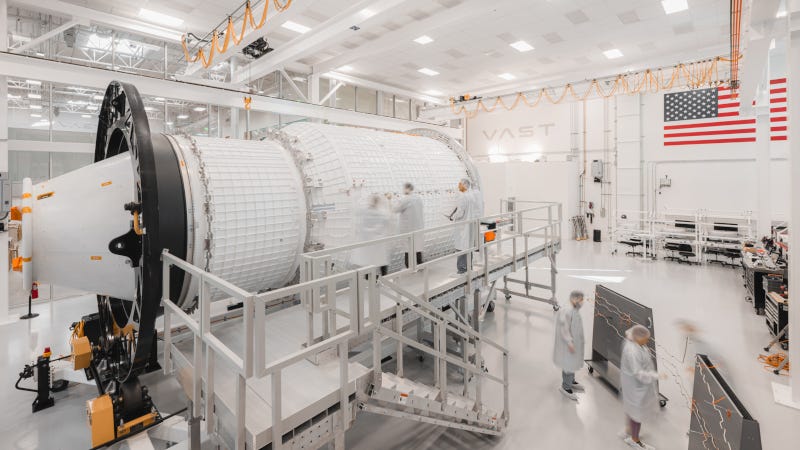
Integration has begun on the Vast Haven-1 commercial space station. Scheduled to be the world’s first private space station, Haven-1 is designed as a standalone, crewed station and serves as the first step for Haven-2, a multi-module station capable of supporting a continuous human presence in low-Earth orbit (LEO) that is Vast’s proposed successor to the ISS.
“Haven-1 is not a concept; it is real, flight-tested hardware designed to carry forward a continuous human presence in low-Earth orbit.”
Max Haot, Vast
Haven-1 is an integral part of the company’s hardware-rich development approach that is putting flight-hardware and systems through rigorous ground and in-space testing to accelerate learning, reduce technical and schedule risk, and unlock new commercial and government capabilities in LEO. Haven-1 is designed to expand access to space and provide an affordable platform for microgravity research, manufacturing, and both national and international space infrastructure.
The first phase of Haven-1 integration includes installation of the station’s pressurized fluid systems, including thermal control, life support, and propulsion system tubes, and component trays and tanks. These systems will undergo pressure, leak, and functional testing. The second phase of integration will incorporate avionics, guidance, navigation and control systems, and air revitalization hardware. The third and final phase will complete the vehicle with crew habitation and interior closeouts, exterior micrometeoroid and orbital debris (MMOD) shielding, thermal radiator installation, and solar array integration, bringing Haven-1 to a fully flight-ready configuration. Vast remains focused on completing integration and conducting a suite of system environmental tests at NASA’s Neil Armstrong Test Facility later in 2026.
Based on the current integration timeline, Vast is updating its schedule for Haven-1 to be ready to launch Q1 2027. Haven-1 is contracted to launch on a SpaceX Falcon 9 from Cape Canaveral, Florida. With each milestone, the team gains more data and greater certainty, enabling timelines to become progressively more precise. Haven-1 represents a true zero-to-one development, and as Vast moves on to its second, third, and subsequent stations, schedule precision will continue to improve as systems, processes, and integration maturity increases. Throughout this process, human safety remains the team’s top priority, with development and manufacturing pace carefully balanced to ensure mission integrity.
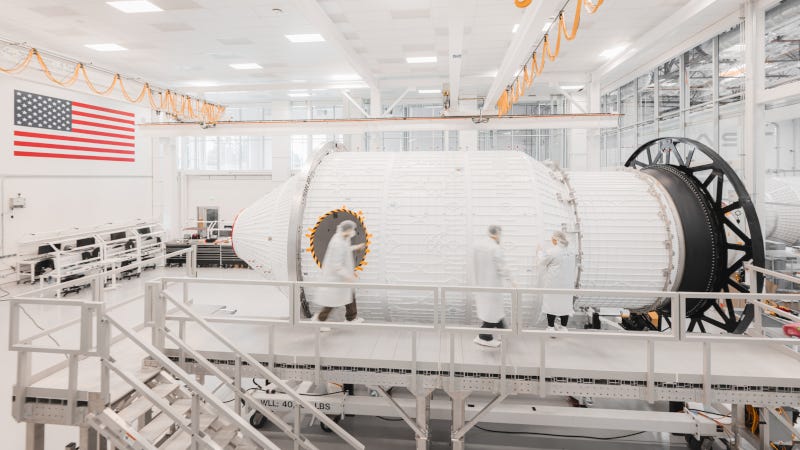
“From the beginning, our business plan has been about building a sustainable future in orbit, one that meets today’s market while creating the foundation for what comes next,” said Max Haot, CEO of Vast. “Haven-1 is not a concept; it is real, flight-tested hardware designed to carry forward a continuous human presence in low-Earth orbit for America and its allies. By vertically integrating design, manufacturing, testing, and operations, we’re moving with both speed and autonomy. Haven-1 brings the next era of space stations within reach and helps ensure there is no gap in our ability to live and work in space beyond the ISS.”
Vast’s hardware-rich, stepping-stone approach accelerates development while improving safety and reducing cost by building, testing, and flying systems early. This is reinforced by Vast’s vertically integrated model, which has already delivered a 10X reduction in primary structure manufacturing costs compared to traditional space station programs, while increasing capability, improving schedule certainty, and shortening manufacturing timelines.